The central issue is not only a clash of rhetoric between Iran and Donald Trump, but the safety of commercial traffic through one of the world’s most consequential energy chokepoints. The public record supplied so far leaves major questions about Iran’s specific demands unanswered.
Iran has threatened Donald Trump over the naval blockade and demanded that Trump meet its demands or face military action, according to the trend report. The dispute concerns breaking the naval blockade around the Strait of Hormuz, where the U.S. military says it has begun an operation to restore commercial shipping and prevent Iran from disrupting a major international waterway.
That makes this more than a war of words. A confrontation over access to the strait could affect tanker routes, shipping insurance, energy markets and the risk facing U.S. forces and civilian mariners.
What the reported threat says
The report frames Iran’s message to Trump as an ultimatum: meet Iranian demands or confront military action intended to break the naval blockade. But the source material available here does not provide the full wording of an Iranian statement, identify the official who delivered it or specify the demands in detail.
That distinction matters. Threats issued through a government spokesperson, military body, state media outlet or an unofficial figure can carry very different weight. Without those details, it is not possible to independently assess whether this was a formal Iranian government position, a warning tied to a particular military move or rhetoric intended to raise pressure on Washington.
What is clear from the U.S. account is that the confrontation is focused on maritime access. The Trump administration’s stated position is that Iran cannot be allowed to impede commercial traffic through the Strait of Hormuz, while Iran is portrayed by U.S. officials as seeking control over passage through the waterway.
Washington’s case for Project Freedom
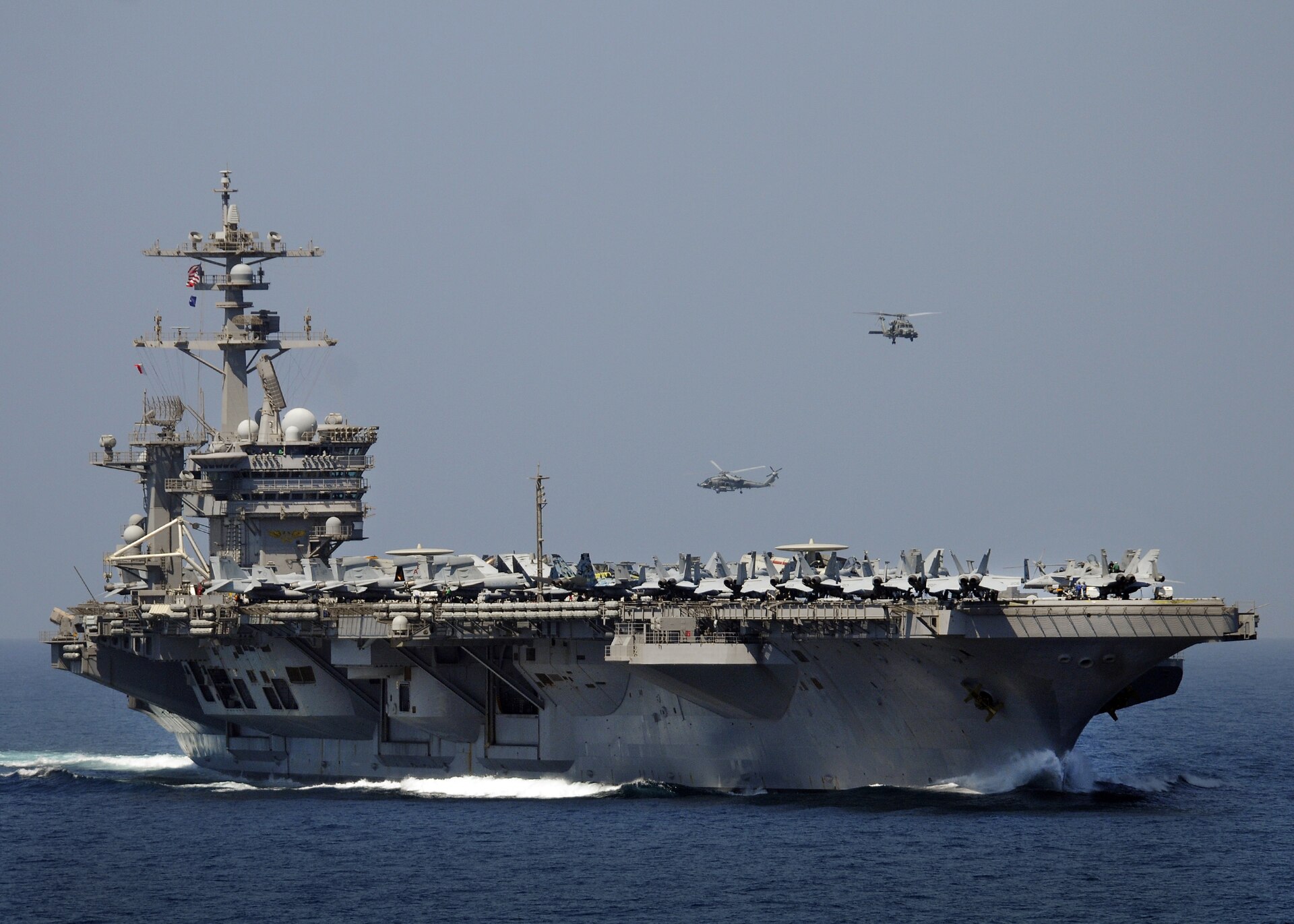
In a Defense Department briefing, Secretary of War Pete Hegseth said President Trump directed U.S. Central Command to launch an operation called Project Freedom. He described it as a defensive, limited and temporary mission to protect commercial vessels moving through the Strait of Hormuz.
Hegseth said U.S. forces would not need to enter Iranian waters or airspace to carry out the mission. He also said two U.S. commercial ships, accompanied by American destroyers, had transited safely, and that more vessels were waiting to make the passage.
Gen. Dan Caine, chairman of the Joint Chiefs of Staff, said Iran had repeatedly threatened and attacked commercial shipping over the previous seven weeks, effectively cutting off traffic and harming the global economy. Those are U.S. government claims; the supplied research does not include Iran’s response to the specific allegations.
U.S. officials have presented the operation as an effort to protect neutral commerce. Their language also makes plain that it is a coercive military posture: Hegseth warned that attacks on American troops, ships or commercial vessels would bring what he called overwhelming U.S. firepower.
The blockade has two meanings
There is an important tension in the official description. Washington says it is working to break Iran’s alleged hold over the strait and reopen safe passage for international shipping. At the same time, Hegseth said an American blockade of Iranian shipping remained in effect.
He said six ships attempting to leave Iranian ports had been turned back after Project Freedom began. That means the dispute is not simply about freedom of navigation in the abstract; it is also about which vessels can move, under whose protection and on what terms.
From the U.S. perspective, restricting Iranian shipping is part of pressure on a government accused of harassing civilian vessels and trying to impose a tolling system. From Iran’s perspective—though its detailed position is not included in the available material—an outside military presence and restrictions on Iranian ships could be cast as an unlawful blockade or a direct challenge to its security.
That clash of narratives raises the chance of escalation. Each side may describe its own actions as defensive while treating the other side’s maritime moves as aggression.
Why the Strait matters globally
The Strait of Hormuz is a narrow passage linking the Persian Gulf to the Gulf of Oman. Caine described it as a route used by shipping connected to roughly one-fifth of global oil consumption, which is why disruptions there can quickly become an international economic issue rather than a regional naval dispute.
Oil is not the only concern. Tankers, cargo ships, crews, insurers and ports all face added costs when vessels are delayed, rerouted or exposed to potential attack. Insurance premiums can rise before an actual closure occurs, and uncertainty alone can alter shipping decisions.
U.S. officials argue that escorting ships through the strait protects mariners and prevents shortages that disproportionately hurt poorer countries. Critics of a more forceful approach would likely point to the opposite risk: military escorts and blockades can create more close encounters, more opportunities for miscalculation and more pressure on Iran to demonstrate it cannot be ignored.
The practical question is whether a protected transit lane can operate reliably enough to reduce tensions—or whether it becomes the most dangerous point of contact between American and Iranian forces.
What remains unclear about Iran’s demands
The central unanswered question is the one embedded in the reported threat: what, precisely, does Iran want Trump to concede? The available research does not identify a list of demands, a deadline, a negotiating channel or evidence of direct talks.
It also does not establish what “military action to break the naval blockade” would mean in practice. That phrase could refer to threats against blockading ships, attempts to escort Iranian vessels, attacks on commercial traffic, or a broader effort to challenge U.S. control of the transit route. Those possibilities carry sharply different consequences.
Another unresolved issue is the scope of international participation. The Defense Department said it was communicating with shipping companies, insurers and partner nations, but the supplied material does not identify which governments are contributing military support or whether a broader coalition has agreed on rules for protecting vessels.
The next test is at sea
The immediate test will be operational, not rhetorical: whether commercial ships can continue moving through the Strait of Hormuz without attacks, detentions or confrontations involving U.S. and Iranian forces.
Trump’s administration has drawn a clear line by announcing Project Freedom and warning Iran against interference. Iran’s reported threat signals that the other side may be seeking leverage rather than accepting the new arrangement.
For now, the facts available support a picture of an active maritime standoff, not a settled outcome. The U.S. says it is reopening an international waterway; Iran is reported to be demanding changes and warning of military action. Until Iran’s demands and its official position are publicly documented, the most consequential details of the dispute remain uncertain.
Leave a Reply