
Author: David Beckam

  • Trump Floats U.S. Control of Hormuz With Fees for Passing Ships

    Trump Floats U.S. Control of Hormuz With Fees for Passing Ships

    The Strait of Hormuz is not just another waterway. It is a critical oil corridor, and Trump’s proposal puts U.S. power, Iranian claims and global shipping costs on a collision course.

    Donald Trump says the United States will take control of the Strait of Hormuz, and the U.S. will charge shipping fees or tolls to vessels using the passage, a claim that immediately sharpened the U.S.-Iran confrontation over the strait. The Hormuz charge for shipping matters because the narrow waterway off Iran is one of the world’s most important oil-shipping routes, and any dispute over who controls it can ripple through energy markets, military planning and diplomacy.

    According to USA TODAY, Trump made the comments in a July 13 phone interview with Fox News, saying the U.S. would become the “guardian” of the strait after renewed fighting between Washington and Tehran.

    A bold claim over Hormuz

    Trump’s statement went beyond the usual U.S. pledge to keep shipping lanes open. He said the United States is reinstating a naval blockade on Iran and seeking operational control of the Strait of Hormuz, the passage connecting the Persian Gulf with the Gulf of Oman and the Arabian Sea.

    “We’re taking over the strait,” Trump said, according to USA TODAY’s account of the Fox News interview. He also said other countries using the waterway should reimburse the United States for the cost of securing it.

    In a later Truth Social post cited by USA TODAY, Trump said the Strait of Hormuz would remain open “with or without Iran” and described the U.S. as “THE GUARDIAN OF THE HORMUZ STRAIT.” He framed the renewed blockade as aimed at Iranian ships or customers, not all commercial traffic.

    The most striking part was the proposed price tag. Trump said the U.S. should collect a fee equal to 20% of the value of cargo shipped through the strait to cover security costs, according to the report.

    Why this waterway matters

    The Strait of Hormuz is one of the world’s most sensitive maritime chokepoints because so much oil and liquefied natural gas moves through it. Even threats involving the strait can jolt markets because traders, governments and shipping firms price in the risk of delays, attacks or insurance spikes.

    For Gulf energy exporters, Hormuz is a lifeline. For Iran, it is also leverage. Tehran has repeatedly used the possibility of closing or disrupting the strait as a warning to the U.S. and its allies during periods of heightened conflict.

    That is why Trump’s claim is not just symbolic. A U.S. move to “run” or control the strait would be read by Iran as a direct challenge in waters it considers central to its security and regional influence.

    It would also put U.S. allies in a difficult spot. Many want the waterway open and secure, but a sweeping American fee system could create new diplomatic fights over who agreed to pay, who benefits and who decides the rules.

    The toll plan faces limits

    The legal question is immediate: can the United States charge vessels for using an international waterway? USA TODAY noted that transit tolls on international waters are not allowed under international law, though fees can be permitted for specific services.

    That distinction matters. Charging for a pilot, port service or direct security escort is different from imposing a broad cargo levy on ships simply because they pass through a strategic route.

    The proposal also sits awkwardly beside the Trump administration’s own recent position. Secretary of State Marco Rubio said in June that “no country is allowed to charge tolls or fees on an international waterway,” according to the USA TODAY report.

    If the U.S. attempted to collect a 20% cargo-value fee, it would likely trigger resistance from shippers, insurers, energy buyers and foreign governments. It is not clear from Trump’s remarks whether the plan is a policy decision, a negotiating threat or a political message aimed at Iran and Gulf states.

    Iran pushed back fast

    Iran did not treat Trump’s wording as a throwaway line. Seyed Abbas Araghchi, Iran’s foreign minister, responded on X by arguing that Iran remains the true guardian of the Strait of Hormuz.

    His response used Trump’s logic against him. If the country providing safe passage should be compensated, Araghchi suggested, then Iran could claim that role too. He also mocked the proposed 20% charge, saying it was “too much” and that Iran would be “fair,” according to USA TODAY.

    The exchange highlights the danger of competing claims over the same waterway. If both Washington and Tehran claim authority to secure, restrict or charge passage, commercial shipping could be caught between rival powers.

    Iran’s reaction also signals that the dispute is not only about ships. It is about prestige, sovereignty and deterrence at a moment when both sides are trying to show they are not backing down.

    A ceasefire framework unraveled

    Trump’s comments came after renewed military strikes and threats shattered hopes for a more stable pause in the U.S.-Iran conflict. USA TODAY reported that the U.S. launched new strikes against Iran on July 12 after Tehran targeted U.S. facilities across the Persian Gulf and said it had again closed the Strait of Hormuz.

    Trump said negotiators had believed they had reached a long-term peace plan after an 11-hour meeting, but he accused Iranian leaders of breaking the deal and adding new demands.

    That matters because the strait dispute is now tied to the collapse of a broader diplomatic track. A June memorandum between the U.S. and Iran had been intended to reopen the strait and create space for further talks, but the latest exchange suggests that framework has largely fallen apart.

    The result is a more volatile mix: military escalation, legal uncertainty, economic pressure and public threats over one of the world’s busiest energy corridors.

    What is still unclear

    The biggest unanswered question is whether Trump’s comments represent an imminent operational plan or an aggressive bargaining position. “Taking over” a strait is not a simple administrative step. It would require military assets, rules of engagement, coordination with regional partners and a legal theory for enforcement.

    It is also unclear whether Gulf allies or other countries shipping through Hormuz have agreed to any reimbursement system. Trump said wealthy nations on the U.S. side should pay, but USA TODAY reported that it was not immediately clear whether Middle Eastern allies had agreed to the fees.

    Shipping companies will be watching for practical signals: naval deployments, insurance warnings, rerouting guidance, sanctions language or formal notices to mariners. Oil markets will watch for any sign that the dispute could reduce actual supply, not just raise fears.

    The clean takeaway is that Trump’s Hormuz claim has opened several fights at once. One is with Iran over control and deterrence. One is with international law over fees and passage. And one is with the global economy, which has little patience for uncertainty at a chokepoint where politics can quickly become a price shock.

  • ICE Shot a Father in Maine. Lawmakers Say He Wasn’t the Target

    ICE Shot a Father in Maine. Lawmakers Say He Wasn’t the Target

    The death of Johan Sebastián Durán Guerrero has become both a family tragedy and a test of transparency for federal immigration enforcement. Investigators now face questions about the stop, the use of deadly force and what agents knew before shots were fired.

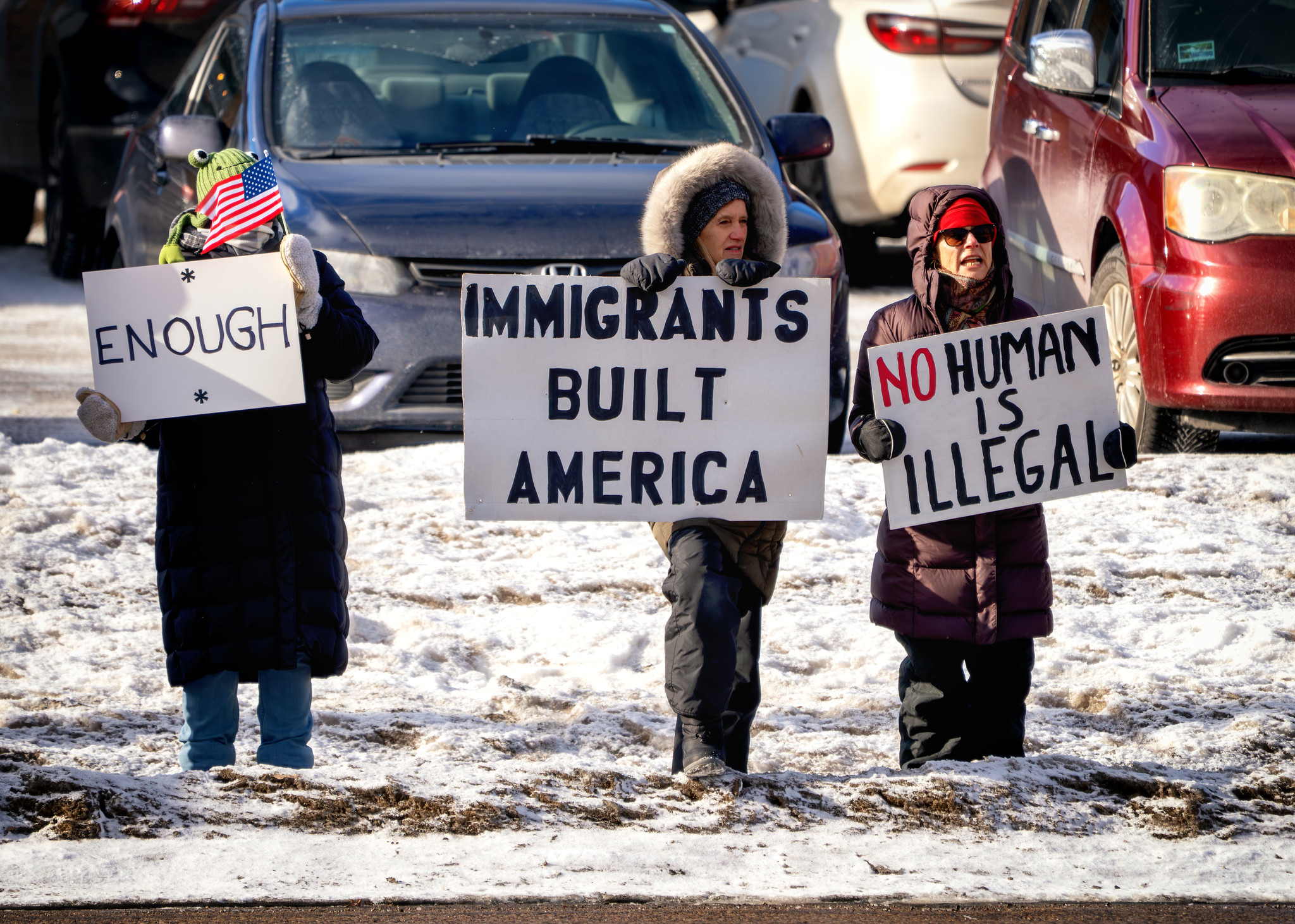
    An Immigration and Customs Enforcement officer fatally shot a man in Maine during a Biddeford operation, and relatives and advocates say the man had come to Maine seeking a better life for his young daughter. The killing matters now because lawmakers say he may not have been the person ICE was looking for.

    The circumstances and aftermath of the shooting now center on three unresolved questions: why agents tried to stop the car, whether deadly force was justified, and how federal officials will explain a father’s death to a shaken Maine community.

    A stop turned deadly

    The man killed has been identified by a family representative and the Colombian Embassy in Washington as Johan Sebastián Durán Guerrero, a 25-year-old Colombian national, according to CBS News. Early accounts of his age and first name varied, a sign of how quickly incomplete information spread after the shooting.

    The shooting happened Monday morning in Biddeford, Maine. The Department of Homeland Security said ICE agents were conducting targeted surveillance at the last known address of an immigrant with a final order of removal when they encountered Durán Guerrero.

    DHS said he attempted to flee the scene when agents tried to stop him at about 7 a.m. Eastern. The department said an officer fired out of fear for public safety. Durán Guerrero later died from his injuries.

    That official account is now under scrutiny because Maine officials say key facts remain unproven in public, including whether the car posed an immediate threat and whether agents had the right person in front of them.

    Lawmakers question the target

    Independent Sen. Angus King of Maine said on CNN that the person killed was not the person agents were seeking, citing a conversation with Homeland Security Secretary Markwayne Mullin. King said he was first told Durán Guerrero was the subject of the warrant, then later received updated information that he was not.

    Democratic Rep. Chellie Pingree also told CBS News she had heard from reliable sources, though not yet confirmed by DHS, that agents may have shot the wrong person. She called the shooting disturbing and said she was pressing the department for more information.

    Those statements sharpen the stakes. A fatal shooting during an immigration operation is serious in any circumstance. If the man killed was not the intended target of the operation, the demand for a full public accounting becomes harder to dismiss as routine oversight.

    DHS has not publicly released all the evidence behind its account. King has called for an “unvarnished, transparent investigation” and said the public has not yet seen evidence proving the officer feared for their safety or the safety of others.

    The father behind the case

    Durán Guerrero’s death is also being remembered as the loss of a young father. A neighbor told reporters he was married and had a daughter around 2 or 3 years old. Advocates described him as someone trying to build a stable life for his family.

    Ruben Torres of the Maine Immigrants’ Rights Coalition told CBS News that Durán Guerrero was “a father” and “a person who was trying his best to create a life and provide for his family.” The group said there was confusion, pain and anger in the community after the shooting.

    The Maine Immigrants’ Rights Coalition also said Durán Guerrero was authorized to work in the United States and had been issued a Social Security number. DHS, meanwhile, described him as being in the country illegally, and King said at a news conference that Durán Guerrero had been ordered to leave the country.

    Those statements can coexist in complicated immigration cases, but they also show why officials will face pressure to explain precisely what Durán Guerrero’s status was, what agents knew at the time, and why he became the focus of the encounter.

    Video raises new questions

    Video obtained by CBS News reportedly showed a vehicle slowly circling several times before coming to a stop. At least two people then approached and appeared to pull someone from the driver’s seat onto the ground.

    A nearby business owner, Cory Poulin, told CBS News he believed the car may have been rolling because the driver had already been shot. That is a witness interpretation, not an official finding, but it underscores why investigators will need to reconstruct the timing second by second.

    The Portland Press Herald published an image of a Kia sedan behind police tape with four bullet holes in the windshield on the driver’s side, according to CBS News. Another video angle reportedly showed people approaching the moving car, with one person appearing to grab the driver’s side door handle before the clip ended.

    The central question is not simply whether the car moved. It is whether its movement created an imminent threat that justified deadly force, and whether officers had alternatives in the moments before the shot was fired.

    No body cameras, multiple probes

    One fact may make the investigation harder: King said the agents involved were not wearing body cameras. Without officer-worn footage, investigators will likely rely on surveillance video, witness statements, forensic evidence, radio traffic and the accounts of the ICE personnel involved.

    Sen. Susan Collins, a Maine Republican, said she was told the Department of Homeland Security’s inspector general would lead an investigation, with help from the FBI. Maine’s attorney general’s office is also investigating the shooting.

    The attorney general’s office said initial statements collected by investigators indicated Durán Guerrero attempted to flee in a vehicle in the direction of an ICE Enforcement and Removal Operations officer. The officer who opened fire will be placed on leave, according to that office.

    That process matters because the case now sits at the intersection of federal immigration enforcement, state oversight and public trust. Each agency may examine a different piece of the same event: whether policy was followed, whether state law was violated, and whether the public received an accurate explanation.

    What remains unanswered

    The Colombian Embassy said it regretted the death of a Colombian national in Biddeford and was providing consular assistance to the family. It also said it had requested information and clarification from DHS about the circumstances of the death.

    For Durán Guerrero’s family, the most urgent questions are personal: how a morning immigration operation ended with a father dead, and what his daughter will one day be told about it. For Maine’s elected officials, the questions are institutional: who authorized the operation, what agents believed, and why the public account shifted.

    The case has already become part of a broader debate over ICE tactics and the risks of aggressive enforcement operations in residential communities. Supporters of immigration enforcement will argue officers must be able to respond quickly when they perceive a threat. Critics will point to the alleged mistaken target, the lack of body cameras and the death of a young father as evidence that the system needs tighter guardrails.

    The next meaningful answers are likely to come from the inspector general, the FBI and Maine investigators. Until then, the official explanation remains incomplete, and the loss at the center of the case is painfully clear: a young daughter in Maine no longer has her father.

  • Idaho’s New School Rules Put Parents and Teachers on Alert

    Idaho’s New School Rules Put Parents and Teachers on Alert

    The biggest impact may not be one dramatic change, but the way districts turn new state laws into handbooks, classroom guidance and parent notices.

    Idaho’s new education laws and what they mean for families and teachers are no longer just a Statehouse debate. The official Idaho Legislature 2026 legislation index lists education-related measures marked as law, including H0515 on harassment, intimidation and bullying and H0516a on K-12 instruction and sexual orientation, putting the focus on how the laws affect Idaho schools, parents, and teachers now.

    The practical impact reaches into school choice options, classroom rules, parent communication, student discipline and teacher compliance. Families should expect more notices and policy updates; teachers should expect new boundaries to be translated into lesson planning, documentation and district guidance.

    The laws now meet real life

    Education laws often sound abstract until they land in a school handbook. That is the stage Idaho is entering now: districts, principals and teachers must turn state-level language into rules families can understand and staff can actually follow.

    The Idaho Legislature’s 2026 legislation page is an important starting point because it shows bill status and identifies measures marked “LAW.” It also cautions that bill status is updated through legislative journal processes and that official actions are maintained in final journals, a reminder that families and educators should rely on final district and state notices before making decisions.

    For parents, the immediate question is simple: will anything change for my child this school year? For teachers, the question is more operational: what can I say, teach, assign, document or enforce under the new rules?

    Bullying rules get sharper focus

    One listed measure, H0515, is identified by the Idaho Legislature as dealing with “harassment, intimidation, bullying” and marked as law. Even without reading that phrase as a full policy manual, the signal is clear: student conduct and school response procedures are under renewed legal attention.

    For families, that may mean clearer expectations for how schools receive complaints, investigate incidents and communicate outcomes. Parents may see revised handbook language, updated reporting forms or more formal steps when bullying allegations are made.

    For teachers, these laws can change the daily rhythm of supervision. A hallway incident, classroom remark, group chat conflict or recess dispute may require more careful documentation than before. The challenge is that teachers are often the first adults to notice a pattern, but they are not always the ones who control the final investigation.

    The tension is real. Stronger anti-bullying rules can reassure families who believe schools have moved too slowly. They can also create pressure on educators if districts do not provide training, time and clear definitions.

    Classroom content faces new guardrails

    Another listed measure, H0516a, is described in the Idaho Legislature index as “K-12 instr, sexual orientation” and marked as law. That places classroom instruction, curriculum choices and teacher communication at the center of the new education-law conversation.

    For parents, the likely practical effect is more attention to what is taught, when it is taught and how schools notify families. Some families will view that as overdue transparency. Others may worry that broad restrictions could limit teachers’ ability to respond naturally when students raise questions.

    For teachers, the impact depends heavily on district interpretation. A state law may set the boundary, but districts typically decide how to train staff, which materials are approved and what teachers should do when a classroom discussion moves beyond the lesson plan.

    That is where confusion can grow. Teachers need rules that are specific enough to follow without turning every classroom exchange into a legal risk calculation. Families need rules that are clear enough to know what rights they have without having to decode legislative language.

    School choice becomes more practical

    The school-choice piece is where families should be especially careful not to rely on slogans. Idaho parents already navigate neighborhood public schools, charter schools, homeschooling, private schools, open-enrollment options and state-created financial programs. New education laws can affect those choices in different ways.

    A classroom-content law may influence whether a family feels comfortable in a particular district, but it does not automatically change enrollment access. A school-choice funding law can affect family budgets, but it may come with eligibility rules, deadlines, spending limits or documentation requirements.

    The real-world advice for Idaho parents is to separate three questions:

    • Where can my child enroll? That depends on district, charter, private-school, homeschool and transfer rules.
    • What costs can be covered? That depends on the specific program and whether expenses qualify.
    • What rules follow the child? Public, charter, private and homeschool settings may face different obligations.

    Teachers also feel school choice changes, even when the law is aimed at parents. Enrollment shifts can affect class sizes, staffing, program budgets and the mix of students arriving midyear.

    Teachers need clarity, not guesswork

    For educators, the biggest burden may be uncertainty. Laws rarely arrive with every classroom scenario answered. A teacher still has to decide what to do when a student reports bullying, when a parent objects to a lesson, when a student asks a sensitive question or when a district policy seems vague.

    That makes district training crucial. A one-page memo is not enough if the law changes reporting duties, curriculum boundaries or parent-notification requirements. Teachers need examples, approved language and a clear chain of command.

    They also need protection from inconsistent enforcement. If one school interprets a rule narrowly and another applies it broadly, families get mixed messages and teachers get exposed to avoidable conflict.

    Idaho districts will likely become the real translators of these laws. Parents may hear “the state changed the rule,” but the daily experience will come through principals, school boards, counselors and classroom teachers.

    Parents should watch the paperwork

    Families do not need to become legal experts, but they should pay attention to the documents schools send home. Updated student handbooks, opt-in or opt-out forms, complaint procedures, enrollment deadlines and tax-credit or scholarship guidance can carry the practical details that headlines leave out.

    Parents should also check whether a rule applies statewide, districtwide or only to a particular program. That matters because Idaho’s education system includes traditional districts, charters, private schools and home education arrangements that may not all operate under the same requirements.

    The smartest move is to keep written records. If a family files a bullying complaint, requests curriculum information, applies for a school-choice benefit or asks about enrollment, documentation can prevent confusion later.

    The same goes for teachers. Written guidance from administrators is safer than hallway interpretation, especially when the law touches sensitive topics or student safety.

    What remains unsettled

    The unanswered question is not whether Idaho’s new education laws matter. They do. The question is how evenly they will be implemented across Idaho schools and how quickly families and teachers will get usable guidance.

    Supporters of tighter education laws often argue that parents deserve more say, students deserve safer schools and teachers deserve clear expectations. Critics often worry that new rules can add paperwork, chill classroom discussion or pull educators into political disputes.

    Both concerns can be true at once. A law can create needed clarity in one area while creating gray zones in another. That is why the next phase matters more than the signing ceremony: district policies, board meetings, staff training and parent notices will determine what changes day to day.

    For now, the takeaway is straightforward. Idaho families should read every school update closely, especially on bullying procedures, classroom instruction and school-choice paperwork. Teachers should ask for written guidance before guessing. The laws are on the books; the real test is how they work when the first bell rings.