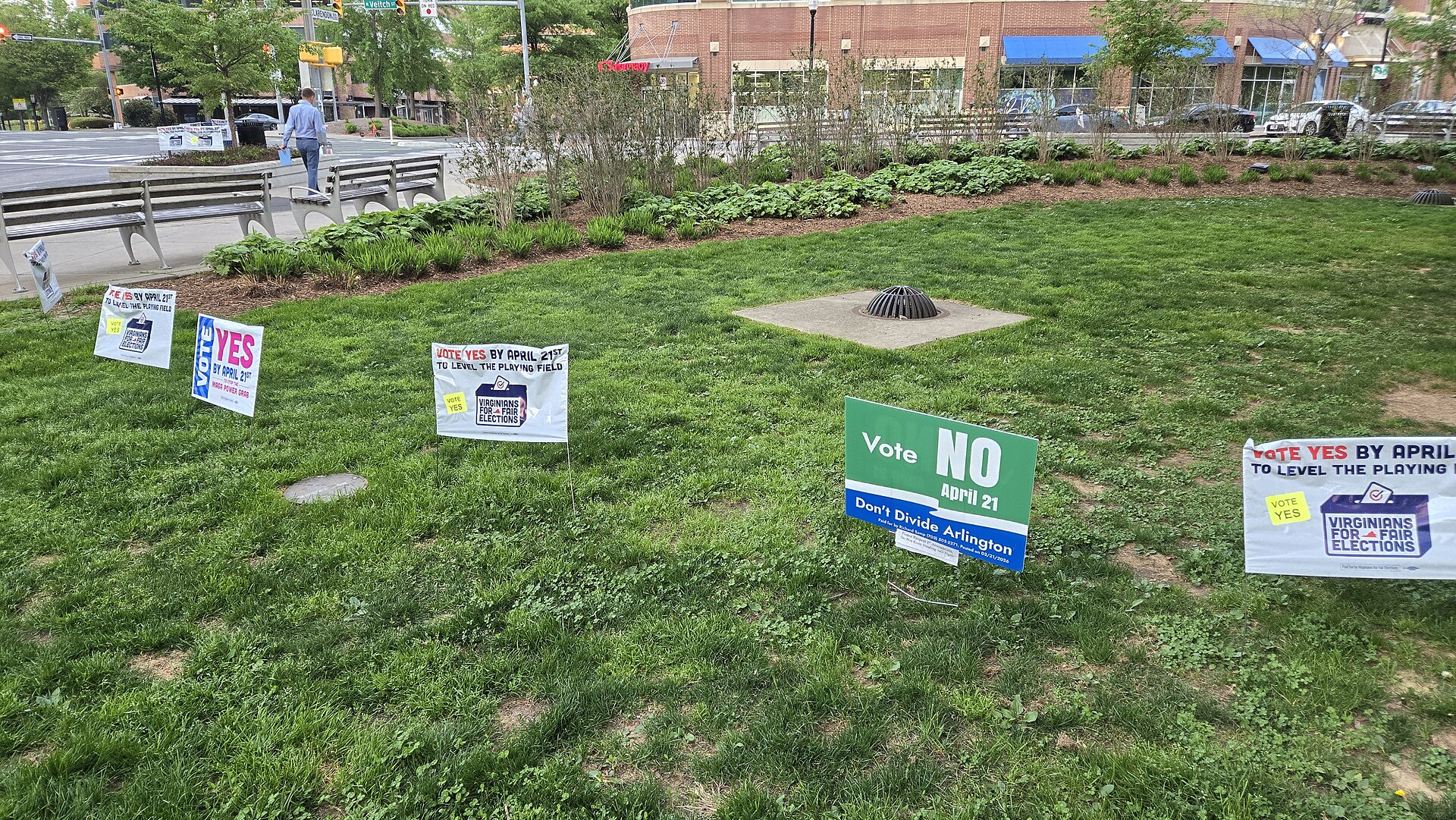
The fight against redistricting is no longer only about which party gains a congressional seat. It is also about whether new maps preserve Black voters’ ability to elect candidates who reflect their communities’ interests.
Black voters and redistricting are at the center of a new fight over political power. The fight against redistricting practices that can weaken Black voters’ political power is focused on a basic question: when district lines change, do Black voters retain meaningful electoral representation or become dispersed across districts where their influence is reduced?
The stakes are rising as at least nine states are expected to use new maps this fall, according to reporting by Politico. The debate is not simply about partisan advantage. It is about whether the push to create more winnable seats can leave Black communities with fewer realistic opportunities to elect their preferred candidates.
Lines on a map carry power
Redistricting is the process of drawing political boundaries for congressional, state legislative and local districts. Maps can shape which neighborhoods vote together, which communities have a shared political voice and how responsive elected officials are likely to be.
Every map makes choices. A community can be kept together in one district, divided among several districts or joined with faraway areas that have different interests. Those choices can affect representation even when nobody’s access to the ballot box changes.
For Black voters, the concern is often dilution: a community large enough to influence an election may be split among multiple districts, leaving it too small to make a difference in any of them. That is one reason redistricting is frequently discussed alongside voter suppression, though they are not identical. Suppression concerns barriers to voting; dilution concerns whether a vote can translate into representation.
How voting power gets diluted
Two mapmaking tactics are commonly part of the argument. “Cracking” divides a politically cohesive community across several districts. “Packing” places many of those voters in one district, potentially creating a safe seat while reducing their influence in neighboring districts.
Neither label automatically settles whether a map is illegal or unfair. Population patterns, local political geography and the shape of existing communities all matter. But advocates for voting rights argue that a map should not use those realities as a pretext for stripping racial minority communities of effective representation.
Majority-minority districts, where racial or ethnic minority voters make up a majority of eligible voters or the voting-age population, have often been a key tool for protecting representation. Yet the question is more complicated than a single percentage. Turnout, coalition voting, candidate preference and the surrounding map can all determine whether a district actually gives voters a meaningful chance to elect their preferred candidate.
A partisan strategy with a racial cost
The newest tension is not limited to maps drawn by one party. Politico reported on a Public First survey that asked Democratic and Harris voters to weigh an uncomfortable trade-off: preserve majority-minority districts or draw more seats likely to be won by Democrats.
Among respondents who identified as Democrats or voted for Kamala Harris in 2024, 46% said it was more important to draw more Democratic seats when framed as a response to Republican mapmaking, while 41% said majority-minority districts should remain intact. The results point to a real strategic divide rather than a settled party consensus.
Pluralities of Black, Hispanic and Asian American respondents in that group also said gaining more Democratic seats was more important, Politico reported. But the survey’s smaller subgroup samples mean those findings require caution. They do not establish a single view among voters of color, much less a universal answer to how maps should be drawn.
The political appeal of aggressive mapmaking is easy to see. If one side redraws lines to build an advantage, the other side may feel pressure to answer in kind. The risk, voting-rights advocates say, is that Black representation becomes treated as a bargaining chip in a broader partisan contest.
Representation is not a simple trade-off
Some Democratic leaders reject the idea that winning more seats and protecting Black voting power are incompatible. John Bisognano, president of the National Democratic Redistricting Committee, told Politico that the two aims are not necessarily a binary choice.
California Assemblymember Mia Bonta, a Black Latina Democrat, made a similar argument, saying Black voters must remain at the center of the party’s approach to maps. House Minority Leader Hakeem Jeffries told Politico that maps in California and Virginia offered a model that would not dilute Black representation.
That is the core disagreement: whether mapmakers can produce more favorable partisan outcomes while maintaining districts that protect minority voters’ ability to elect candidates of choice. In some states, advocates may see room for both. In others, the available political geography may make the conflict sharper.
Critics of race-conscious districting raise another concern. They argue that drawing lines primarily around race can itself become constitutionally suspect and that voters should not be assumed to share political preferences because of their race. Supporters respond that ignoring race entirely can conceal the very patterns that have historically weakened minority voting strength.
The Voting Rights Act remains central
Challenges to maps often turn on Section 2 of the Voting Rights Act, which bars voting practices that result in racial minorities having less opportunity than other voters to participate in the political process and elect representatives of their choice.
Courts do not invalidate a map merely because a district has fewer Black voters than before. Plaintiffs generally must show more: that the minority community is sufficiently large and geographically compact to form a district, that it votes cohesively and that majority voters usually vote as a bloc in a way that defeats the minority community’s preferred candidates. The full legal analysis also considers the local history and political context.
That framework makes redistricting fights fact-heavy and slow. Maps can be litigated for months or years, sometimes while elections proceed under disputed boundaries. A court ruling can change a state’s political balance, but it can also determine whether a community believes its vote has a real path to representation.
What the next maps will reveal
With multiple states preparing to use new maps, the coming test will be practical rather than rhetorical. Do proposed districts keep communities with shared interests intact? Do they preserve Black voters’ opportunity to elect preferred candidates? And do claimed partisan gains depend on dispersing voters whose representation has already been fragile?
There is no single district design that guarantees fair representation everywhere. The relevant populations, election patterns and legal questions differ state by state. Still, the central principle is clear: a redistricting plan cannot be judged only by how efficiently it creates seats for one party.
For Black voters, the fight against redistricting practices that dilute voting power is ultimately about more than line-drawing. It is about whether electoral representation remains meaningful after the maps are redrawn—and whether parties seeking an advantage are willing to protect that principle when it is politically inconvenient.
Leave a Reply