The agency’s confirmation establishes that the video has reached U.S. protective intelligence officials, but it does not disclose an assessment of its credibility or any security measures. The episode comes amid heightened U.S.-Iran tensions and renewed concern about threats aimed at the Trump family.
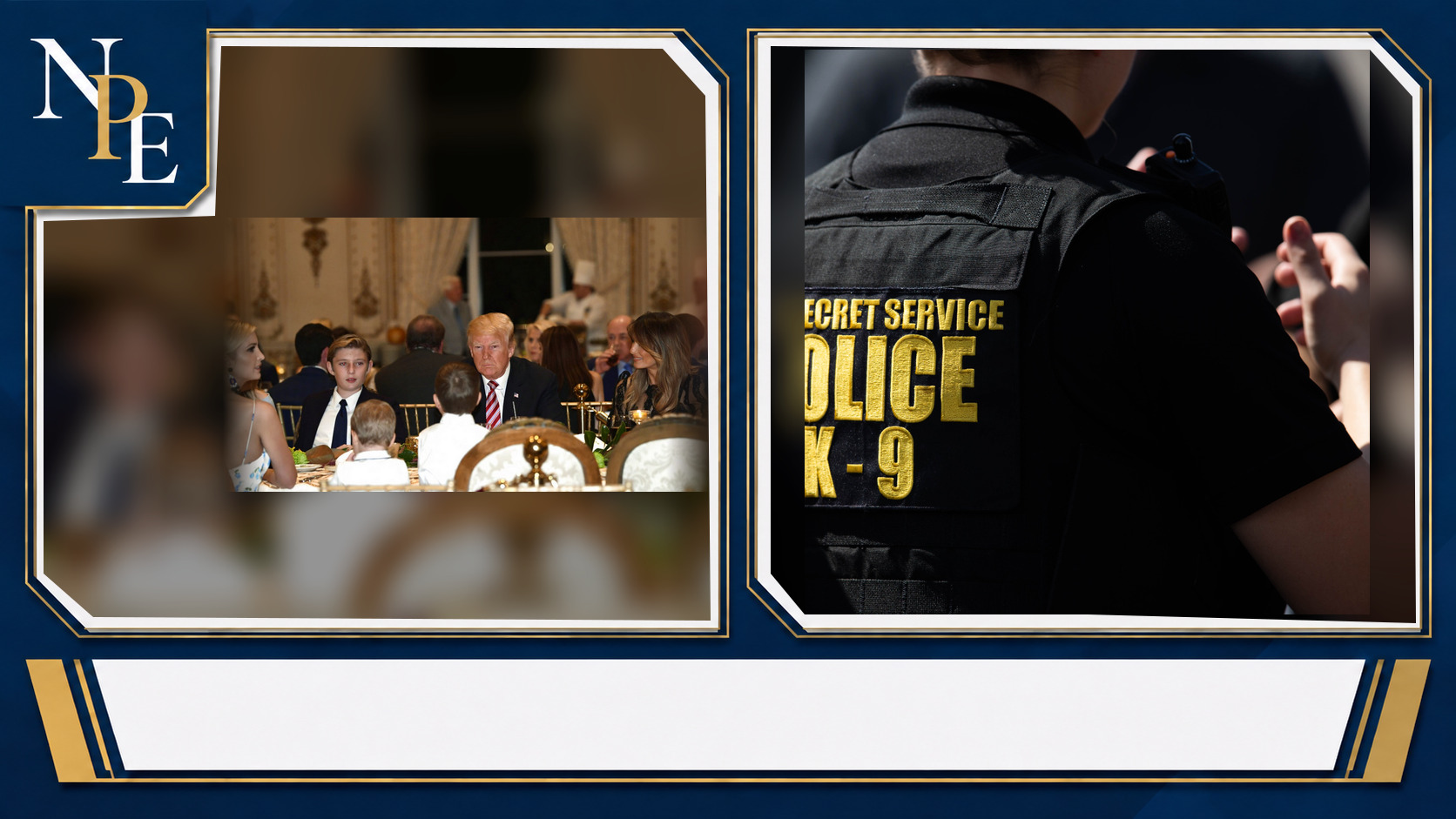
The U.S. Secret Service is aware of an Iranian state media video that appears to threaten the life of Barron Trump, President Donald Trump’s youngest son, and is reviewing it as potential threat material. The agency confirmed awareness of the broadcast and said it investigates anything that can be perceived as a threat toward its protectees.
The video, reportedly aired by media linked to Iran’s Islamic Revolutionary Guard Corps, allegedly references a $10 million bounty and presents Barron Trump as a target. The Secret Service has not said whether it considers the threat credible or whether the video has led to changes in Barron Trump’s protection. The agency also declined to discuss protective-intelligence matters, citing operational security. The episode comes amid heightened tensions between the United States and Iran and renewed threats directed at members of the Trump family.
What the Secret Service confirmed
Secret Service spokesman Nate Herring said the agency was aware of the video from Iranian state media. In a statement reported by the Associated Press, Herring said the agency investigates anything that could be perceived as a threat toward people under its protection.
That is a deliberately limited statement. The agency did not publicly describe the video as a credible or imminent threat, identify suspects, discuss its investigative steps or say whether protection around Barron Trump had changed.
Herring said the agency does not discuss matters of protective intelligence because of operational-security concerns. That restraint is standard in cases involving people protected by the Secret Service: publicly detailing travel plans, vulnerabilities, staffing or response measures could create additional risk.
The reported video and bounty claim
The Washington Post reported that the footage was released by media linked to Iran’s Islamic Revolutionary Guard Corps and claimed a $10 million bounty had been placed on Barron Trump. The Post described the video as depicting a person resembling him and referring to possible places he could be found.
Those reported elements are significant because they move beyond generalized hostile rhetoric toward material that names an individual and appears to encourage violence. Still, a public video alone does not establish that its producers had the means, intent or operational ability to carry out an attack.
That distinction is central to how the Secret Service approaches threats. Protective intelligence teams must take threatening communications seriously without treating every message, image or propaganda product as proof of an immediate plot.
Why public confirmation carries weight
The Secret Service’s statement does not reveal much about the investigation, but it confirms that the material is on the agency’s radar. For a protected person, that can trigger assessment of the source, distribution, audience, possible links to real-world actors and whether the content is part of a broader pattern.
Federal protective work is often less visible than criminal investigations. It can include reviewing digital material, coordinating with intelligence and law-enforcement partners, assessing travel and public-event risks, and considering whether a threat needs to be referred for further action.
Officials also have to distinguish between state-linked messaging, online intimidation and actionable planning. The public may see those categories as similar because each can be alarming. Investigators look for evidence that can show whether a threat has moved from rhetoric to capability and preparation.
Iran tensions shape the backdrop
The episode arrives during a period of severe hostility between Washington and Tehran. The Associated Press reported that Iranian media had repeatedly circulated threatening content directed at Donald Trump and his family after the U.S. assassination of Iran’s Ayatollah Ali Khamenei at the beginning of a war in Iran launched by Trump alongside Israel.
Threat concerns involving Iran did not begin with this video. The Washington Post noted that U.S. officials have long been concerned about Iranian plots against American officials, with fears intensifying after U.S. actions against Iranian military and political leaders, including the 2020 strike that killed Gen. Qasem Soleimani.
That background does not answer the most immediate questions about this particular video. But it explains why a public threat directed at the president’s son receives attention from security agencies even if officials do not disclose their findings.
What remains unknown about risk
There has been no public account of who created the video, whether Iranian government authorities directed it, how widely it was distributed or whether investigators have identified any person attempting to act on its message. The available reporting also does not establish whether the claimed $10 million bounty is real, funded or connected to a specific organization.
The White House did not immediately respond to a request for comment, according to the Washington Post. Barron Trump, who has generally maintained a lower public profile than many members of his family, has not publicly addressed the video.
For now, the clearest verified point is narrow but important: the Secret Service says it knows about the material and is handling it through its protective-intelligence process. The absence of public detail should not be read either as proof of an imminent danger or as proof that officials consider the issue insignificant.
A reminder about threat reporting
Episodes like this also show why public discussion of threats requires care. Repeating graphic language, sharing threatening footage or circulating alleged location details can magnify material that investigators are trying to assess and can expose a target to further harassment.
The useful question is not whether a disturbing video deserves attention; a threat toward a protected person plainly does. It is whether public claims can be separated from verified facts. In this case, officials have confirmed awareness, while the assessment of danger and the protective response remain confidential.
That is likely to remain the public boundary unless law enforcement announces charges, identifies a specific plot or concludes that additional warning is necessary.
Leave a Reply