The filing could close a case that became a symbol of the clash between immigration enforcement, labor organizing and protest rights. It also leaves a contested record over what counts as peaceful protest near federal operations.
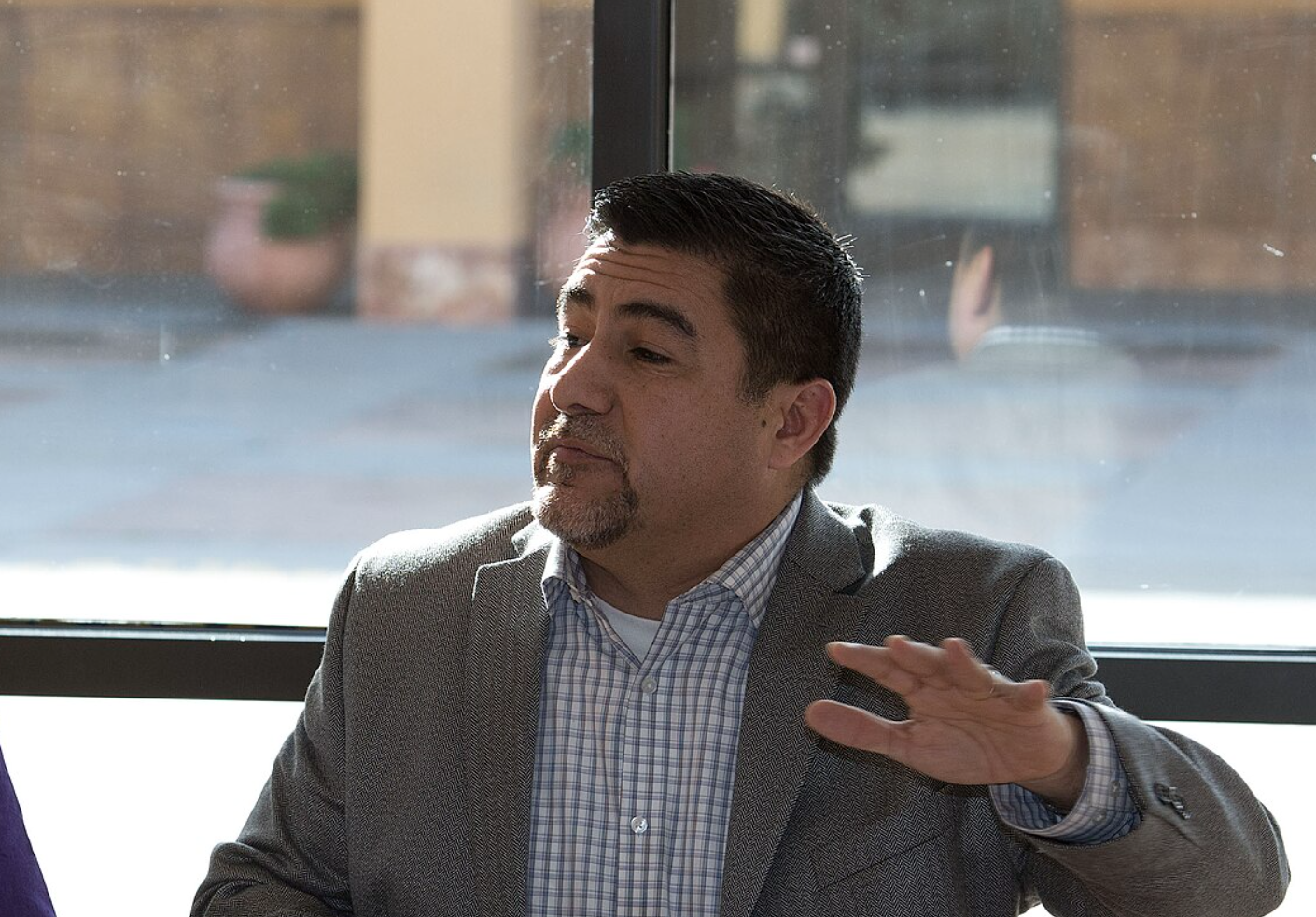
Prosecutors are moving to drop a criminal charge against California labor leader David Huerta, who was arrested during an immigration protest in California. The U.S. attorney’s office in Los Angeles filed a motion Monday to dismiss the Justice Department case against Huerta, president of Service Employees International Union California, after more than a year of pretrial release compliance.
The move matters because it could end a prosecution that became a flashpoint in Los Angeles over immigration enforcement, protest rights and federal power. But the proposed dismissal does not erase the competing accounts of what happened outside the immigration operation.
A conditional exit from court
According to the Associated Press, federal prosecutors said the criminal case against Huerta is expected to be fully dismissed by the end of August if he continues to comply with the terms of his pretrial release.
That makes the filing more than a routine court update. It is a significant retreat from a case that began as a felony obstruction prosecution and was later reduced to a misdemeanor.
The U.S. attorney’s office in Los Angeles framed the move as part of an agreement. Prosecutors said Huerta had complied with bond conditions for more than a year and that the government was prepared to dismiss the case if that continued.
Huerta’s side cast the development very differently. In a statement reported by AP, he said there was never a real case and described the prosecution as an attempt to punish and silence him for exercising constitutional rights.
Why Huerta was arrested
Huerta was arrested in June 2025 while protesting outside a Los Angeles business where federal agents were investigating suspected immigration violations. The episode came during a broader immigration crackdown that sparked widespread protests in the city.
Authorities alleged that Huerta sat down in front of a vehicular gate and encouraged others to move in circles in a way that could prevent law enforcement from entering or leaving. They also alleged he pushed back after an officer told him to leave and put hands on him to move him out of the path of a vehicle.
A letter describing the terms of Huerta’s diversion agreement included stipulated facts, according to AP. It said Huerta positioned himself in the driveway outside the front gate to oppose the policies and tactics of the enforcement activity he observed, encouraged others to do the same and that at least one federal agent credibly believed he could not enter through the front gate.
Huerta has said he was tackled, pepper-sprayed and detained while exercising his right to protest. That dispute is the core tension of the case: prosecutors say the issue was interference with a search warrant, while Huerta and his supporters say the prosecution targeted dissent.
Two sharply different readings
The Justice Department’s position has not been that peaceful protest alone led to Huerta’s arrest. The U.S. attorney’s office said law enforcement was justified and emphasized that Huerta had been charged with interfering with a judicial search warrant.
That matters legally and politically. Federal officers executing a warrant have authority to secure access and control the immediate scene. Protesters, meanwhile, retain constitutional protections, but those protections are not unlimited when conduct is alleged to obstruct officers.
Huerta’s lawyers, Abbe Lowell and Marilyn Bednarski, said the case had no legal basis and argued that the filing showed critics of the administration’s immigration actions would not be silenced.
The result is an unusual split-screen moment: prosecutors are stepping back from the charge while continuing to defend the principles behind the arrest. Huerta’s camp is treating the same filing as vindication.
Why the case drew attention
Huerta is not a low-profile defendant. He is president of Service Employees International Union California, a major labor organization representing more than 750,000 workers, including janitors, security officers and other service workers.
After his arrest, union leaders and immigrant-rights advocates rallied in cities across the country. Huerta became one of the most visible figures in the backlash to the Trump administration’s immigration crackdown in California.
Democratic officials also pressed the federal government for answers. Senate Democratic Leader Chuck Schumer and California’s Democratic senators questioned the arrest, and Sen. Adam Schiff attended Huerta’s bond hearing, according to AP.
For labor groups, the case was about more than one charge. It touched the ability of unions and community organizations to show up at immigration enforcement scenes without facing prosecution. For federal authorities, it raised the countervailing issue of whether protest activity can cross into obstruction when officers are executing a warrant.
A broader protest-case problem
The dismissal move also fits a wider pattern noted by AP: the Justice Department has faced setbacks in prosecutions involving people accused of assaulting or hindering federal officers during protests against the Trump administration’s immigration enforcement policies.
Those cases can be difficult because they often turn on crowded, chaotic scenes where protest, observation, physical movement and law enforcement orders overlap in real time. Video, officer testimony and witness accounts may all exist, yet still leave room for disagreement over intent and necessity.
That is why the Huerta filing is politically potent even if it is procedurally narrow. It gives each side a piece of the argument it wants. Prosecutors can say the conditions of an agreement were met; Huerta’s supporters can say the government backed away after a year of pressure.
It also shows the risk of announcing high-profile protest prosecutions aggressively, then later narrowing or abandoning them. The original felony charge carried a message. So does the move to dismiss it.
What remains unsettled
The immediate next step is straightforward: if Huerta continues to comply with his pretrial release terms, prosecutors expect the case to be fully dismissed by the end of August. Until then, the dismissal is a pending legal off-ramp rather than a fully completed ending.
What remains less clear is whether the case will change how federal authorities handle arrests around immigration protests, especially when union leaders or elected officials are present. There is also no sign from the filing that the two sides agree on the larger constitutional meaning of the arrest.
For Huerta and his allies, the lesson is that protest against immigration enforcement must remain visible even when the government responds forcefully. For prosecutors, the line remains that protest is protected but interference with federal officers is not.
The practical takeaway is narrower but important: a case once promoted as a serious obstruction prosecution now appears headed for dismissal, conditioned on continued compliance. The legal charge may soon disappear, but the argument it exposed in Los Angeles is not going away.
Leave a Reply