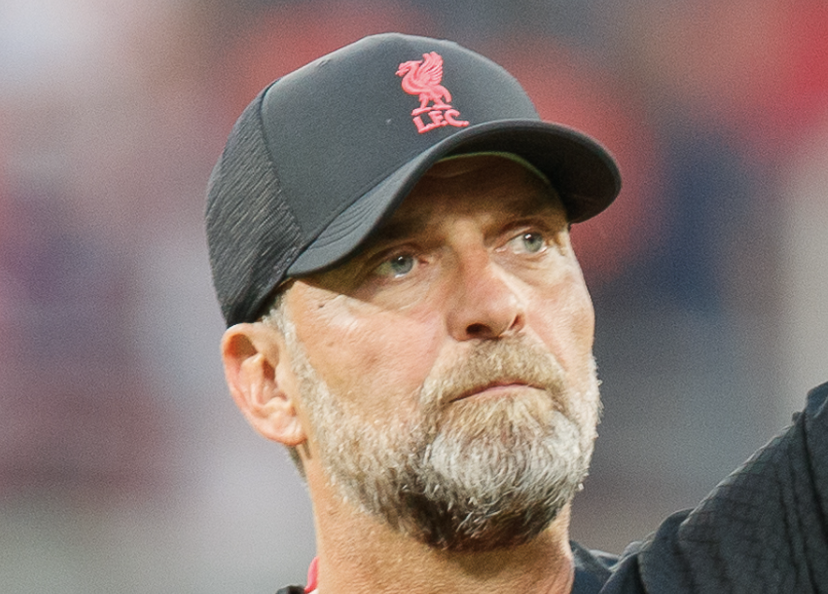
Klopp arrives with rare public goodwill and a four-year runway to the 2030 World Cup. Matthäus’s warning is that Germany’s problems are bigger than one famous manager can solve by personality alone.
Lothar Matthäus is warning that Jürgen Klopp faces a huge responsibility as Germany manager after Klopp has taken over as Germany’s national team coach. Presented by the DFB on Friday in Frankfurt, the 59-year-old former Liverpool, Borussia Dortmund and Mainz manager signed a four-year deal through the 2030 World Cup in Morocco, Portugal and Spain, replacing Julian Nagelsmann.
This article explains why the job is seen as difficult: Matthäus admires Klopp’s charisma, but says Klopp’s massive responsibility will still be judged by results. For Germany, this is not just a celebrity coaching hire. It is an attempt to restore a national team whose standards remain shaped by winning.
A dream hire with a catch
Klopp’s arrival gives the DFB the kind of manager few national federations can realistically attract. He brings a Champions League-winning reputation, a deep history in German football and a public image built on energy, communication and emotional connection.
That is why the appointment immediately feels bigger than a routine coaching change. Klopp is not an outsider learning German football from scratch. He built Mainz, revived Borussia Dortmund, conquered Europe with Liverpool and has long been viewed as an obvious candidate for the Germany job whenever the timing finally aligned.
Matthäus, Germany’s 1990 World Cup-winning captain, is not dismissing that appeal. His caution is sharper because it accepts Klopp’s strengths while pointing to the hard limit of the role: a national team coach cannot simply buy solutions, reshape a squad over 50 matches or hide behind a long rebuild.
According to comments reported by Bavarian Football Works, citing Matthäus speaking to Sky Sport via Bild, the former midfielder believes Klopp and his staff will have to examine the player pool carefully and make hard calls about who still belongs.
Matthäus sees the personnel problem
The most revealing part of Matthäus’s warning is not about Klopp’s résumé. It is about Germany’s players.
Matthäus suggested that some talents may have been overlooked in the past because previous coaches leaned on established names who no longer performed at the required level. That is a familiar tension for national teams: loyalty and hierarchy can stabilize a squad, but they can also slow renewal.
His point was not that Klopp lacks imagination. It was that even Klopp cannot create a new generation out of thin air. As Matthäus put it, Klopp can look around with his coaching team, widen the lens and try to form a side capable of taking Germany back to where the country expects it to be.
That is both encouragement and warning. Klopp can change tone, selection standards and dressing-room chemistry. He cannot change the passport rules, the available talent cycle or the fact that international managers get only limited training time before the matches that define them.
Charisma will not buy time forever
Klopp’s greatest asset may be the one Matthäus singled out: communication. Few managers have been better at creating belief around a project, and few are as comfortable absorbing public pressure without sounding defensive.
That could matter immediately. Germany has not merely needed tactical repair in recent years; it has needed conviction. The national team’s identity has felt uncertain through the post-Joachim Löw era, with Hansi Flick and then Julian Nagelsmann unable to restore the sense that Germany were inevitable contenders.
Still, Matthäus’s assessment is blunt. Klopp’s personality, charisma and past success will only protect him for so long. The Germany job is still a results business, and the national team will measure him by whether he wins the matches that matter.
One line from Matthäus captures the constraint: even Klopp is only allowed to play with eleven men who have a German passport. It is a reminder that this job is very different from Liverpool or Dortmund, where recruitment could be aligned with a tactical vision over several seasons.
Why the Nagelsmann replacement matters
Replacing Nagelsmann gives Klopp a clean headline, but not a clean slate. Germany’s recent disappointments have accumulated across multiple managers, which makes the new appointment feel less like a tweak and more like another attempt to reset the whole program.
The shadow stretches back to the 2018 World Cup in Russia, when Germany’s title defense collapsed early. Löw eventually left after Euro 2020, Flick could not stabilize the team, and Nagelsmann’s tenure ended after another disappointing World Cup performance, according to the source report.
That history changes how Klopp will be judged. A normal national-team coach might ask for patience while installing principles. Klopp will receive goodwill, but the expectations attached to his name may shorten the grace period rather than lengthen it.
There is also a psychological burden. Germany do not see themselves as a rebuilding outsider hoping for a quarterfinal run. The standard remains to compete for major trophies, and that standard follows Klopp into every squad announcement, friendly, Nations League match and tournament qualifier.
The first tests arrive this fall
Klopp’s early competitive runway is expected to include UEFA Nations League matches against the Netherlands, Greece and Serbia in the fall. Those fixtures will not decide the 2030 World Cup, but they will shape the first public reading of his Germany project.
They also arrive at a useful time. By then, European club seasons will be underway, giving Klopp and his staff current form to assess before choosing their first squads. That matters if he is serious about widening the player pool rather than defaulting to reputation.
The open questions are practical. Which senior players retain status? Which younger options get accelerated? Does Klopp import the high-intensity emotional style most associated with his club teams, or does he adapt to the shorter preparation windows of international football?
Those choices will reveal whether this is a genuine reset or a famous manager trying to squeeze more from a familiar core. Matthäus appears to believe Klopp has the tools to do the former, but he is warning that the margin for sentiment is narrow.
The real pressure is expectation
There are two fair ways to view Klopp’s appointment. The optimistic case is obvious: Germany have hired one of the defining managers of his generation, a coach with credibility across clubs, players, supporters and the DFB itself.
The cautious case is just as strong. International football is unforgiving, and Germany’s issues have survived several coaching changes. If the pipeline is uneven, if key positions lack elite depth or if veterans are declining, Klopp’s personality cannot solve everything.
That is why Matthäus’s warning lands. He is not arguing that Klopp is the wrong man. He is saying the job remains brutally hard even if he is the right one.
For Germany, the appointment raises the ceiling. For Klopp, it removes excuses. The next four years will test whether his communication, experience and judgment can turn a prestigious but unsettled national team back into a contender before the 2030 World Cup.
Leave a Reply