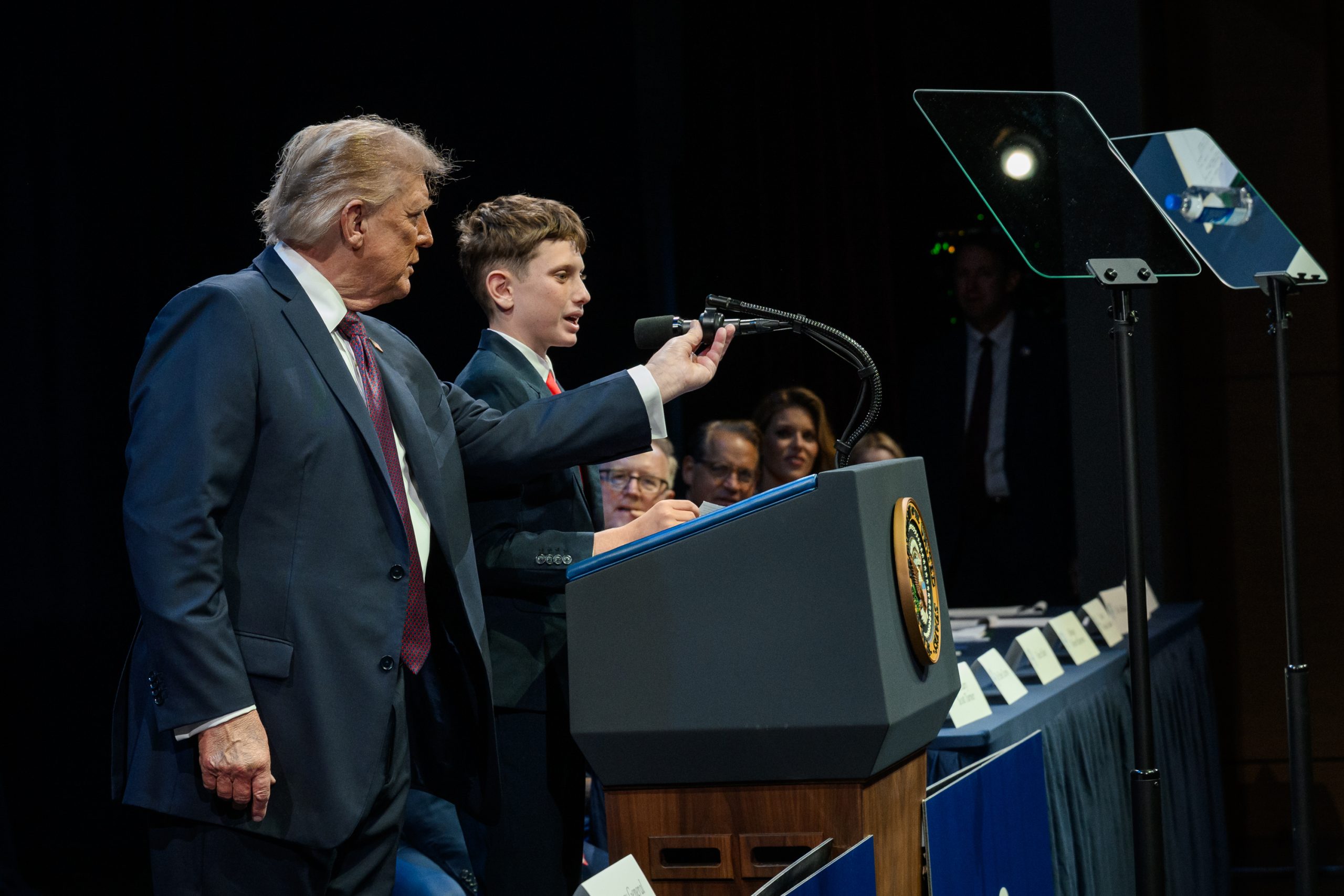
The address was not just a message to voters. It was a pressure campaign aimed at lawmakers weighing a controversial election bill with steep odds in the Senate.
Donald Trump delivered a primetime address to the nation from the White House, and what Trump said in the address quickly moved beyond a standard presidential update: President Trump used the national spotlight to defend his agenda, press Americans to lean on lawmakers and revive a voting bill facing a hard path in Congress.
The speech mattered less as a one-night broadcast than as a test of political muscle. The White House put the address in front of the country; the next question is whether Congress can, or will, act on the pressure Trump just applied.
A speech built for leverage
Primetime presidential addresses are usually reserved for moments the White House wants to elevate above the churn of daily politics. Trump’s address fit that pattern, but with a familiar twist: it was part policy pitch, part campaign-style appeal, and part call to action.
PBS NewsHour reported that Trump closed by urging Americans to pressure lawmakers to pass the SAVE America Act. NBC News reported that Trump also defended his economic policies, argued they were working for Americans and criticized Democrats.
That combination shows the speech’s real purpose. Trump was not simply explaining an agenda. He was trying to create outside pressure on Congress while reassuring supporters that his broader program is still on track.
The voting bill at the center
The SAVE America Act, according to PBS NewsHour’s summary, would require someone seeking to register to vote in federal elections to present documentary proof of United States citizenship in person to the proper election office.
It would also create a national voter ID standard, replacing the current patchwork in which states decide whether to require identification and what forms qualify.
Supporters of such measures typically argue they are needed to strengthen confidence in elections and create clearer rules. Trump’s decision to highlight the bill in a national address suggests he sees election administration as a potent political issue, not a side matter.
But turning a talking point into law is much harder than making it the emotional finish of a speech.
Democrats see a voting barrier
Democrats are uniformly opposed to the legislation, PBS NewsHour reported, saying it would effectively disenfranchise many Americans by forcing them to locate or pay for copies of citizenship documents.
That objection goes to the heart of the policy fight. The question is not only whether voters should prove citizenship; federal law already bars noncitizens from voting in federal elections. The dispute is over what proof should be required, when it should be shown and who might be left out by the process.
Voting rights advocates have long warned that document-heavy registration rules can hit older voters, lower-income voters, married people whose names have changed, rural residents, students and others who may not have easy access to paperwork. Backers counter that uniform standards are a reasonable safeguard.
Trump’s speech sharpened that divide by pushing the issue onto a national stage.
The Senate math is rough
The House, narrowly controlled by Republicans, is still looking at ways to move the bill, PBS NewsHour reported. Aaron D. Blacksberg, federal policy counsel for the Institute for Responsive Government, told PBS that one possible route under discussion would turn the legislation into a grant-based measure encouraging states to act rather than imposing mandatory standards.
That would be a major shift. A grant structure could make the bill easier for some lawmakers to support, but it would also raise questions about whether Trump’s preferred policy would be watered down before it ever reached a final vote.
The bigger obstacle is the Senate. PBS reported that Senate Republican leaders have consistently said the legislation lacks enough GOP support there to be enacted. The report also noted that supporters appear to be well short of the 60 votes needed to avoid a guaranteed filibuster.
Backers have looked at whether the bill could move through reconciliation, which can require only a simple majority. But that path is uncertain because it would need to fit budget rules, wait for a budget resolution and survive scrutiny from the Senate parliamentarian.
Trump also sold the economy
The address was not only about elections. NBC News reported that Trump used the speech to argue that his economic policies are delivering for Americans, even as he faced slumping approval ratings.
According to NBC, Trump rolled out what he described as a $1,776 “warrior dividend” for nearly 1.5 million military personnel. The figure and framing were designed to be memorable, and they gave the speech another audience beyond election-focused Republicans: service members, military families and voters watching their household finances.
That economic messaging matters because presidents often use national addresses to reset a public narrative. If voters are skeptical about prices, wages or economic direction, a primetime speech offers a chance to claim progress before opponents define the moment for him.
The risk for Trump is that a speech can raise expectations faster than policy can meet them. Voters may remember the promise more clearly than the legislative limits behind it.
The fight moves off camera
The most immediate effect of the address may be pressure on House Republicans. Sean Morales-Doyle, director of the voting rights and election center at the Brennan Center for Justice, told PBS that even though Senate prospects are dim, Trump’s pressure means “the House isn’t going to let it go.”
That is the key takeaway. Trump can use primetime to set the agenda, but Congress decides whether that agenda becomes law. The House can pass legislation by simple majority, but the Senate remains the higher hurdle, especially for a bill that Democrats oppose and some Republicans may not be eager to prioritize.
Several questions remain unresolved: whether House leaders can settle on a version that satisfies Trump and enough moderates, whether Senate Republicans will spend political capital on a bill with weak odds, and whether reconciliation can legally carry provisions aimed at election rules.
For now, Trump’s national address has done what it was built to do: put an issue in front of the country and force lawmakers to respond. Whether that produces a bill, a stalled fight or another campaign argument is the part the White House does not fully control.
Leave a Reply