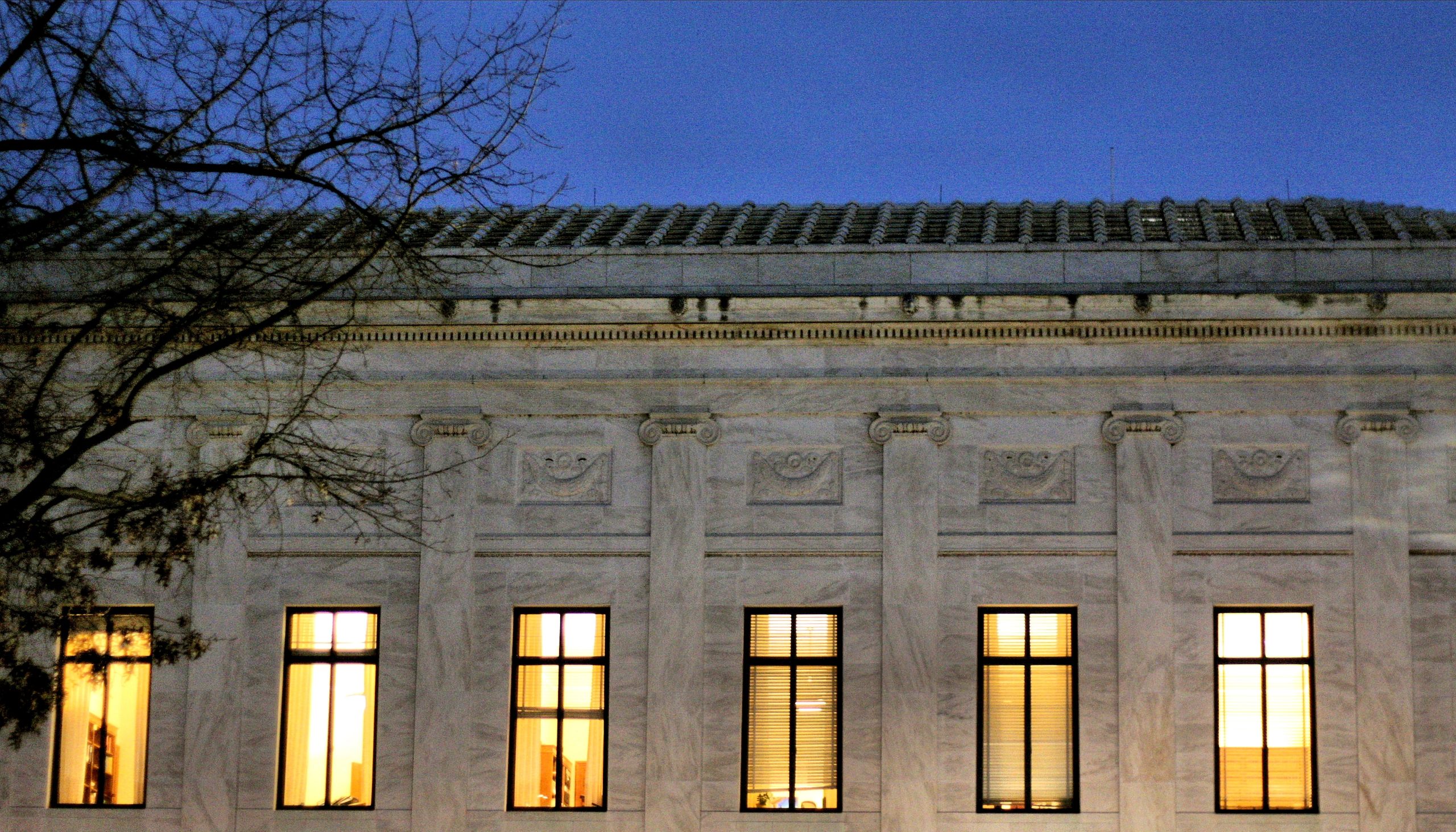
The dispute centers on Postal Service-related voting rules, mail-in ballots and the timing of Supreme Court action before the midterms. The key question is whether the court treats it as an ordinary emergency appeal or something with broader democratic stakes.
A legal expert predicts that an upcoming Supreme Court ruling could be a key moment for Donald Trump: former federal prosecutor Joyce Vance says Trump is said to be deeply afraid of the decision as the court prepares to act this week on a Trump administration appeal filed less than 100 days before the midterm elections.
The appeal concerns new postal voting rules involving the Postal Service, a national voter database and mail-in ballots. On Sunday, Vance argued in a Substack essay, as Raw Story reported, that the timing makes the dispute politically significant because control of voting procedures can shape access before Election Day.
Why the appeal landed hard
The immediate fight is legal. The larger fight is political. According to Raw Story’s account of Vance’s essay, the Trump administration asked the Supreme Court to stop a lower court from blocking its new postal voting rules.

Those rules are described in the reporting as involving whether the Postal Service can create a national voter database and whether mail-in ballots would be sent only to people on that list. That makes the case about more than paperwork. It touches who receives a ballot, how voters are identified and how much control the federal government can exert over election-related mail.
Vance’s warning is that this is not a routine procedural skirmish. She wrote that it is “going to be a key moment,” and argued that the very existence of the dispute reflects badly on the administration.
Her core point is blunt: less than 100 days before the midterm elections, a Supreme Court intervention over mail voting rules could influence the playing field before voters ever cast ballots.
The shadow docket raises stakes
Vance said the Supreme Court could rule this week from what is commonly called the shadow docket. That term refers to emergency orders and other decisions the court issues outside its full merits process, often without the same level of briefing, oral argument or signed majority opinion that accompanies landmark cases.
Emergency appeals are not automatically improper. Election disputes often move quickly because deadlines are real, ballots must be printed or mailed, and officials need clarity before voting begins.
But speed can also magnify consequences. A short order from the justices can reshape the practical rules on the ground before the public has a full explanation of the court’s reasoning.
That is why Vance’s alarm is aimed not only at the outcome, but at the process. If the court acts quickly, voters, state officials, postal administrators and campaigns may be left parsing a high-stakes order in real time.
Postal voting is the pressure point
Mail voting has become one of the most contested pieces of American election administration. For many voters, especially older Americans, disabled voters, military families, rural residents and people with rigid work schedules, mail ballots are not a convenience. They are the practical route to participation.
At the same time, disputes over mail ballots have become a recurring front in partisan election litigation. Questions about who gets a ballot, how lists are maintained, what safeguards are required and which officials control the process can quickly become fights over turnout.
The Postal Service sits in an unusual position in that debate. It is not an election agency, but it is essential to election logistics when ballots move through the mail.
That is why a dispute involving postal voting rules can have an effect far beyond Washington legal circles. If rules change close to an election, even small administrative shifts can create confusion for voters and election offices.
Vance frames it as power
Vance’s argument, as quoted by Raw Story, is not subtle. “Under the Constitution, the choice of elected officials belongs to the people,” she wrote. “Donald Trump is deathly afraid of what that means.”
She also argued that efforts to circumvent the vote are “inherently undemocratic” and should not be treated as just another court case. In her view, the executive order at issue is not business as usual but a maneuver that would shift power away from voters.
That is an interpretation, not a court finding. The Supreme Court has not yet issued the ruling at the center of Vance’s warning, and the available source material does not include the Trump administration’s full legal rationale.
Still, her criticism lands because timing matters in election law. Courts often say that late changes to voting rules can disrupt elections. Here, Vance is arguing the disruption is the point, or at least the risk that should concern the public.
What the court could clarify
The justices’ decision could answer several immediate questions. The first is whether the lower court’s action can remain in place while the legal fight continues. The second is whether the administration can implement its disputed postal voting rules on an emergency timeline.
The court may also signal how much deference it is willing to give the executive branch when election-related rules intersect with federal agencies. That matters because the Postal Service is national, but elections are administered through a complicated mix of federal, state and local authority.
A narrow order could resolve only the injunction question. A broader order could send a stronger message about how the court views the administration’s authority in the run-up to the midterms.
What remains unclear is whether the court will explain itself in detail. Shadow docket rulings can be terse, and a limited explanation would leave lower courts and election officials guessing about how far the ruling reaches.
The unresolved political question
Trump’s political interest is obvious: the midterms will test the strength of his governing coalition and determine the balance of power around his administration. Vance’s claim is that the appeal’s timing shows concern about losing power through the ordinary democratic process.
Trump allies would likely reject that framing and argue that election rules are a legitimate subject for litigation, especially when questions of administrative authority and ballot integrity are in play. Courts exist to settle those fights, and emergency review can be necessary when deadlines are close.
Those two views are difficult to reconcile because they start from different premises. One treats the case as a legal dispute over election mechanics. The other treats it as a warning sign about control over the vote itself.
The Supreme Court’s next move will not settle every political argument around mail voting. But it may determine the rules under which a consequential midterm season unfolds, and it will show whether the justices view this appeal as routine emergency litigation or as something with deeper democratic consequences.
Leave a Reply