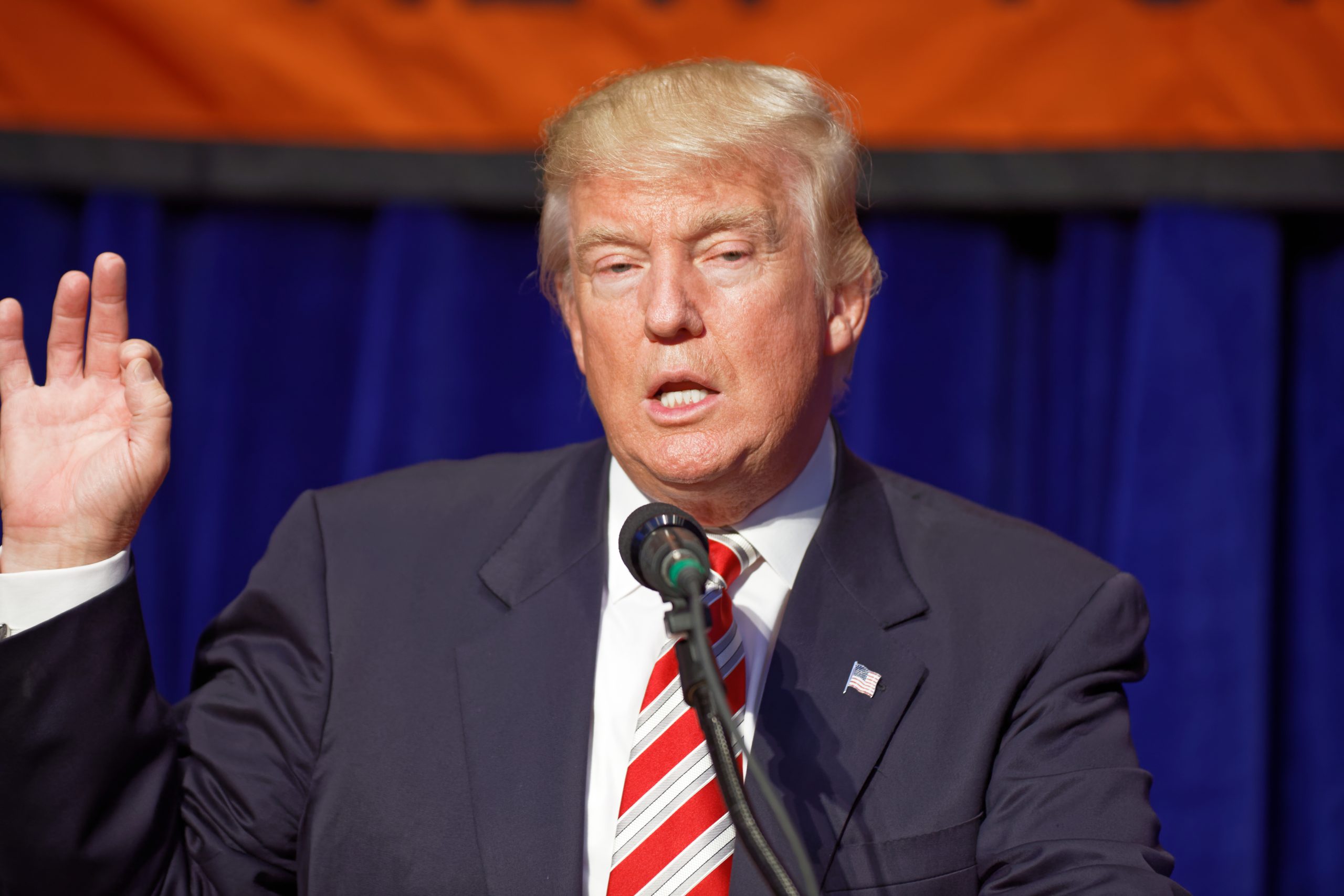
Corporate America has never been a single bloc on Trump. The latest reported cold shoulder matters because public distance from executives can shape money, messaging and confidence around a political comeback.
Donald Trump is losing credibility with major business leaders, and industry executives are giving him a cold shoulder, according to a Raw Story report surfaced by MSN. The report says Trump’s standing with major industry executives has weakened — a notable signal because corporate support, or even corporate silence, matters for a politician who has long sold himself as a business-aligned dealmaker.
The phrase attached to the report is blunt: Trump’s “credibility is shot.” The larger question is not whether every chief executive has turned on him. It is whether enough influential business leaders now see public alignment with Trump as riskier than useful.
Why the reported snub matters
For Trump, credibility with executives is not just a vanity metric. It affects fundraising networks, policy coalitions, public appearances, trade group pressure and the softer but powerful language of market confidence.

Major executives do not need to denounce a political figure to send a message. They can decline invitations, avoid photo opportunities, stay quiet on supportive statements, route political money elsewhere or ask industry groups to take the public lead.
That is why a “cold shoulder” from business leaders can matter even when it is hard to measure. Corporate America often speaks through absences: the missing CEO at a roundtable, the donor who skips a dinner, the trade association that praises a policy but avoids praising the politician behind it.
The Raw Story report’s available summary does not identify the executives or industries behind the assessment. That leaves an important caveat: the scale of the backlash is not yet clear. But the premise fits a long-running tension around Trump — many executives may like tax cuts or deregulation, while still worrying about volatility, reputational risk and political unpredictability.
Corporate America was never monolithic
The idea that business leaders moved in one direction on Trump has always been too simple. Some embraced him. Some negotiated with him. Some criticized him while quietly hoping for parts of his economic agenda.
A Financial Times record of chief executive reactions from Trump’s first presidency captured that split clearly across technology, finance, media and manufacturing. The FT described the period as “emotional days in the US c-suite,” with reactions ranging from fear and outrage to optimism.
In technology, several executives publicly objected to Trump’s immigration policies while also watching for business-friendly tax changes. Apple CEO Tim Cook said the immigration order was “not a policy we support,” while also saying he was optimistic about tax reform and that repatriation of overseas cash could be good for the country and Apple.
Amazon’s Jeff Bezos told staff that no nation was better at harnessing immigrants’ talents and that the United States should not weaken that advantage, according to the FT. At the same time, Amazon announced plans to create 100,000 U.S. jobs, a move the FT noted appeared responsive to Trump’s focus on domestic employment.
Credibility is a business asset
Executives often care less about political theater than predictability. A company can plan around a tax rate. It can model a regulation. It can lobby against a rule it dislikes. What is harder to price is abrupt escalation, contradictory messaging or a political alliance that turns into a consumer backlash.
That is where credibility becomes a business asset. If executives believe a political leader will keep commitments, understand trade-offs and maintain usable channels, they are more likely to engage. If they believe promises are unstable or personally costly, they may keep distance even when they agree on some policy goals.
Trump’s political brand has always included confrontation. Supporters see that as strength: a willingness to pressure institutions that, in their view, have ignored workers, borders, domestic industry or conservative voters. Some business figures have valued that pressure when it produced tax relief, lighter regulation or bargaining leverage.
Critics inside and outside corporate circles see a different risk. They argue that a politics built on public pressure campaigns can make companies targets rather than partners. For multinational businesses, that can complicate hiring, supply chains, consumer trust and relationships with employees who expect corporate leaders to speak on immigration, civil rights or democratic norms.
Silence can signal retreat
The reported executive cold shoulder should not be read as proof that business money has abandoned Trump. Corporate influence is rarely that clean. A CEO may avoid a public appearance while a company’s lobbyists still seek favorable treatment from a Trump-aligned policy team. A donor may dislike the rhetoric but support the judges, tax policy or regulatory posture.
That split is why public silence is worth watching. When executives are enthusiastic, they often want to be seen. They appear at summits, issue statements, join councils and lend the aura of competence that campaigns prize. When they are uneasy, they may still engage — but at a lower temperature.
The FT’s earlier record showed how carefully executives calibrated their posture. Facebook’s Mark Zuckerberg said he was concerned by the impact of immigration orders and invoked the United States as a nation of immigrants. Google’s Sundar Pichai told employees the company was upset about restrictions that affected workers and their families. These were not routine partisan attacks. They were business leaders tying political decisions to talent, operations and identity.
That same logic applies now. If executives believe association with Trump brings more uncertainty than upside, they may choose distance without staging a public break. In politics, that can be just as damaging as open criticism because it deprives a candidate of validators.
What remains unclear
The biggest unanswered question is whether the reported chill is anecdotal or structural. A few executives declining engagement would be politically embarrassing. A broader pattern across sectors would be more consequential.
Several signals would make the difference clearer:
- Named executives willing to describe why they are staying away.
- Fundraising data showing whether major business donors are shifting money.
- Public event rosters that reveal who is willing to appear with Trump.
- Trade association messaging that supports policies but avoids personal endorsement.
- Earnings-call language where companies discuss political uncertainty, tariffs, labor or immigration risk.
There is also a political counterargument. Trump’s appeal has never depended entirely on elite approval. In fact, distance from CEOs can reinforce his outsider message with voters who distrust big corporations. A cold shoulder from executives may hurt him in boardrooms while helping him with supporters who see corporate skepticism as proof he is not controlled by establishment interests.
That argument has limits. Trump’s movement has often attacked corporate power rhetorically, but it has also benefited from wealthy donors, friendly media figures, business surrogates and executives willing to frame his agenda as economically credible. Losing that layer of validation would not end his influence. It would change the coalition around him.
The takeaway for voters
The reported loss of credibility with major industry executives is best understood as a warning light, not a final verdict. It suggests business leaders may be reassessing the cost of standing close to Trump, especially when private access and public association are two very different things.
For readers, the key is to separate policy preference from personal confidence. Many executives may still prefer elements of Trump’s economic agenda. That does not mean they trust his judgment, messaging or ability to deliver without disruption.
If the cold shoulder becomes visible — fewer endorsements, fewer appearances, fewer donors willing to attach their names — it will say something important about Trump’s standing beyond the campaign trail. Corporate leaders do not vote as a bloc, but they often reveal where power believes risk is moving.
Leave a Reply