The justices’ refusal closes off an unusually rare request to revisit their earlier decision not to hear the case. A separate Supreme Court appeal involving Carroll’s $83 million defamation judgment remains pending.
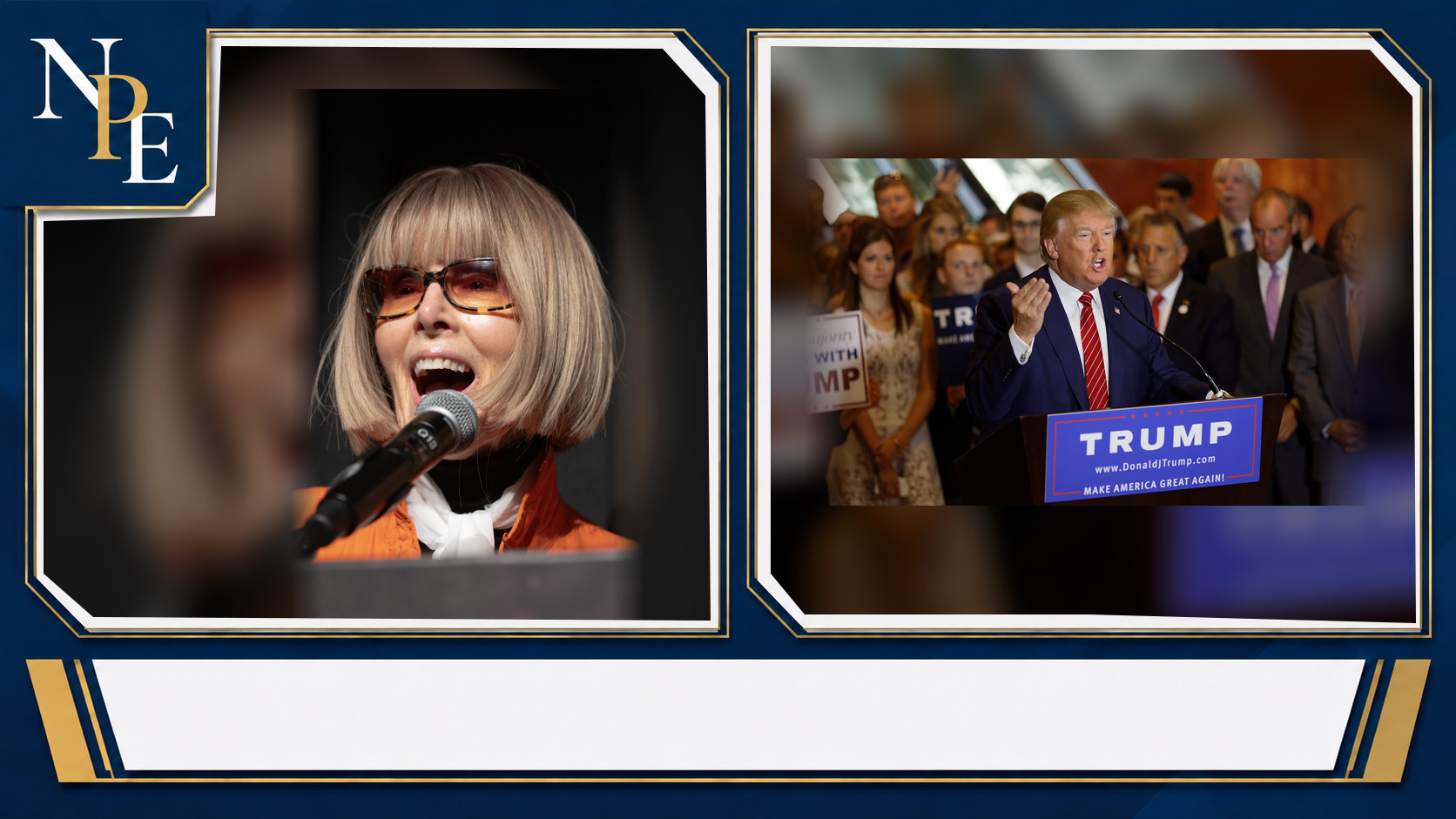
The U.S. Supreme Court declined to hear Donald Trump’s latest bid to overturn E. Jean Carroll’s award, leaving a $5 million jury verdict in place. Trump sought to block the verdict over allegations of sexual abuse and defamation, and Monday’s action marked the second time the court rejected his appeal after its June decision.
The case stems from Carroll’s allegation that Trump assaulted her in a New York City department-store dressing room in 1996 and later defamed her in 2022. Trump denies wrongdoing, says he does not know Carroll, and has characterized her claims as false.
A rare request gets no traction
The key development was not a new trial or a new ruling on the evidence. It was the Supreme Court’s decision not to reconsider its earlier refusal to hear Trump’s challenge.
After the justices declined his initial appeal in June, Trump made the unusual request that they revisit that decision. The court almost never grants requests to reconsider a denial of review, according to NBC News.
Its latest order means the court will not examine the underlying jury verdict. It also leaves standing the lower-court decisions that upheld Carroll’s win.
That distinction matters. A refusal to hear a case is not an endorsement of every argument made by the lower courts. But it is decisive for this dispute because there is no further Supreme Court review of the $5 million judgment on the horizon.
What the $5 million verdict covered
Carroll sued Trump in federal court in New York after publicly accusing him of sexually assaulting her in the mid-1990s. She said the encounter occurred in a dressing room at a Manhattan department store in 1996.
The lawsuit that reached the Supreme Court combined Carroll’s sexual-abuse allegation with defamation claims tied to Trump’s statements after he left office. A jury awarded her $5 million in 2023.
Trump has consistently disputed Carroll’s account and denied any wrongdoing. His position has been that the allegations were fabricated and that he did not know her.
The verdict was a civil finding, not a criminal conviction. Civil juries decide whether liability has been proved under the applicable legal standard and can award money damages; criminal cases involve separate charges, procedures and potential penalties.
The money has already been paid
The $5 million award is no longer simply a theoretical legal exposure. NBC News reported that Trump has already turned over the $5 million, plus interest.
That does not make the Supreme Court’s action meaningless. Trump had continued seeking to undo the judgment, and a successful appeal could have altered the result or required further proceedings.
Instead, Carroll’s judgment remains in force. For Carroll, it is the end of one major chapter in a long-running legal fight. For Trump, it removes one potential path to reversing a verdict he has repeatedly contested.
The decision also shows how difficult it is to revive a case after the Supreme Court has already declined to take it up. The court receives thousands of requests each term and accepts only a small fraction; requests to reconsider a prior denial are even less likely to succeed.
Trump’s evidence challenge fell short
Trump’s original petition argued that the trial should not have included certain evidence. According to SCOTUSblog, he objected to testimony from other women who alleged that Trump had assaulted them, as well as the 2005 “Access Hollywood” recording.
Carroll’s legal team argued that the lower courts had correctly applied the rules governing that evidence. The U.S. Court of Appeals for the 2nd Circuit had already upheld the jury’s verdict before Trump asked the Supreme Court to intervene.
Because the justices declined review, they did not issue a written opinion resolving those competing arguments. The public is therefore left with the result, rather than a new Supreme Court explanation of the evidentiary questions.
That silence is common in orders denying review. It can frustrate people looking for a broader legal statement, but it does not weaken the immediate effect: the lower-court outcome remains intact.
A separate $83 million case remains
Monday’s action does not end every legal dispute between Trump and Carroll. A separate defamation case produced an $83 million judgment for Carroll, far larger than the $5 million award at issue here.
That case concerns statements Trump made while he was president during his first term. It has involved litigation over whether Trump can invoke presidential immunity in connection with Carroll’s claims.
The Supreme Court has a separate appeal from Trump involving that judgment, and NBC News reported that the justices are not expected to act on it until later this year. Its outcome is not dictated by the court’s refusal to revisit the $5 million case.
The cases are related by the same parties and a shared history, but they raise different legal questions and concern different statements and damages awards.
The practical takeaway from Monday
For now, the clearest result is narrow but consequential: Carroll’s $5 million award against Trump stands, including the money and interest already transferred.
The Supreme Court’s action is also a procedural dead end for Trump’s challenge to that verdict. The justices declined the initial appeal and then declined to reconsider that refusal.
Attention will now shift to the $83 million case, where the stakes are larger and the legal issue of presidential immunity remains unresolved. Until the court acts there, the two Carroll judgments should not be treated as one case or one final outcome.
Monday’s order resolves the smaller of the two Supreme Court matters, but it reinforces an important point: a civil verdict that survives trial-court review, an appeals-court challenge and a failed Supreme Court petition is exceptionally difficult to dislodge.
Leave a Reply