
Nixon’s upset over Alexander Vindman was more than a primary result: it elevated a Democratic Socialists of America member in a statewide Florida race. The November contest against Republican Sen. Ashley Moody will test how far a worker-focused progressive message can travel.
Angie Nixon won the Florida Senate Democratic primary on Aug. 18, 2026, defeating Alexander Vindman, and she is a Democratic Socialist. The Florida state representative’s victory puts a member of Democratic Socialists of America on the ballot for U.S. Senate in a state where Republicans hold the seat and where ideological labels will be central to the fall campaign.
Nixon’s win was an upset over Vindman, the retired Army lieutenant colonel known for testimony during President Donald Trump’s first impeachment. She now faces incumbent Republican Sen. Ashley Moody for the seat tied to the term Marco Rubio won in 2022, turning a Democratic primary contest into a broader argument over the direction of Florida politics.
A surprise in Florida’s primary
The Associated Press and Decision Desk HQ called the Democratic Senate primary for Nixon shortly after polls closed in Florida, according to USA TODAY. Nixon won despite Vindman’s higher fundraising and backing from more establishment-oriented Democratic figures.
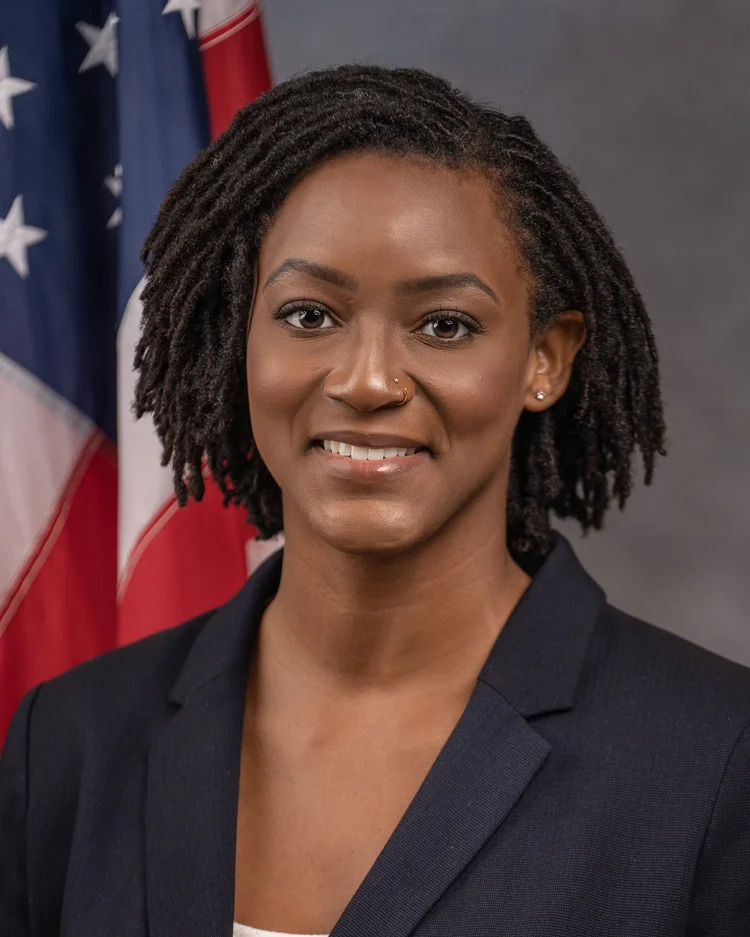
That contrast is a major part of the result. Vindman entered with national name recognition from his role in Trump’s first impeachment proceedings. Nixon entered as a Jacksonville-area state legislator with an unmistakably left-wing campaign and support from prominent progressive elected officials.
Among those backing Nixon were Florida Rep. Maxwell Frost, Minnesota Rep. Ilhan Omar and Michigan Rep. Rashida Tlaib, USA TODAY reported. Her coalition showed that grassroots organization, a sharp message and progressive endorsements can sometimes overcome financial disadvantages in a low-turnout primary.
It does not automatically mean that a statewide general election will follow the same script. Primary voters and November voters are different electorates, especially in a state that has recently favored Republican candidates in major statewide races.
What Nixon means by Democratic Socialist
Nixon’s campaign confirmed to USA TODAY that she belongs to the Democratic Socialists of America, or DSA. That membership matters because, if elected, she would be the first DSA member in the U.S. Senate, according to the newspaper.
“Democratic socialist” is often used loosely in American politics, but it is not simply another word for Democrat or progressive. In Nixon’s case, the label points to a politics centered on a larger public role in securing basic needs and on confronting concentrated corporate wealth.
Her campaign platform includes universal health care, higher taxes on wealthy people and a federal minimum wage of $25 an hour. In her election-night remarks, Nixon also emphasized housing, public education, child care, veterans, immigrants and family farmers.
Those positions will appeal to voters who see economic insecurity as the defining political problem. Critics, including Republicans, are likely to argue that her proposals are too costly, too expansive or out of step with Florida’s electorate. Nixon has indicated she intends to meet that fight directly rather than soften the label.
Labels will shape the fall race
Nixon told supporters after her win that she was not afraid of labels. Her approach reflects a calculation: avoiding the term “socialist” may not prevent opponents from using it, while embracing a worker-centered identity can energize supporters who are tired of conventional political messaging.
Moody, meanwhile, has already described Nixon as a “self-proclaimed socialist,” according to USA TODAY. The general election is therefore likely to feature a stark ideological contrast rather than a contest built around minor differences in policy emphasis.
For Nixon, the opportunity is to define Democratic Socialism in practical terms: wages that cover basic expenses, health care access, affordable housing and public services. For Moody, the opportunity is to link Nixon’s agenda to national concerns about taxes, government spending and the reach of federal power.
Neither side can assume that the label alone settles the argument. Voters may respond differently depending on whether the campaign focuses on ideology in the abstract or on the cost of rent, medical care, child care and groceries.
An internal Democratic Party test
Nixon’s primary win also highlights a continuing debate inside the Democratic Party. The question is not merely whether progressives can win primaries; it is whether candidates openly aligned with Democratic Socialism can build coalitions broad enough for statewide office.
Not every progressive candidate uses the same language or belongs to DSA. The party’s left flank includes labor-oriented Democrats, reform-minded liberals, social democrats and Democratic Socialists, with real differences in strategy and policy. Nixon’s result should not be read as a verdict on every faction.
The same night, USA TODAY noted, other candidates aligned with DSA or Democratic Socialism lost challenges against established Florida House members. That mixed outcome is important. Nixon’s victory was significant, but it was not evidence that every anti-establishment or left-wing campaign will break through.
Her race may instead show the value of candidate-specific factors: local roots, a clearly defined message, the ability to motivate volunteers and a contrast with an opponent seen as closer to the party establishment. Nixon is a Jacksonville native who lives in the city’s Moncrief neighborhood, according to her campaign.
Her record brings praise and scrutiny
Nixon’s Senate campaign will not begin with her primary victory alone. In May, she was arrested after staging a sit-in at Gov. Ron DeSantis’ office to protest mid-cycle redistricting. She said the action concerned fair representation and voting rights.
DeSantis called the action “performative nonsense” in a post on X, according to USA TODAY. Nixon is scheduled to appear in court Sept. 21 on misdemeanor charges of trespassing and resisting an officer without violence. A charge is an allegation, and the case has not been resolved.
Supporters may view the protest as evidence that Nixon is willing to take risks for issues she believes in. Opponents may use it to challenge her judgment or portray her as an activist first and a legislator second. The facts and outcome of the court case will remain relevant as the campaign develops.
The challenge against Ashley Moody
Nixon now faces Moody, a Republican incumbent, in the November election. The race will test whether Nixon can expand beyond a Democratic primary electorate while keeping the volunteers and small-dollar enthusiasm that helped power her nomination.
The central unresolved question is how voters interpret her identity as a Democratic Socialist. In a favorable scenario for Nixon, the label becomes shorthand for a direct economic-populist appeal. In a favorable scenario for Moody, it becomes a potent warning about the policies Nixon would support in Washington.
Nixon has already made her choice about how to approach the fight: lean into her beliefs, not away from them. Her primary victory ensured that Florida’s Senate race will not be a conventional contest over biography alone. It will be a public test of whether an explicitly Democratic Socialist candidate can turn a primary upset into a statewide coalition.
Leave a Reply