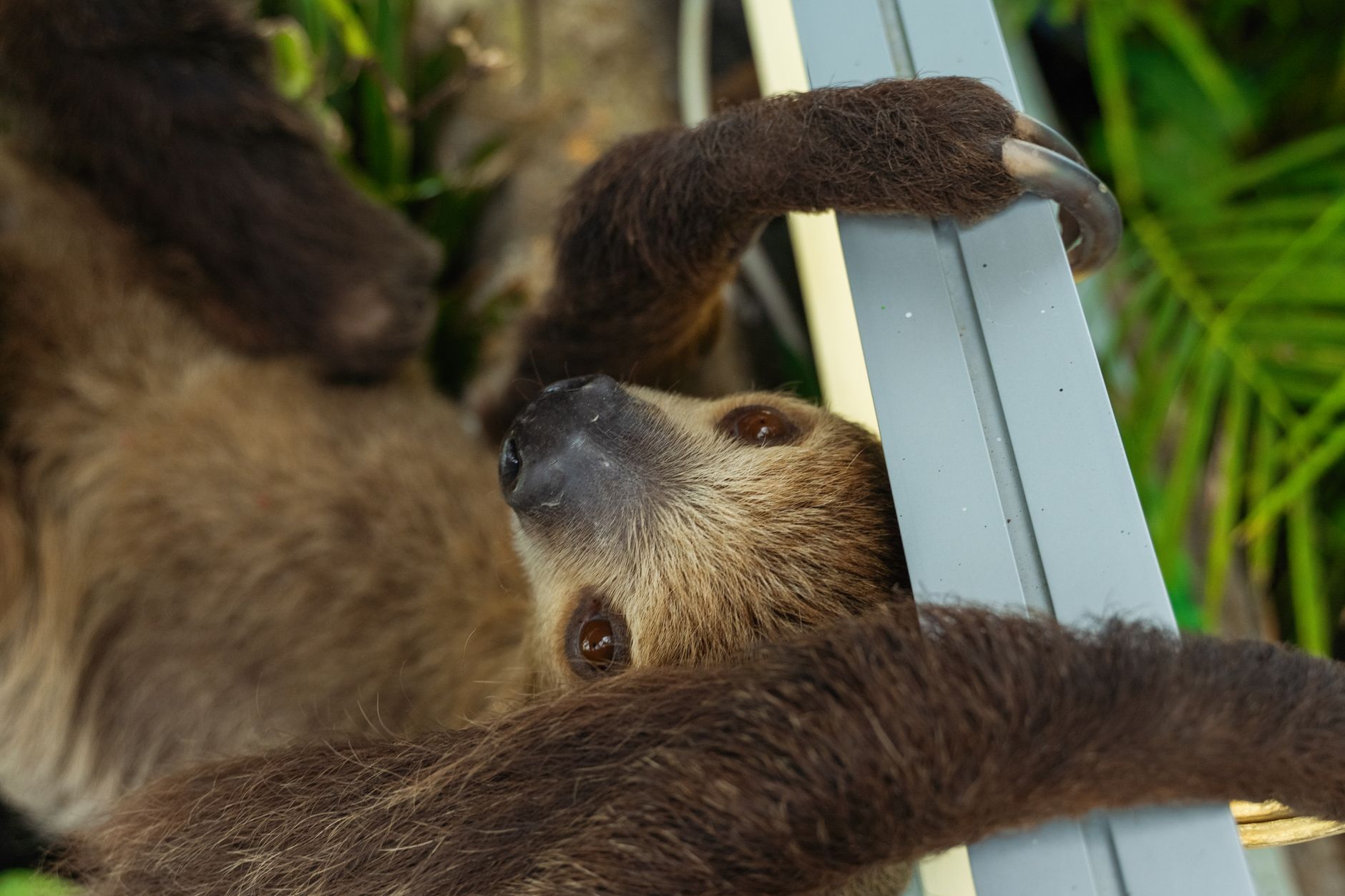
A close-up wildlife photo can look harmless from the visitor’s side of the camera. Research on sloth encounters suggests the animal may be paying a different price.
A 2018 study of sloth selfie tourism found that physical handling was common during encounters, although the animal’s treatment was not necessarily visible in the resulting photos. Researchers reported that, for 48.6% of the time sloths were handled, people physically manipulated their heads or limbs or held them.
That distinction matters because a close-up image can make a sloth appear calm and comfortable while concealing what happened just outside the frame. The study found that handlers sometimes positioned the animals for photographs, raising concerns about whether the encounters prioritized visitors’ access and pictures over the sloths’ welfare.
The findings do not establish that every sloth selfie involves abuse. They do show why apparently harmless selfie tourism deserves scrutiny: physical contact, restraint and forced positioning may compromise the animals’ welfare even when the final image gives no obvious sign of distress.
The photo can hide the handling
Sloths are often marketed as unusually gentle, sleepy and happy to be held. Their slow movements make them seem like ideal photo subjects, especially in tourist settings where visitors may be invited to cradle one, touch it or pose beside it.
But a sloth’s stillness is not a reliable signal that it welcomes the interaction. Wild animals do not need to struggle, bite or flee for an encounter to be stressful. An animal that is restrained, repeatedly passed between people or unable to get away may have few visible options for resisting.
The 2018 study, indexed by the National Institutes of Health’s PubMed database, concluded that handling associated with sloth selfies was likely to compromise welfare. Researchers recorded physical manipulation of the head or limbs, as well as holding methods that could limit normal movement.
That distinction matters because the appeal of a selfie depends on close contact. A visitor can photograph a sloth from a respectful distance without changing its position. A posed portrait often requires somebody to make the animal available, visible and still.
Why stillness is easily misread
People commonly read animal behavior through a human lens. A sloth with a relaxed-looking face may be assumed to be content; an animal that does not pull away may be assumed to consent. Neither conclusion follows automatically.
Sloths have highly specialized bodies adapted for life in trees. Their claws, limbs and posture are designed around climbing and hanging, not being carried around as a photo prop. Repositioning an animal for a camera can interfere with how it naturally supports itself.
Stress also does not always produce a dramatic response. Freezing, reduced movement and apparent passivity can be protective responses in some animals. That makes welfare harder for tourists to judge during a brief, supervised interaction.
This is one reason researchers and animal-welfare advocates urge caution around experiences that promise a guaranteed cuddle, hold or selfie with a wild species. The most camera-friendly behavior may not be evidence of comfort at all.
Tourism creates pressure for access
Close-contact wildlife tourism exists because it sells something ordinary wildlife watching cannot: the feeling of a personal encounter. A sloth in a tree may be memorable, but a sloth in someone’s arms is easier to package, promote and share online.
That commercial pressure can reshape the encounter around the visitor’s schedule. Animals may be brought out repeatedly, handled by many people or kept in settings where a staff member can deliver the perfect shot. The problem is structural, not just a matter of whether one tourist is gentle.
A 2020 academic paper on animal ethics and social-media-driven tourism described sloth selfies as part of a wider growth in animal experiences designed for online sharing. Its central concern was that digital attention can normalize direct contact with animals while obscuring the conditions needed to produce it.
Facilities may describe encounters as educational or conservation-minded, and some may provide care or public information. Those claims deserve to be assessed separately from the photo opportunity itself. Education does not erase the welfare question when animal handling is required for the experience to work.
Not every viewing experience is equal
The case against forced handling is not a case against seeing sloths in person. Wildlife tourism can support local guides, habitat protection and public interest in species that many travelers might otherwise never encounter.
The key difference is whether the activity preserves the animal’s ability to behave normally and keep its distance. A sighting in the wild, a guided observation from afar or a rescue-center visit that does not promise physical contact carries a different set of welfare risks from a paid holding session.
- Better signs: visitors observe animals at a distance, groups are limited, and staff do not offer holding, touching or guaranteed selfies.
- Reasons for caution: animals are passed person to person, positioned for photographs, awake or displayed on demand, or promoted primarily as props.
- A useful question: could this photo happen if the animal were free to move away? If not, the encounter deserves closer scrutiny.
There is no single visual test a tourist can use to certify that an animal venue is responsible. A clean enclosure, friendly staff and a conservation message may all be positive signs, but they cannot by themselves show whether an animal is being overhandled.
What responsible visitors can do
Travelers do have leverage because photo encounters exist only when customers buy them and share them. Choosing observation over touch helps shift demand away from businesses that depend on repeated access to wild animals.
Before booking, look beyond promotional photos. Check whether a facility clearly explains its handling policy, whether it allows guests to hold animals, how often animals are presented and whether it focuses on rehabilitation, release or long-term care. Independent accreditation or reputable local conservation partnerships can be useful signals, though they are not automatic guarantees.
During a visit, declining a hold or a posed photo is a simple boundary. So is taking the picture from a distance. The more honest version of wildlife travel may be less intimate than a selfie, but it leaves room for the animal to remain an animal rather than a souvenir.
The bigger question behind one selfie
The 48.6% finding is not a verdict on every individual who has taken a sloth photo. Most visitors may not know how the animal reached their arms or what handling can mean for its welfare.
It is, however, a reason to reconsider the story told by the image. A wildlife selfie tends to record a moment of human delight. It rarely records the transfers, restraint or repeated exposure that may have happened before the camera was raised.
For sloths and other wild animals, the most respectful encounter may be the one that produces a less dramatic photograph: an animal moving at its own pace, in its own space, with no need to perform for the lens.
Leave a Reply