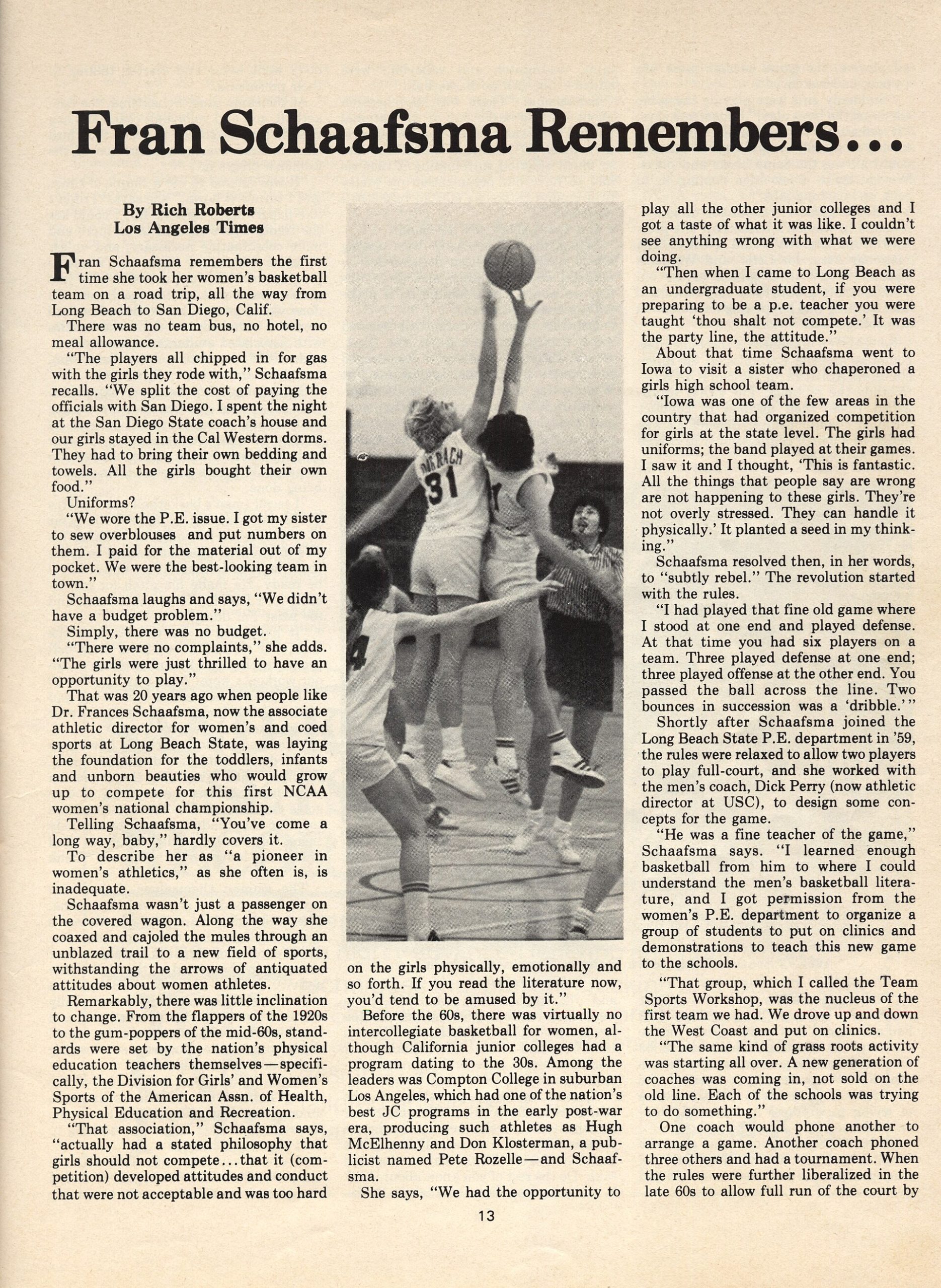
The debate is no longer only cultural or partisan. Courts, schools and athletic bodies are now deciding how far inclusion rules can go when women’s sports are organized by sex.
The political left is unlikely to win the debate over transgender athletes in women’s sports because the fight has moved beyond slogans and into rules for schools, state lawmakers and Title IX. At the center is whether transgender athletes competing in women’s and girls’ sports should be eligible based on gender identity, biological sex or sport-by-sport standards.
That makes the broader legal and political fight over eligibility in sports harder for inclusion advocates: courts and policymakers are increasingly treating sex-based categories as permissible, while critics warn that blanket bans can isolate transgender students and erase individual circumstances.
Why the argument is landing
The strongest argument for limiting transgender participation in women’s and girls’ sports is simple and politically powerful: female sports categories exist because sex-linked physical differences can matter in competition. Supporters of sex-based eligibility say that if those categories are not protected, women and girls may lose fair opportunities to compete, win roster spots or safely participate in some sports.

That argument has moved from campaign speeches into statutes, school policies and litigation. According to SCOTUSblog, Idaho enacted its Fairness in Women’s Sports Act in 2020, the first state law of its kind, and 25 other states later enacted similar bans. West Virginia passed its Save Women’s Sports Act in 2022.
Those laws do not all resolve the issue morally or socially. They do show why the politics have shifted. Inclusion advocates are not merely debating hostile rhetoric; they are facing a policy architecture that now exists in much of the country.
The Title IX fight hardened
Title IX is the legal center of gravity because it prohibits sex discrimination in education programs receiving federal funds while also allowing separate male and female sports teams. The core question is what schools may do when a student’s gender identity differs from sex assigned at birth.
SCOTUSblog reported that the Supreme Court ruled on June 30 that states can exclude transgender athletes from women’s and girls’ sports teams. In cases involving Idaho and West Virginia, the justices ruled unanimously that the laws did not violate federal civil rights laws, while dividing over whether West Virginia’s law violated the Constitution as applied to the student before the court.
Writing for the court, Justice Brett Kavanaugh said states may maintain women’s and girls’ sports for biological females and may determine eligibility based on biological sex. He wrote that the Constitution and Title IX do not require an overhaul of women’s and girls’ sports throughout America.
That holding gives supporters of sex-based rules their strongest institutional footing. It does not end every dispute, but it makes clear that Title IX can be read to protect sex-separated sports categories rather than require gender-identity-based access to them.
The fairness claim is durable
The fairness argument resonates because it connects abstract law to everyday competition. Parents, coaches and athletes understand roster limits, scholarship opportunities, race times, strength differences and contact-sport safety concerns. Even people who support transgender rights in housing, employment or health care may draw a different line in sports.
Kavanaugh’s opinion, as summarized by SCOTUSblog, emphasized inherent physical differences relevant to athletic performance, including height, weight, strength, speed, endurance and jumping ability. He also pointed to safety risks in contact sports and competitive fairness across many sports.
That is why the political left faces a tougher challenge here than on many other LGBTQ issues. The pro-inclusion message often asks the public to balance fairness for cisgender girls and women against belonging for transgender girls and women. The opposing message tends to be shorter: women’s sports should be for female athletes.
Shorter does not automatically mean better. But in politics, especially when schools and youth sports are involved, a message that feels concrete often travels farther than one built around legal nuance and individual assessment.
Blanket bans still have costs
The case against sweeping exclusions is also substantial. Critics argue that categorical bans can punish transgender students who have lived socially as girls for years, may be receiving medical care that affects puberty, and may not have any meaningful athletic advantage in a particular sport or grade level.
Justice Sonia Sotomayor, joined by Justices Elena Kagan and Ketanji Brown Jackson, wrote in dissent that the majority showed sympathy for cisgender girls and women but inflicted hardship on those it disfavored without giving them a fair and full opportunity to litigate their claims. That dissent captures the central objection: broad laws can flatten real differences among students.
The West Virginia case involved Becky Pepper-Jackson, identified in court filings as B.P.J., a 15-year-old student who had publicly identified as female since third grade, according to SCOTUSblog. The Idaho case involved Lindsay Hecox, who sought to try out for women’s track and cross-country at Boise State University and later competed in women’s club soccer.
Those facts matter because they complicate the public shorthand. The debate is often framed as elite competition, medals and podiums. Many actual disputes involve school teams, adolescents, tryouts and the social consequences of being excluded.
Schools need workable rules
For schools, the hardest part is turning a culture war into a policy that can be applied consistently. A rule that depends only on gender identity is easy to administer but may not satisfy fairness concerns. A rule that depends only on biological sex is also easy to administer but can be harsh for transgender students whose lives do not fit neatly into that box.
Sport-by-sport rules may sound more precise, but they require expertise, recordkeeping and risk tolerance that many school districts do not have. Age, puberty, hormone treatment, level of competition and whether the sport is contact or non-contact can all matter. The more tailored the rule, the more complicated it becomes.
The practical questions are not small:
- Who decides eligibility: state lawmakers, school districts, athletic associations or courts?
- Should rules differ for elementary school, high school, college and elite competition?
- How should privacy be protected when eligibility is challenged?
- What standards avoid invasive verification procedures?
- How should schools protect transgender students from harassment while enforcing the law?
These questions explain why litigation is likely to continue even after major rulings. Courts can uphold a state’s authority to draw sex-based lines and still leave schools to wrestle with implementation.
What both sides face now
Opponents of transgender participation in women’s sports currently have the stronger legal and political position because their argument aligns with the traditional structure of sex-separated athletics. They can point to state laws, governing-body rules and a Supreme Court reading of Title IX that permits biological-sex eligibility standards.
Inclusion advocates face a narrower path. Their most viable argument may be less about abolishing sex-based categories and more about limiting the harshest applications of blanket bans, especially for younger students or cases where no competitive advantage is shown.
The unresolved question is not whether women’s sports will remain a protected category. They will. The harder question is whether the protection of that category must always mean excluding every transgender girl or woman from every female team, at every age and every level.
That is where the next phase of the fight will be. The political left may struggle to win the broad debate if it appears to dismiss fairness concerns. But supporters of sex-based rules may also face pressure to show that protecting women’s sports does not require making transgender students invisible.
Leave a Reply