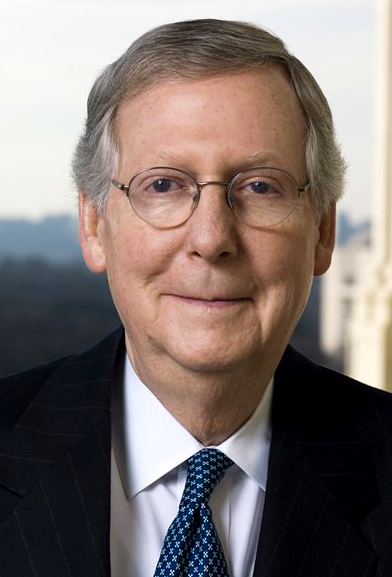
McConnell’s office says he is improving, but weeks without a direct public update have turned a private health matter into a fight over representation, voting power and Kentucky’s vacancy rules.
Andy Beshear is asking Mitch McConnell to explain his health and ability to serve after the 84-year-old Kentucky senator was hospitalized in Washington on June 14. In a Wednesday push, Beshear said McConnell has been silent and absent from the Senate for three weeks, raising concerns among Kentucky voters.
That silence prompts Beshear’s push because McConnell’s absence could affect Senate votes, tighten Republican math and complicate Donald Trump’s agenda in Washington. The question is no longer only medical; it is about whether Kentucky’s voice and the Republican agenda have a reliable vote when the chamber reconvenes.
One absence, fewer GOP votes
McConnell’s health has become a national political issue because the Senate is a place where attendance can decide outcomes. Republicans hold a 53-47 advantage, according to the Associated Press. If McConnell is not voting, the party’s working number falls to 52.
That does not mean every Trump priority collapses. It does mean Republican leaders have less room for internal disagreement, illness, travel problems or defections. In a chamber built on narrow margins, a single missing senator can turn a manageable vote count into a leadership problem.
AP reported that McConnell had been among senators blocking war powers resolutions that would limit Trump’s military options in Iran. Without him present, the administration loses one potential buffer on that front.
At the same time, McConnell has not been an automatic vote for every Trump-backed proposal. AP also reported that he was among Republicans refusing to support Trump’s sweeping elections law overhaul. His absence could help Trump avoid one critic on one issue while costing him support on another.
Beshear frames it as representation
Beshear, a Democrat, sent McConnell a letter asking him to update Kentuckians on his condition, according to AP. The governor’s argument is not that the public is entitled to every medical detail. It is that voters need to know whether their senator can serve.
AP reported that Beshear’s letter said Kentuckians had become increasingly concerned about McConnell’s health, well-being and ability to hold office. Beshear also wished McConnell a safe and speedy recovery, keeping the language careful while still raising a direct political challenge.
The pressure is striking because of who is making it. Beshear is a Democratic governor who has repeatedly won statewide in Kentucky. McConnell is the state’s dominant Republican figure of the modern Senate era.
That makes the letter more than a personal request. It is a public demand from Kentucky’s top Democrat to the state’s most powerful Republican: speak directly to voters, or allow uncertainty to keep growing.
What McConnell’s allies say
McConnell’s aides have said he continues to improve and is working with staff on Kentucky and Senate matters while the Senate is out of session. They have not provided a detailed public account of his condition.
Republican leaders have also tried to reduce speculation. Senate Majority Leader John Thune and Sen. John Barrasso publicly said they had spoken with McConnell and that he was alert and discussing current events.
Those assurances matter inside the Senate, where relationships and private calls carry weight. They may matter less to voters who have not heard directly from McConnell since his hospitalization.
That gap is where Beshear’s pressure gains force. Secondhand updates can reassure allies, but they rarely end questions when a senior elected official has been out of public view for weeks.
Kentucky’s vacancy law adds stakes
The political tension is sharper because Kentucky changed how a Senate vacancy would be filled. The state once allowed the governor to appoint an interim senator. During Beshear’s tenure, the Republican-run legislature changed that system twice.
AP reported that McConnell and other GOP leaders supported a 2021 change because they did not want Beshear to alter the partisan balance in Washington if a Senate vacancy opened. That law would have required the governor to choose from a short list supplied by the previous senator’s party.
In McConnell’s case, that would have meant Beshear selecting a Republican. Then lawmakers changed the process again in 2024, moving to a special-election model. Beshear vetoed both changes, and Republican lawmakers overrode him.
Under the current system, Beshear would not simply appoint a successor if McConnell’s seat became vacant before his term ends in January. His role would be limited to calling a special election.
The election calendar is murky
The current vacancy law still leaves practical uncertainty. AP reported that the 2024 statute says Beshear shall issue a proclamation for a special vote, but it does not clearly state when that proclamation must be issued or exactly when the election must happen.
That timing question could matter enormously. Depending on how events unfolded, Kentucky could face two Senate races at once, a short-term special election, or a period in which the seat remains empty until a new Congress is sworn in.
The regular race for the full term beginning in 2027 is already underway. Republicans nominated U.S. Rep. Andy Barr, and Democrats nominated former state lawmaker Charles Booker, according to AP.
If a special election were held alongside the general election, voters could see separate contests: one for the remainder of McConnell’s current term and another for the next full term.
Privacy meets public power
There is a fair counterargument to Beshear’s demand. Elected officials do not lose every right to medical privacy when they take office. Health problems can be complicated, recovery can shift, and families often need time before making information public.
McConnell’s allies can also point out that a Senate office can keep operating during a recess. Staff can handle constituent work and legislative matters, and long absences have occurred before in Congress.
But the Senate does not allow proxy voting. When votes are called, a senator’s physical presence can matter. That is why McConnell’s condition has become inseparable from questions about Kentucky representation, succession rules and Trump’s agenda.
The immediate unknown is whether McConnell will return when the Senate reconvenes, and in what capacity. His office says he is improving. Beshear says Kentuckians need more than general reassurance. Until McConnell himself provides a public update, the silence will remain part of the story.
Leave a Reply