
Riyadh has tried to keep distance from the U.S.-Iran conflict while protecting its cities, oil sites and investment plans. The Iraq strikes show how quickly that balancing act can become a direct military role.
Saudi Arabia carried out strikes in Iraq against Iran-backed militias with the United States, according to reports from BBC and The New York Times, a move that shows how Saudi Arabia is being pulled deeper into the U.S.-Iran conflict and raises the risk of a wider regional war.
The pressure on Riyadh is not limited to Iraq. Houthi attacks from Yemen, drone threats tied to militias, and Iran’s wider network across the Gulf are narrowing Saudi Arabia’s effort to avoid escalation while still defending itself.
Iraq Changes Riyadh’s Role
The immediate focus is Iraq, where the BBC reported that Saudi Arabia and the United States struck sites linked to Iraq’s Popular Mobilisation Forces. The group is a collection of paramilitary factions, some with ties to Iran, and the report said the militias were believed to be behind drone attacks on the kingdom.
The New York Times described the strikes as Saudi Arabia’s entry into the U.S.-Iran war after a delayed response. That description is significant because it captures the perception problem Riyadh now faces: even a strike framed as defensive can look to adversaries like the opening of a new front.
Saudi Arabia has spent years trying to reduce tensions with Iran and limit the fallout from proxy conflicts. A joint or direct military move in Iraq changes that posture, at least in the eyes of armed groups that may now see Riyadh as a more active participant.
The central dilemma is blunt. If Saudi Arabia does not respond to attacks, militias may read restraint as weakness. If it does respond, those same groups may have a stronger pretext to escalate.
Threats Are Coming From Several Directions
The danger for Saudi Arabia is not one militia or one battlefield. CNN’s framing of the crisis pointed to pressure from the Houthis, from Iraq and from Iran itself. The BBC similarly described a kingdom facing threats from three sides.
From Yemen, the Houthis remain the most familiar source of pressure. The group seized much of Yemen in 2014 and fought a long war against a Saudi-led coalition. Even after a fragile truce, the threat of drones and missiles crossing Saudi Arabia’s southern border has not disappeared.
From Iraq, the challenge is more politically tangled. The Popular Mobilisation Forces are embedded in Iraq’s security and political system, while some factions are aligned with Iran. Striking sites linked to them risks not only retaliation from militants, but friction over Iraq’s sovereignty and internal politics.
Iran adds the broader strategic layer. Tehran’s network of allies and armed partners gives it reach across the region, meaning a Saudi confrontation with one group can quickly be read as part of a wider confrontation with the Iranian axis.
Vision 2030 Meets Drone Risk
Saudi Arabia’s caution is not only military. Crown Prince Mohammed bin Salman’s Vision 2030 program depends on the kingdom being seen as stable enough to attract foreign capital, tourism, technology and large-scale infrastructure investment.
That ambition is vulnerable to a long-running missile and drone threat. The BBC noted that new industries and assets such as data centers could be exposed if Saudi Arabia faces an enduring threat from drones or missiles.
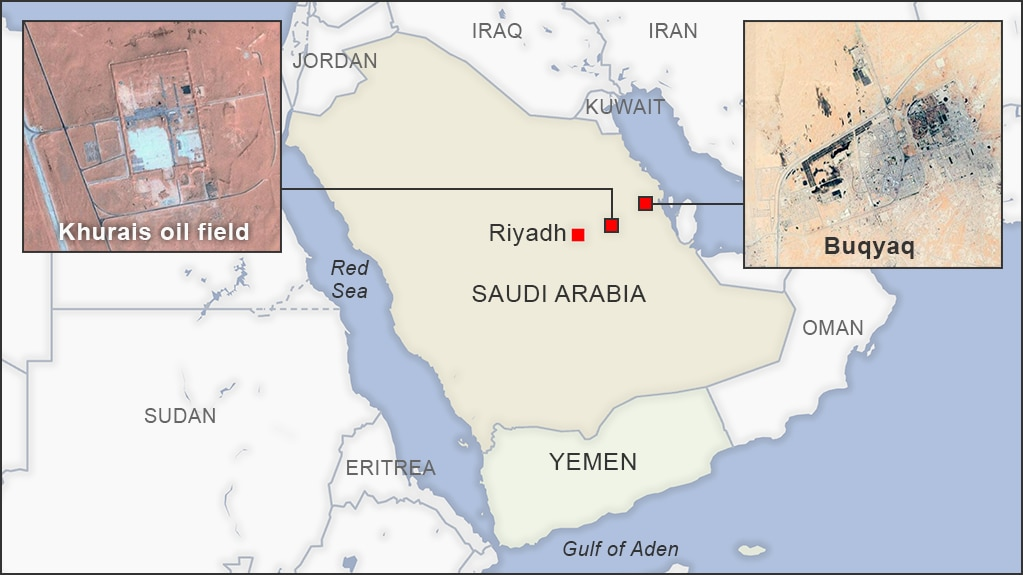
The kingdom has already seen the scale of that vulnerability. In 2019, attacks on the Abqaiq and Khurais oil facilities briefly shook global energy markets and exposed weaknesses in Saudi defenses. Those attacks showed how relatively low-cost drones and missiles can disrupt heavily defended infrastructure.
That memory cuts both ways. It helps explain why Riyadh may feel it cannot simply absorb repeated attacks. It also explains why Saudi Arabia wants to avoid a full-scale war that could put its transformation agenda under sustained threat.
Washington Is Shield And Liability
Saudi Arabia’s reported joint action with the United States underlines how dependent Riyadh remains on U.S. military power, air defense cooperation and intelligence. In a missile and drone fight, that support can be central rather than symbolic.
But the partnership carries political risk. If Saudi Arabia is seen as moving in step with Washington, Iran-backed factions can portray the kingdom as helping prosecute the U.S. side of the conflict. That perception can become a justification for more attacks.
There is a familiar Gulf calculation beneath the surface: states want American deterrence, but not necessarily automatic escalation that turns their territory and economies into targets. Saudi Arabia’s current position shows how hard that line is to hold.
For U.S. military planners, Saudi participation may look like burden-sharing. For Riyadh, it may feel less like a chosen expansion of the conflict than the consequence of geography, exposed infrastructure and repeated threats.
Restraint Is Becoming Costlier
Saudi Arabia has previously pushed for caution. Reuters reported in late 2023 that Riyadh urged Washington to show restraint as Houthi attacks on shipping raised fears of a wider conflict. The message then was to contain the fallout, not expand the war.
That logic still has force. Saudi leaders have reasons to preserve ties with Washington without turning the kingdom into a forward platform for every U.S. confrontation with Iran. They also have reasons to deter Iran-backed groups without destroying diplomatic channels with Tehran.
The problem is that restraint has a price when attacks continue. If Saudi Arabia holds back, adversaries may decide its economic ambitions make it reluctant to retaliate. If it strikes, adversaries may try to prove that Saudi cities, oil sites and investment projects remain within range.
That is why the Iraq strikes matter beyond their immediate military effect. They suggest Riyadh may have reached a point where the risks of inaction look higher than the risks of action.
The Escalation Test Ahead
The key unanswered question is whether the strikes change behavior. If militias in Iraq reduce drone attacks, Riyadh can argue that limited force worked. If attacks expand, Saudi Arabia may face pressure for more strikes, closer U.S. coordination and deeper involvement.
Iran’s response is also uncertain. Tehran could retaliate directly, rely on allied groups, or avoid open escalation while maintaining pressure on shipping and Gulf states. Each path would carry different risks for Saudi Arabia.
There is also a diplomatic challenge: whether Saudi Arabia can keep channels open with Iran while hitting Iran-backed forces. Gulf diplomacy often runs on that kind of split track, with public deterrence paired with private messaging.
The larger takeaway is that Saudi Arabia is no longer dealing only with the question of how to stay outside the U.S.-Iran conflict. It is now trying to prevent a limited response from becoming a lasting role in a wider regional war.
Leave a Reply