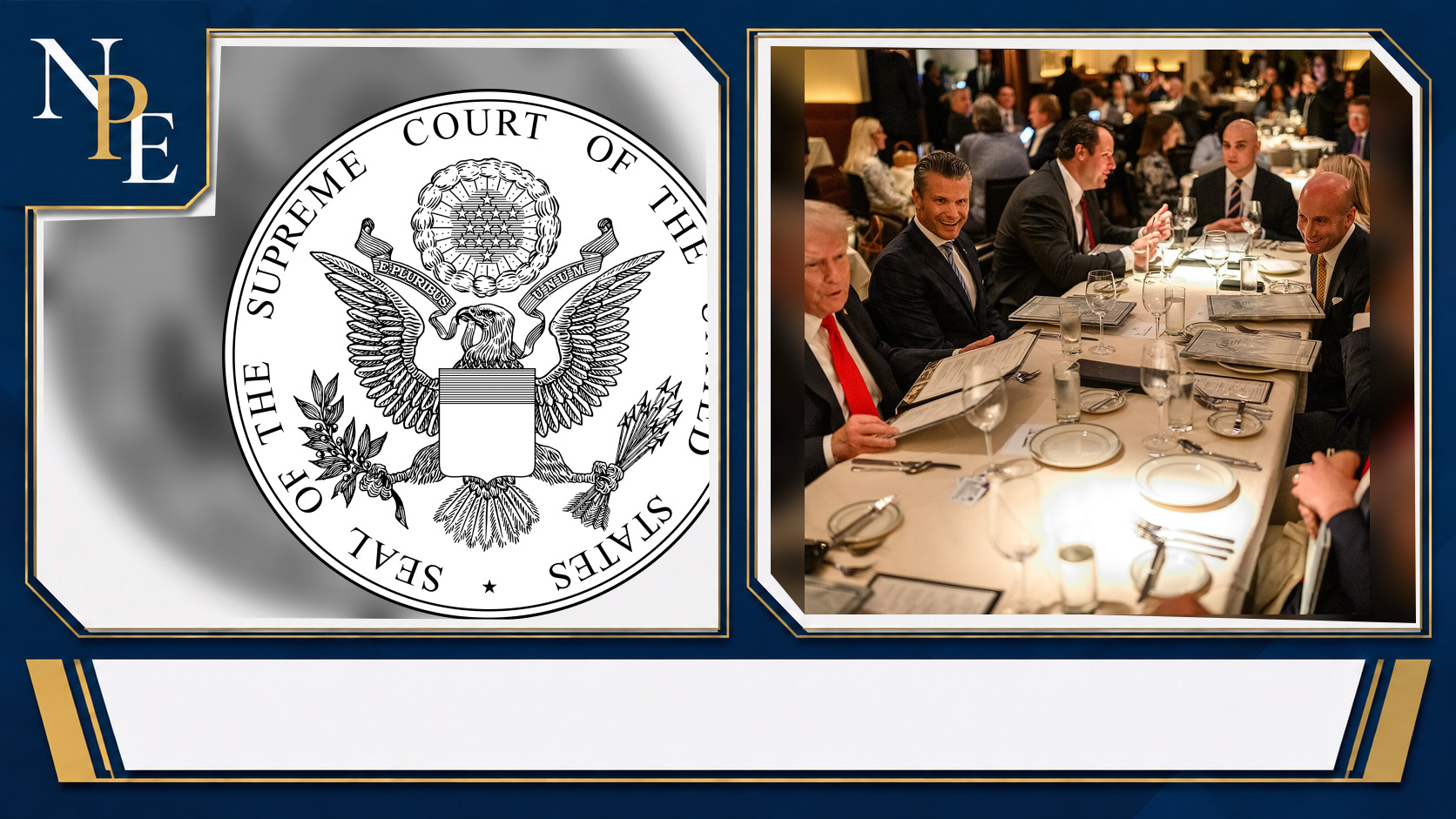
The court did not rule on every allegation Texas raised. It found that Texas lacked the legal basis to challenge how four other states conducted and certified their presidential elections.
The U.S. Supreme Court rejected a Texas lawsuit backed by Donald Trump on December 12, 2020, denying Texas’s request to challenge election results in four states won by Joe Biden: Georgia, Michigan, Pennsylvania and Wisconsin. The lawsuit sought to invalidate those results, but the ruling ended the legal effort to change the Electoral College outcome.
The decision left Biden’s certified 306-232 Electoral College victory intact, along with his margin of about seven million votes nationwide. It was a major setback for Trump’s effort to overturn Biden’s 2020 election victory days before the Electoral College met.
A sweeping request arrived late
Texas Attorney General Ken Paxton, a Republican and Trump ally, brought the case directly to the Supreme Court. Texas alleged that election officials in the four states had improperly changed voting procedures during the COVID-19 pandemic.
Its proposed remedy went much further than contesting a recount or a single local result. Texas asked the court to discard the presidential outcomes in all four states after voters had cast ballots and state officials had certified the results.
The lawsuit also sought to let the Republican-controlled legislatures in Georgia, Michigan, Pennsylvania and Wisconsin determine which presidential electors should be recognized. Trump supported the case and filed a motion seeking to intervene as a plaintiff.
That made the litigation an unusually broad post-election challenge: one state was asking the nation’s highest court to intervene in elections administered by four other states.
The court stopped at standing
The Supreme Court declined to hear the case because Texas had not shown “a judicially cognizable interest in the manner in which another State conducts its elections.” The legal issue was standing—whether Texas had a recognized basis to sue over election administration elsewhere.
This was not a ruling that evaluated and resolved every allegation about voting procedures in Georgia, Michigan, Pennsylvania or Wisconsin. The court’s conclusion was narrower: Texas could not use this case to pursue its requested remedy against the other states.
That procedural finding was decisive. Without standing, Texas could not obtain judicial consideration of the broader claims or ask the court to set aside the certified outcomes.
Two justices, Clarence Thomas and Samuel Alito, said they would have allowed Texas to file its complaint under the court’s original-jurisdiction procedures for disputes between states. Neither said Texas should prevail, and neither expressed a view on the merits of Texas’ allegations. No justice endorsed throwing out the four states’ certified presidential results.
Why state boundaries mattered
Presidential elections are run by states within a framework shaped by state law, federal law and constitutional rules. Election disputes generally move through recounts, state courts, election-administration processes and, in limited circumstances, federal courts.
Texas sought a different route. Its filing asked the Supreme Court to displace decisions made by election officials, voters and courts in other states, then reopen the question of electors after Election Day.
Supporters of the case argued that election procedures in presidential contests can have national consequences because electoral votes affect the entire country. The defendant states countered that Texas had no right to dictate how they ran their elections and that the lawsuit lacked both factual and legal support.
Legal experts had widely been skeptical before the decision. The court’s order underscored a central limit: a dispute may be politically consequential nationwide without giving one state authority to challenge another state’s election process in court.
The Electoral College clock
Timing made the ruling especially consequential. The court acted just before the Electoral College was scheduled to meet on December 14, 2020.
Biden had secured 306 certified electoral votes, well over the 270 needed to win the presidency, while Trump had 232. The Texas case targeted four state results that formed a key part of that Electoral College majority rather than a single close jurisdiction.
After the Supreme Court rejected Texas’s case, there was no pending Supreme Court proceeding capable of stopping those states’ electors from meeting and casting their votes. The Electoral College later formalized Biden’s victory.
Congress certified the result on January 7, 2021, after the count had been interrupted the previous day by the attack on the U.S. Capitol. The court’s action did not itself decide the election result; the states had already certified it. Its immediate practical effect was to close this high-profile judicial path for altering it.
Political disagreement outlasted case
Trump and his allies repeatedly claimed that fraud or illegal voting had changed the outcome. Courts reviewing post-election challenges did not find a basis to overturn Biden’s victory, and election officials from both parties said the 2020 election was secure.
After the Texas decision, then-White House press secretary Kayleigh McEnany criticized the justices for not reaching the substance of the case. Biden’s campaign and Democratic officials described the order as a rejection of an attempt to deny the certified result.
The case also had substantial political support. Eighteen states and more than 100 Republican members of Congress backed Texas’s position, according to contemporaneous BBC reporting.
That support helps explain why the dismissal remains notable. The case exposed competing views about when courts should intervene after states complete election certification—and about the boundary between political objections and a legal remedy.
A narrow order with broad effect
The Supreme Court did not issue a sweeping rewrite of election law or settle every factual dispute raised by Texas. Its legal rationale focused on a basic requirement: Texas had not demonstrated a direct, legally recognizable injury tied to how other states conducted their elections.
Still, a narrow rationale had a broad practical consequence. It removed the final prominent Supreme Court case seeking to unsettle Biden’s wins in Georgia, Michigan, Pennsylvania and Wisconsin before the Electoral College vote.
The lasting point is not that the court approved every election policy used in the four states. It is that Texas was not entitled to invoke the federal judiciary to overturn other states’ certified presidential election results. For Trump’s 2020 post-election effort, that closed this particular route to changing the outcome.
Leave a Reply