The shift matters because federal dietary guidance shapes school meals, military food programs and public health messaging. It also revives a long-running fight over saturated fat, processed foods and what counts as “real food.”
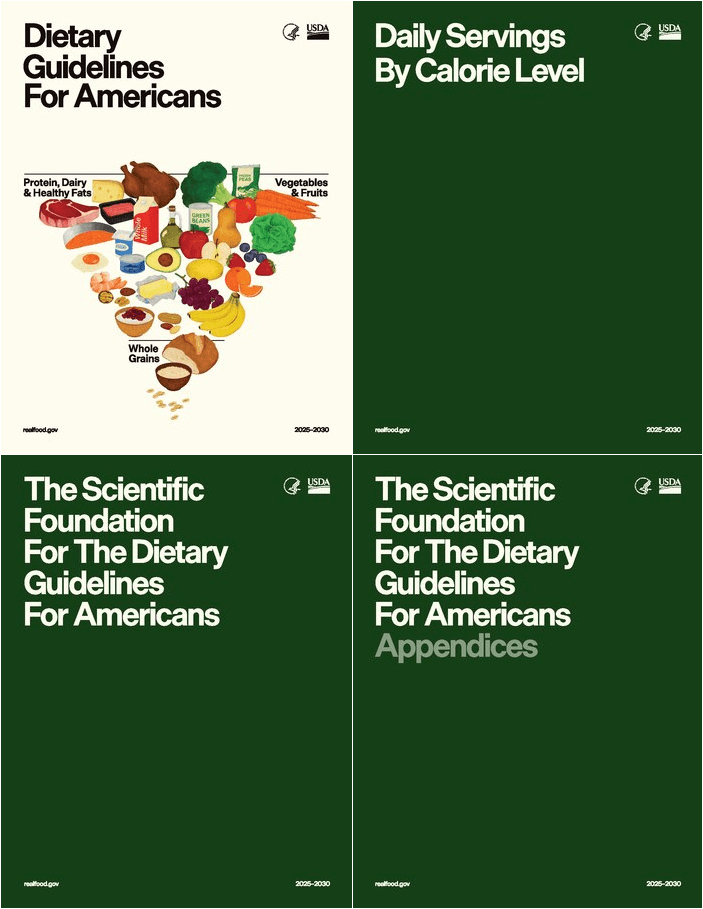
New U.S. dietary guidance recommends a very high-protein diet, beef tallow is presented as a healthy fat option, and full-fat dairy is included in the recommendations now reshaping U.S. nutrition policy. In the United States, the reported new food pyramid/Dietary Guidelines for Americans 2025-2030 mark a major reset: HHS says federal advice will prioritize high-quality protein, healthy fats, fruits, vegetables and whole grains while pushing Americans away from highly processed foods.
That is why the debate has moved beyond grocery lists. Federal dietary guidance helps steer school meals, military and veterans’ meals, food assistance policy and the health advice many doctors, dietitians and families hear for years.
Protein moves to the center
The clearest shift is protein. An HHS fact sheet describes the new guidelines as a break from prior advice that, in the administration’s view, favored carbohydrates and undervalued protein.

The agency says the guidelines prioritize “high-quality, nutrient-dense protein foods in every meal.” The examples are broad: eggs, poultry, seafood and red meat, along with beans, peas, lentils, legumes, nuts, seeds and soy.
That framing matters because protein has become the dominant language of American food marketing, from snack bars to cereal to restaurant menus. The federal government’s embrace of protein-first messaging could accelerate that trend, but it also raises a practical question: will Americans hear “more protein” as “more balanced meals,” or simply as permission to pile on meat?
The answer may depend on how the guidance is translated into actual meals. The HHS language includes plant proteins and seafood, not just beef and eggs. But the political and cultural energy around the reset is clearly coming from a backlash against low-fat, grain-heavy nutrition advice.
Full-fat dairy gets a comeback
Full-fat dairy is one of the most visible reversals. HHS says the new framework includes “a larger variety of dairy products, at all price points,” including whole milk and full-fat dairy products.
For decades, federal advice generally nudged Americans toward low-fat or fat-free dairy, especially in institutional settings such as schools. The new language does not merely tolerate full-fat dairy; it places it back inside the acceptable range of recommended foods.
Supporters will see that as a correction. They argue that whole foods should not be reduced to a single nutrient, and that full-fat yogurt, milk or cheese may fit into a healthier diet than ultra-processed low-fat products loaded with sugar or additives.
Critics will point to the long-standing concern that full-fat dairy contains saturated fat, which many heart-health groups have urged people to limit. The core argument is not whether dairy can be part of a healthy diet. It is whether federal advice should soften its position on saturated fat at a population level.
Beef tallow is the flashpoint
Beef tallow has become the attention-grabbing symbol of the new nutrition fight. The MSN-distributed Live Science report framed the guidance as treating beef tallow as a healthy fat option, alongside the broader shift toward animal-derived and whole-food fats.
The HHS fact sheet provided in the available materials does not single out beef tallow by name. It says people should receive the bulk of fat from whole food sources such as meats, poultry, eggs, omega-3-rich seafood, nuts, seeds, full-fat dairy, olives and avocados. When cooking with or adding fats, it points to nutrient-dense natural options with essential fatty acids, such as olive oil.
That distinction is important. Beef tallow is rendered animal fat, high in saturated fat compared with many plant oils. Calling it “healthy” is more controversial than saying Americans should eat fewer packaged foods and more whole foods.
The tallow debate also shows how quickly nutrition guidance turns into identity politics. For some, tallow represents a return to traditional cooking fats and a rejection of industrial seed oils. For others, it looks like a risky overcorrection that could blur decades of cardiovascular nutrition advice.
The real target is processed food
The less flashy but more consequential part of the reset is the attack on highly processed foods. HHS says the guidance calls out certain packaged, prepared, ready-to-eat salty or sweet foods and urges Americans to avoid sugar-sweetened beverages such as soda, fruit drinks and energy drinks.
The fact sheet also takes a hard line on added sugar, saying no amount of added sugars or non-nutritive sweeteners is recommended or considered part of a healthy or nutritious diet. It calls for parents to completely avoid added sugar for children age four and under.
That message is likely to find wider agreement than the debate over beef tallow. Many nutrition researchers, even those who disagree about low-carb diets or saturated fat, share concerns about diets built around sugary drinks, refined carbohydrates and heavily processed snacks.
HHS links the reset to chronic disease and health costs. The agency cites 42 million Americans who depend on SNAP, says 78% of SNAP recipients are on Medicaid, and argues that federal incentives should not steer families toward sugary drinks, candy and chips. It also cites an analysis saying 48% of federal tax dollars are spent on health care and that 90% of U.S. health care spending is on people with chronic diseases.
Not exactly a pyramid anymore
Calling this a “new food pyramid” is understandable shorthand, but it can be misleading. The old USDA food pyramid has not been the official public-facing icon for years; it was replaced by MyPlate. The current fight is really about the Dietary Guidelines for Americans, the federal nutrition blueprint that sits behind many public programs.
Those guidelines matter because they do not stay on government websites. HHS says they are the foundation for dozens of federal feeding programs, including school meals, military and veterans’ meals, and other child and adult nutrition programs.
That is where abstract food philosophy becomes policy. If the protein-first, whole-food, full-fat-dairy approach is carried into procurement rules and meal standards, it could change what millions of people are served in cafeterias and federally funded programs.
It may also shape food company behavior. When federal guidance changes, manufacturers reformulate products, launch new labels and market around the language of the moment. Expect “high-protein,” “whole food,” “no added sugar” and “healthy fat” claims to get louder.
What remains unresolved
The big unresolved question is how precise the guidance will be in practice. “Prioritize protein” can mean salmon, beans and eggs. It can also mean oversized portions of red meat. “Healthy fats” can mean avocados and olive oil, or it can be used to justify more saturated animal fat than many clinicians would recommend.
There is also a tension between simplicity and science. Public health guidance has to be easy enough for families to use, but nutrition evidence rarely fits neatly into slogans. A reset that tells people to eat less ultra-processed food may be broadly useful; a reset that turns every traditional fat into a health food would be harder to defend.
For readers, the practical takeaway is not that every old rule has vanished. The new federal message, as described by HHS, favors protein, whole foods, full-fat dairy options, fewer refined carbohydrates and less added sugar. The most contested part is how far that shift should go on animal fats, especially beef tallow.
The policy fight is just beginning. The real test will be whether the reset produces clearer meals and better health outcomes — or simply replaces one set of food wars with another.
Leave a Reply