
The Alabama Republican’s pledge turns a long-running Washington fight over COVID-19 oversight into a state-level campaign promise. The legal path is less clear than the politics.
Tommy Tuberville says Alabama will pursue legal action against Anthony Fauci after Fauci invoked the Fifth Amendment and declined to answer questions under oath at a Republican-led Senate hearing. The Alabama Republican’s vow of an Alabama legal pursuit, framed in local reporting as a pledge to seek a Fauci trial in the state if he becomes governor, turns a Washington fight over COVID-19 testimony into a state-level political promise.
Fauci, the former top U.S. infectious disease expert, appeared after being subpoenaed by Sen. Rand Paul of Kentucky, one of his sharpest congressional critics. The conflict matters now because Fauci’s refusal to answer questions has given Republican lawmakers a new focal point in their yearslong effort to revisit pandemic decisions, origins questions and claims that Fauci misled Congress, allegations Fauci denies.
Tuberville’s Alabama pledge
Tuberville’s statement adds a distinctly local layer to a national fight. According to Rocket City Now, the Alabama senator pledged to investigate Fauci and seek a trial in Alabama if elected governor, arguing that Fauci’s pandemic handling harmed people in the state.
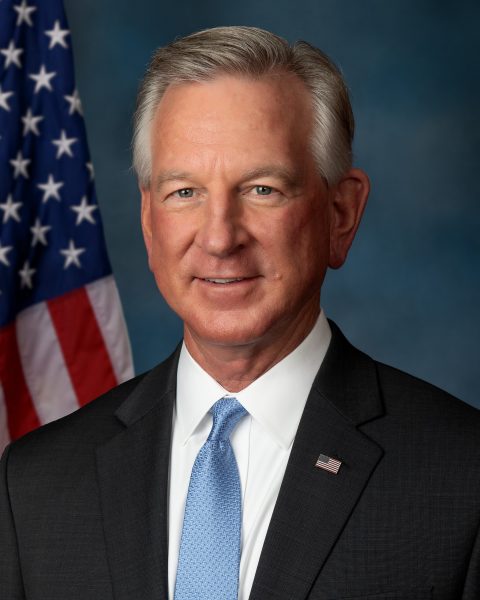
That framing is politically potent in Alabama, where resentment over pandemic-era restrictions, school closures, mask mandates and federal health guidance still animates many conservative voters. It also lets Tuberville cast himself not just as a critic of Fauci, but as someone promising state action rather than more congressional hearings.
What is less clear is what specific legal claim Tuberville believes Alabama could bring. A governor does not personally prosecute criminal cases. State attorneys general, local prosecutors and courts would have to decide whether any viable case exists, and any case involving federal officials, federal funding or congressional testimony would raise complicated jurisdiction questions.
For now, the pledge functions as both a legal threat and a campaign message: Alabama, Tuberville is saying, should not leave the Fauci fight to Washington.
Why Fauci took the Fifth
Alabama Daily News reported that Fauci invoked the Fifth Amendment and declined to answer questions from senators during a Republican-led hearing about his handling of the COVID-19 pandemic. Reuters also reported that Fauci, the former top U.S. infectious disease expert, declined to answer questions at a Rand Paul-led Senate committee appearance.
The Fifth Amendment protects people from being compelled to give testimony that could incriminate them. Invoking it is not an admission of guilt. It is a constitutional right, and witnesses sometimes use it when they believe questioning is designed to expose them to prosecution or legal jeopardy.
Fauci’s stated rationale, according to Alabama Daily News, was that Paul had shown an “obvious obsession” with calling for his prosecution. Fauci said he was following his attorneys’ advice and believed the hearing was intended to get him to say something that could be used against him.
That explanation will not satisfy his critics. For Paul, Tuberville and other Republicans, the refusal to answer under oath is likely to be presented as a sign that unanswered questions remain. For Fauci’s defenders, it is a predictable response to a hearing they view as built around prosecution threats rather than fact-finding.
The Paul-Fauci feud deepens
The hearing did not happen in a vacuum. Paul has spent years challenging Fauci over federal support for virus research, the origins of COVID-19 and the government’s public-health response. Their exchanges during earlier hearings became some of the most visible clashes of the pandemic oversight era.
Paul has argued that Fauci helped obscure questions about research and responsibility. Fauci has repeatedly denied lying or covering up the origins of COVID-19. House Oversight materials show that Fauci has previously sat for transcribed interviews with attorneys present, underscoring that this latest confrontation comes after years of formal inquiries, not as a first attempt to question him.
Before the latest hearing, Paul released more than 1,000 pages of Fauci’s personal diary from the pandemic years, according to Alabama Daily News. Paul suggested the diary showed a gap between what Fauci wrote privately and what he told the public.
Some of those diary entries reportedly reflected the uncertainty that scientists and officials faced in the earliest days of the pandemic. That is the central divide: critics see inconsistency and concealment; supporters see evolving science under crisis conditions.
The legal path is murky
Tuberville’s promise raises a basic question: what would an Alabama legal pursuit of Fauci actually look like?
If Tuberville were governor, he could direct state priorities, appoint officials in some contexts and use the office to pressure for investigations. But he could not simply order a criminal conviction, and he would not control federal prosecutions. Any legal action would need a theory, evidence, jurisdiction and a prosecutor willing to bring it.
A state case would also have to connect Fauci’s alleged conduct to Alabama in a legally meaningful way. Political arguments that federal pandemic policy hurt Alabama residents are not the same as a chargeable offense. Civil claims, criminal allegations and legislative investigations each require different standards.
That does not mean Tuberville’s pledge is meaningless. State officials can open investigations, issue subpoenas in certain circumstances and refer findings to prosecutors. But without a named statute, a filed complaint or a clearly identified court, the promise remains more political than procedural.
Two audiences hear different stories
For many Republican voters, Fauci remains the face of pandemic-era government authority. He is associated with school closures, masks, vaccine messaging and the public-health establishment that conservatives often accuse of overreach.
For many Democrats and public-health experts, Fauci represents career scientific service during a chaotic emergency. They argue that Republican investigations have blurred legitimate oversight with attempts to punish a politically useful villain.
The Fifth Amendment moment sharpens that split. Critics can say Fauci refused to defend his record. Supporters can say no witness should be expected to answer questions in a setting where lawmakers have openly talked about prosecution.
That tension is why Tuberville’s Alabama pledge travels beyond one hearing. It is part of a larger effort to keep pandemic accountability alive as a political issue, even years after the emergency phase of COVID-19 ended.
What remains unanswered
The immediate next step is not obvious. No source material reviewed for this article shows that Alabama has filed a case against Fauci, that a prosecutor has accepted a referral or that a court proceeding in Alabama is underway.
The key unanswered questions are practical ones: what law Tuberville believes Fauci violated, whether Alabama has jurisdiction, who would bring the case, and what evidence would support it beyond political disagreement over pandemic policy.
Fauci’s Fifth Amendment invocation ensures the fight will not fade quickly. It gives Republican lawmakers a new argument that he has more to explain, while giving Fauci’s side a clear defense that he was protecting himself in a hostile legal and political environment.
The takeaway is sharper than the slogan. Tuberville is trying to move the Fauci battle from Senate hearing rooms into Alabama politics. Whether that becomes an actual legal case, or remains a campaign promise built around a constitutional silence, is still unresolved.
Leave a Reply