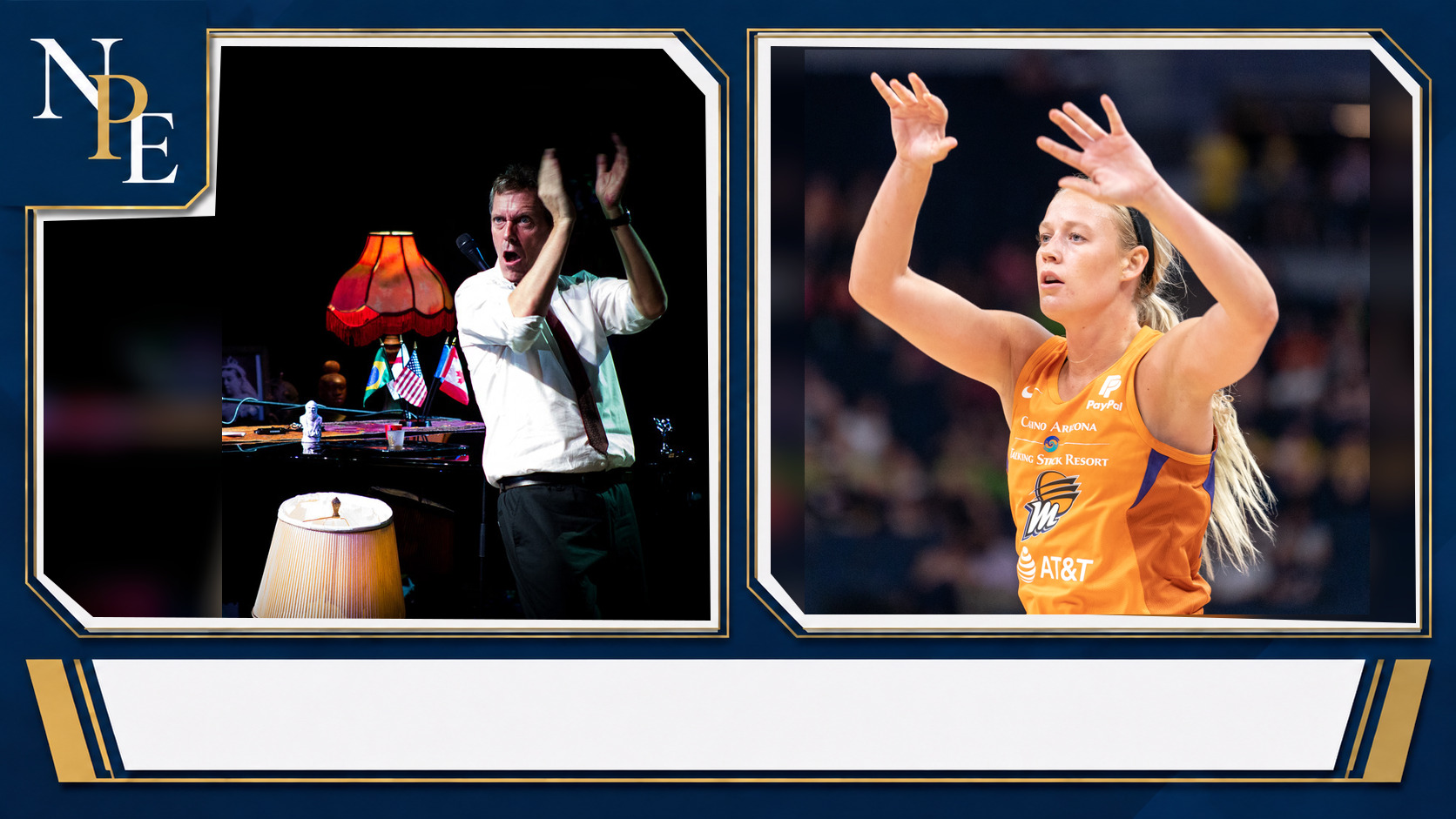
Laurie’s exchange with comedy writer Graham Linehan turned a basketball debate into a broader argument about celebrity speech and public backlash. The available reporting documents Laurie’s position, while leaving key details about any real-world “cancellation” fallout unclear.
Hugh Laurie came to Sophie Cunningham’s defense in the controversy involving transgender athletes in sports, and a comedian declared that the actor cannot be canceled. Laurie publicly backed Cunningham after being pressed to clarify his view on whether men should compete in women’s sports.
The exchange matters because it pulls a familiar celebrity into a debate that has moved far beyond sports talk. It also raises a separate question: when people say someone is being “canceled,” are they describing an actual professional consequence, a wave of online criticism, or simply a prediction of backlash?
Laurie’s answer was direct
According to reporting by The Washington Times, the discussion began after Laurie posted on X about the dispute playing out in professional basketball. His initial post included a joke about the unusual height of NBA players and the idea that, relative to them, nearly everyone else could seem small.

Irish comedy writer Graham Linehan then pressed Laurie to state his position plainly. Laurie responded that he does not believe men should compete against women in sports and said he believed he had already made that view clear.
Linehan also asked whether Laurie specifically supported Cunningham, the Indiana Fever guard. Laurie confirmed that he did. That brief confirmation is the central verified event behind the larger argument now circulating around him.
The available source material does not show Laurie laying out a detailed policy proposal for leagues, schools or governing bodies. His public comments were a statement of personal opinion in an online exchange, not an announcement tied to a team, employer or sports organization.
Why Cunningham became the focus
Cunningham had already become a prominent voice in the conversation before Laurie joined it. In an ESPN profile cited by The Washington Times, she said she wanted to protect young girls in locker rooms and said they should not have to compete against what she called biological men.
When reporters later asked about the comments, Cunningham described restrictions on transgender athletes competing in women’s sports as “common sense.” She also said she did not dislike anyone and would not retreat from her belief.
Her remarks put her at the intersection of competing concerns that are often discussed as if they have easy answers. Supporters of restrictions commonly point to competitive fairness and privacy; supporters of transgender inclusion emphasize dignity, equal participation and the effects of exclusion. The exchange involving Laurie did not resolve those issues. It showed how quickly a public figure’s endorsement can become part of the argument itself.
The “canceled” claim needs context
The comedian’s assertion that Laurie “can’t be canceled” is a striking framing device, but the reporting provided does not document a formal attempt to remove Laurie from a job, production or platform. Nor does it identify a professional penalty imposed on him because of these comments.
That distinction matters. “Cancellation” is often used as shorthand for criticism, calls for accountability, boycotts, social-media pile-ons or a real loss of work. Those are different events with different consequences, and treating them as interchangeable can obscure what has actually happened.
In this case, Laurie’s high profile is part of why the language caught on. He is best known to many viewers for playing Dr. Gregory House on House, and his entry into a contentious subject naturally draws attention from audiences who may not otherwise follow women’s basketball or sports-eligibility debates.
But celebrity status does not establish immunity from criticism, just as criticism does not by itself establish cancellation. The available account supports that Laurie expressed a view and backed Cunningham; it does not establish a concrete campaign against him or a measurable career consequence.
Linehan’s role adds tension
Linehan’s involvement gives the exchange another layer. The Father Ted co-creator has become closely associated with gender-critical activism, and reporting has described his online comments on transgender issues as a source of significant controversy.
The Washington Times reported that Linehan was arrested at Heathrow Airport last September over social-media posts criticizing transgender activism. The Metropolitan Police later said it would take no further action over those posts, according to the same report.
That history helps explain why his challenge to Laurie carried more weight than an ordinary celebrity reply. Laurie was not merely responding to a generic question online; he was being urged by a polarizing figure to take a clearer public position.
Laurie’s response was still somewhat bounded. He confirmed support for Cunningham and stated his view on competition, while also telling Linehan that he supported him only “some of the time.” That qualification suggests an alignment on this issue, not necessarily a wholesale endorsement of everything associated with Linehan.
Sports policy remains unsettled
The public debate over transgender athletes is often compressed into blunt phrases, but the underlying questions differ by setting. Elite professional competition, school sports, youth participation, locker-room policies and medical eligibility rules are not necessarily governed by the same standards or practical concerns.
Laurie and Cunningham’s comments focus on women’s sports and competition. They do not explain how they believe individual leagues should write rules, what standards should apply at different levels, or how organizations should balance fairness, inclusion and privacy in practice.
That lack of detail is common in fast-moving online disputes. A short post can make a position visible, but it rarely supplies the nuance needed for a policy discussion that affects athletes, teams and governing bodies differently.
What the episode actually shows
The verified core of this story is straightforward: Laurie publicly said he does not believe men should compete against women in sports and confirmed support for Cunningham after Linehan challenged him to be explicit.
The broader “can’t be canceled” narrative is more interpretive. It reflects the expectation that celebrities who speak on this subject will face intense reaction, but the material available does not show that Laurie has been formally punished or professionally sidelined.
For now, the episode is a reminder that online culture-war language can outrun the underlying facts. Laurie’s comments have made him part of the transgender-athletes debate; whether they produce any lasting career fallout remains unclear.
Leave a Reply