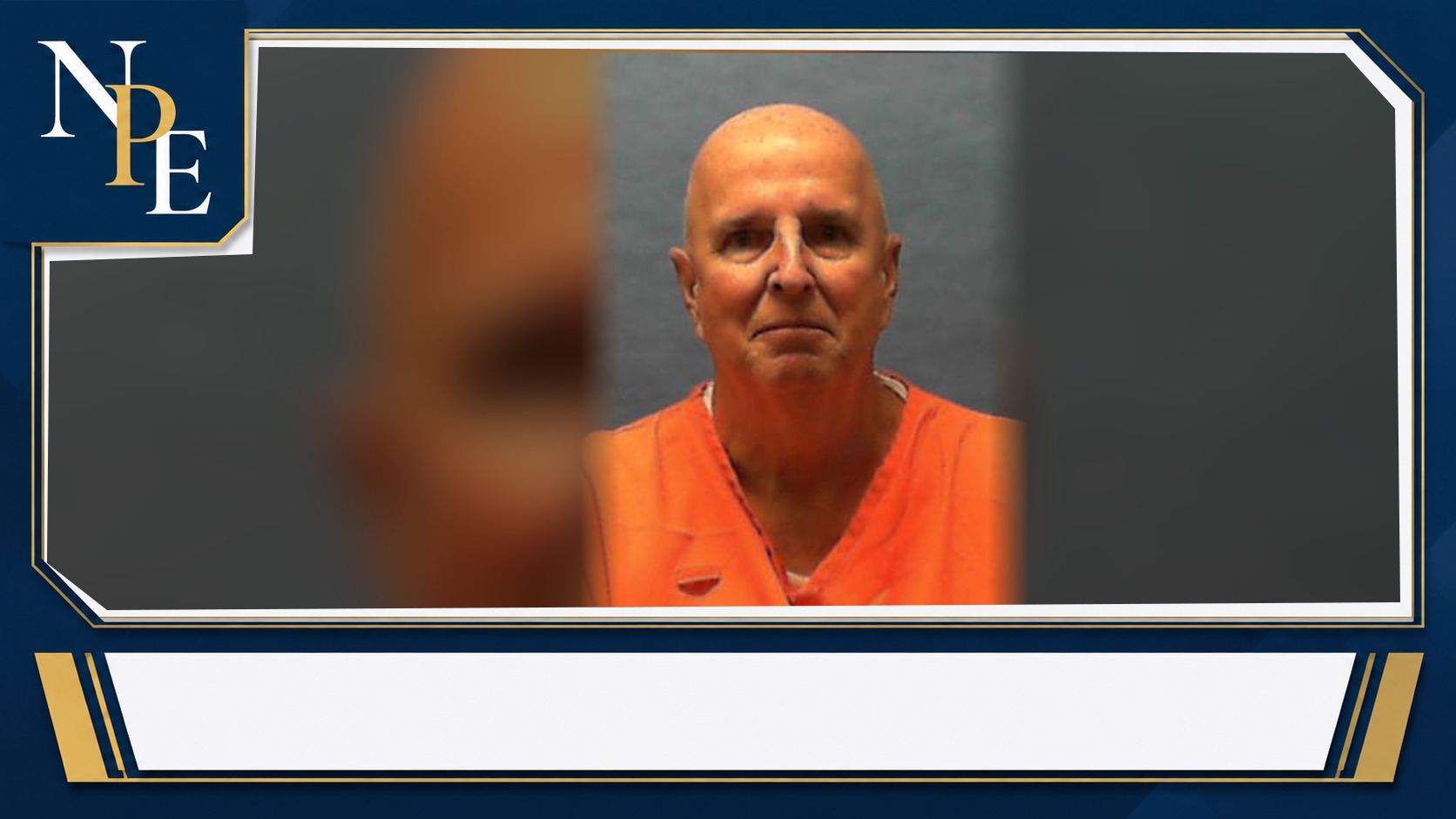
A stay does not erase Duckett’s conviction or death sentence, but it stops the state from carrying out an irreversible punishment while a forensic request remains unresolved. The case arrives as Florida has sharply increased its use of the death penalty.
Florida’s Supreme Court halted James Aren Duckett’s planned execution while DNA testing in Duckett’s case remains pending. Duckett, 68, was sentenced to death for the 1987 killing of 11-year-old Teresa McAbee, but the court’s stay means Florida could not proceed with the scheduled lethal injection at the time of the Associated Press report.
The immediate dispute is narrower than the decades-old conviction, yet enormously consequential: a circuit court approved DNA testing that Duckett says could exonerate him, and the evidence review had not been completed. The Florida Supreme Court also directed the state to report on the test’s status.
A pause, not a reversal
A stay pauses an execution while litigation or another court-ordered matter is addressed. It does not throw out a conviction, vacate a death sentence or amount to a court finding that the person is innocent.

That distinction is essential in Duckett’s case. The available reporting says his execution did not take place. His 1988 death sentence for first-degree murder and sexual battery remained in force when the Florida Supreme Court intervened.
Duckett had been scheduled to receive a three-drug lethal injection at Florida State Prison near Starke. The reporting does not provide a public timetable for whether or when an execution might be reset if the stay is eventually lifted.
The unresolved DNA question
During his appeals, Duckett sought DNA testing and argued that the results could exonerate him. A circuit court granted that request, but the testing was still pending when the state’s highest court issued its stay.
No reported result from the DNA testing is available. The reporting also does not establish that a result will alter Duckett’s legal status, his conviction or his sentence.
That uncertainty explains the significance of the order. The court did not decide the ultimate meaning of the forensic evidence; it stopped the execution while the court-approved process remains incomplete and required the state to update it on the testing.
The conviction dates to 1987
According to court records described by the AP, McAbee disappeared on May 11, 1987, after she was seen getting into Duckett’s patrol car near a convenience store. Duckett was then a police officer in Mascotte, west of Orlando.
Officials said McAbee’s body was found in a lake the following morning, less than a mile from the store. A medical examiner determined that she had been sexually assaulted and drowned.
The AP reported that blood and hair evidence linked McAbee to Duckett. Court records also described tire tracks at the lake that matched tires used on Mascotte patrol cars, as well as Duckett’s and McAbee’s fingerprints on the hood of his vehicle.
Three teenage girls testified at trial that Duckett had previously given them rides and made sexual advances, the AP reported. That evidence was part of the trial record behind the conviction; the current litigation centers on the request for additional DNA testing.
Why timing matters in capital cases
Those who support carrying out death sentences may see a conviction that has survived extensive trial and appellate review as settled. Defense lawyers and death-penalty opponents, by contrast, argue that a pending forensic test should be resolved before the state imposes a punishment that cannot be undone.
The Duckett stay does not settle that broader debate. It illustrates how both positions can converge on a procedural question: whether an execution should proceed before a court-authorized evidence review is finished.
Capital litigation can extend for decades, but an old case can still present an unresolved evidentiary issue near an execution date. A pending test is not, by itself, proof of innocence, just as a stay is not proof that the conviction will stand unchanged after review.
Florida’s faster execution pace
The court’s action comes during an unusually active period for executions in Florida. The AP reported that the state carried out 19 executions in 2025, the highest annual total overseen by Gov. Ron DeSantis since Florida reinstated the death penalty in 1976.
That figure surpassed Florida’s prior modern-era annual record of eight executions in 2014. Nationally, 47 people were executed in the United States in 2025, according to figures cited by the AP, and Florida carried out more executions than any other state.
Florida uses lethal injection, with a three-drug protocol that includes a sedative, a paralytic and a drug intended to stop the heart, according to the AP’s account. As death warrants move more quickly, the status of final-stage appeals and evidence requests receives greater scrutiny.
What the court has yet to decide
Duckett’s conviction and death sentence remained intact in the available reporting. The Florida Supreme Court’s order did not resolve his claim that DNA testing could be exculpatory, and it did not announce a final outcome for the execution.
The next significant development is expected to be the status of the testing and the state’s response to the high court’s request. Until then, the source-supported fact is straightforward: Duckett was not executed, because Florida’s Supreme Court paused the planned execution while DNA testing remains pending.
Leave a Reply