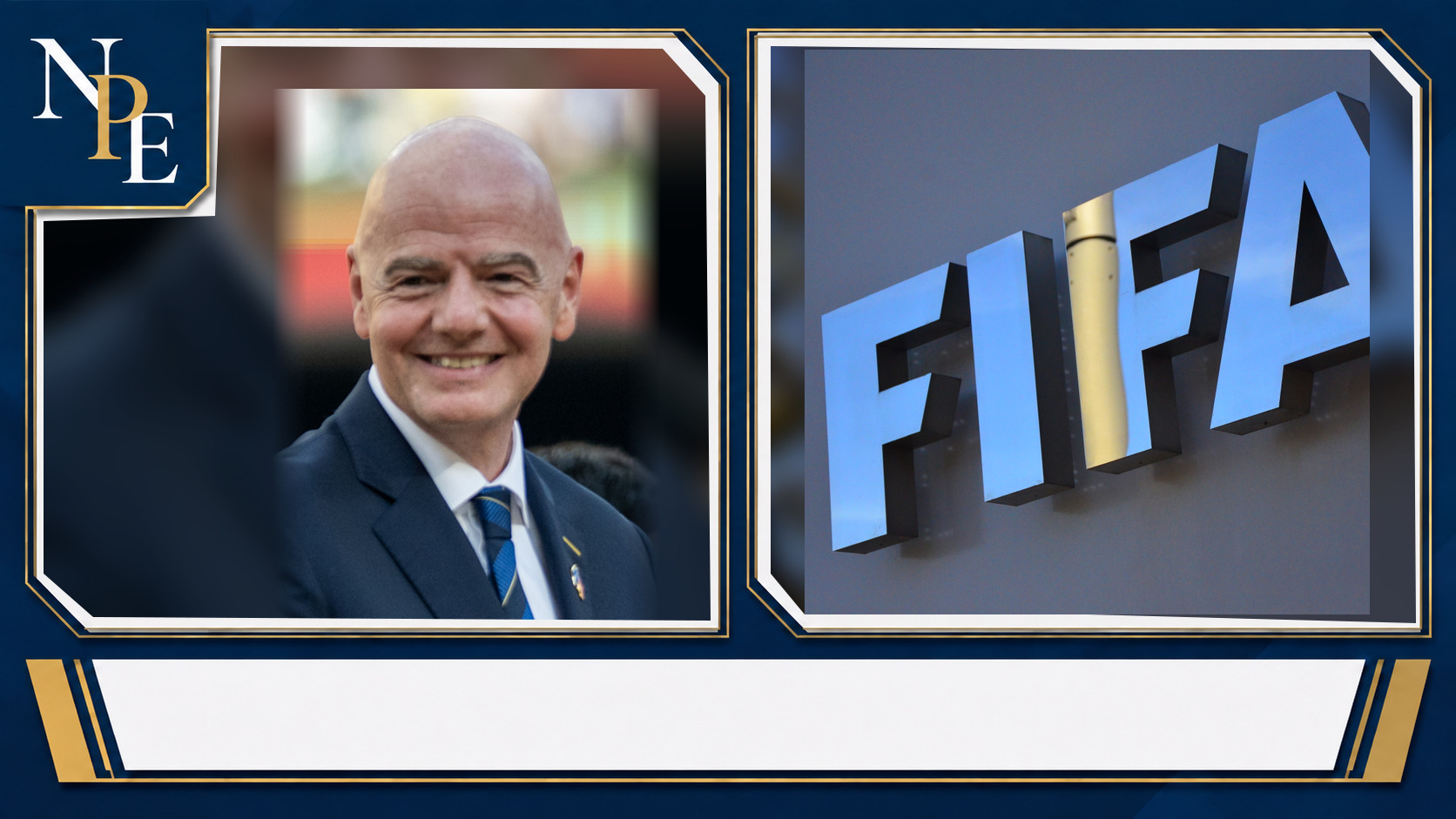
A call from FairSquare does not itself remove Gianni Infantino from office. It does, however, put FIFA’s rules, oversight and possible presidential succession under sharper scrutiny.
Gianni Infantino’s position as FIFA president is under threat after a leaked letter linked to human rights organization FairSquare called on FIFA to rule him ineligible for another term. The letter calls for an end to his tenure or blocks him from seeking another term, putting FIFA’s term-limit rules and its willingness to enforce them at the center of the dispute.
Reuters reported that FairSquare urged FIFA to prevent Infantino from pursuing re-election. That is not the same as a FIFA decision to remove its president, but it raises a consequential question for world football: who decides whether the leader of its most powerful governing body can stay in the race?
FairSquare’s challenge targets eligibility
The reported request is focused on eligibility for a future presidential bid, rather than an announcement that Infantino has already lost his job. That distinction matters. A campaign to bar a candidate from standing generally requires the organization responsible for the election to interpret its statutes and apply its internal procedures.
FairSquare is a human rights organization that has repeatedly scrutinized governance and rights issues connected to global sport. Its intervention places the debate in a broader argument about accountability at FIFA, whose decisions shape the World Cup, international competition calendars and the distribution of major football revenues.
The available reporting says FairSquare has urged FIFA to find Infantino ineligible for another term. It does not establish that FIFA has accepted that argument, opened a formal case, or set a timetable for a ruling.
That uncertainty is central to the story. A letter can increase public and political pressure, yet the practical consequences depend on what FIFA’s decision-makers do next.
A letter is not a removal
The phrase “end of FIFA president reign” suggests an immediate change at the top. At this stage, the reported development is a demand for FIFA action, not confirmation that Infantino will leave office or be stripped of his current position.
There are several possible paths between a public challenge and an actual leadership change: FIFA could reject the request, seek an internal interpretation of its rules, begin a review, or face pressure from member associations to address the issue through its governing structures.
Each path carries a different burden of proof and a different level of transparency. FIFA could also choose to make little public comment while handling any eligibility question internally, which would likely intensify calls for a clear explanation.
For supporters of a review, the point is that term limits should mean little if they can be interpreted selectively. For Infantino’s defenders, any eligibility decision should follow FIFA’s written rules and established process rather than be driven by headlines or outside pressure.
Why term limits matter at FIFA
Term limits are designed to address a basic governance concern: power can become harder to challenge when an executive remains in office for a long time, builds alliances across an organization and controls access to influential institutions.
At FIFA, that question reaches far beyond one executive. The president leads an organization made up of 211 member associations and sits at the center of decisions with global commercial, sporting and diplomatic consequences.
A disagreement over whether a president may seek another term can therefore become a test of institutional credibility. The outcome affects not only the individual candidate but also whether member associations, players, commercial partners and fans believe the organization applies its rules consistently.
Critics of long tenures often argue that clear limits protect independence and reduce the risk of an entrenched leadership culture. Others argue that continuity can be valuable in a complex international body, especially when members have repeatedly backed a leader’s agenda. FIFA’s own rulebook and its interpretation of it are what would determine which argument prevails in this case.
Pressure grows beyond one letter
The FairSquare appeal arrives in an environment where FIFA’s leadership decisions already attract unusually close attention. The organization governs the sport’s highest-profile tournaments, and debates over its leadership can quickly become debates over money, influence, transparency and the direction of football itself.
That is why the source of the appeal matters. A rights group is not a FIFA electoral body, and it cannot independently disqualify a candidate. But it can frame a dispute in terms that make silence more difficult for FIFA, particularly if other stakeholders echo the request for an explanation.
The case also illustrates the difference between formal power and reputational pressure. FIFA has the formal authority to administer its election rules. Civil-society groups, member associations and public scrutiny can influence how much detail the organization is expected to provide about its reasoning.
For Infantino, the immediate challenge is political as well as procedural. Even without a formal adverse ruling, a sustained dispute over eligibility can dominate discussion around a potential re-election bid and test support among football’s national associations.
What FIFA still needs to clarify
The most important unanswered question is whether FIFA will respond publicly to FairSquare’s reported request. A substantive response would need to say whether the organization believes there is an eligibility issue to examine and, if so, what process applies.
It is also unclear from the available reporting what exact timetable, if any, would govern a decision before a future FIFA presidential election. Without that information, claims that Infantino’s departure is imminent go beyond what has been established.
Reuters’ report makes clear that FairSquare has called for action against a further Infantino bid. It does not amount to a finding that he is ineligible, nor does it establish that a removal process is underway.
The broader stakes are straightforward: FIFA now faces pressure to demonstrate how its rules work when they concern the office at the top of world football. Whether it issues a detailed answer or declines the request, its handling of the challenge will shape the next phase of the debate over Infantino’s future.
Leave a Reply