Jeffries’s shift highlights a familiar Democratic divide: voters want relief from health-care costs, but the route to universal coverage remains politically unsettled. Polling suggests support is strongest for the goal of guaranteed coverage, not necessarily one specific plan.
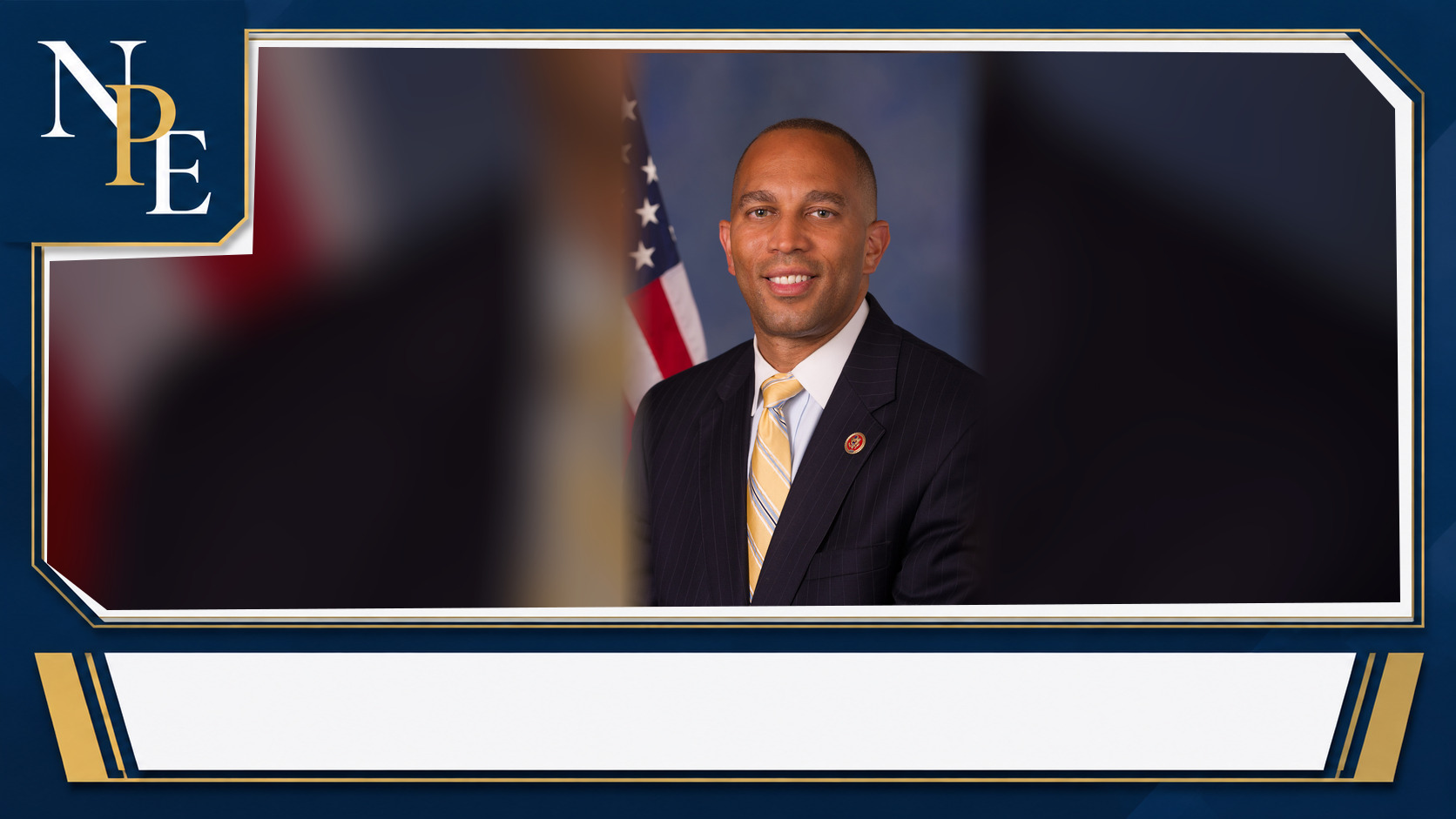
Hakeem Jeffries does not currently support Medicare for All, even though the House Democratic leader previously co-sponsored versions of the proposal. His change of position has renewed a Democratic Party argument over health policy, while public polling shows substantial support for Medicare for All and for a larger federal role in helping Americans get health coverage.
The key tension is not whether many voters are unhappy with the current system. It is whether replacing much of private insurance with a government-run plan is the answer they want—and whether Democratic leaders believe that argument can win.
Jeffries now favors a different route
Jeffries was asked about Medicare for All during an appearance on NBC’s Meet the Press and said he does not currently support the legislation. He said lawmakers should focus on fixing what he called a broken health-care system and making care affordable.
That is a notable turn from his earlier record. Congressional records show that Jeffries co-sponsored Medicare for All legislation in 2019 and 2021, when versions of the idea were backed by a larger group of congressional Democrats.
His present position places him closer to Democrats who favor strengthening existing programs, including the Affordable Care Act and Medicare, rather than replacing the country’s employer-based and private insurance system with a single national plan.
That distinction matters. “Medicare for All” is often used as shorthand for any effort to expand coverage, but the bills carrying that name go much further than expanding subsidies or adding a public insurance option.
What Medicare for All would change
Medicare for All generally refers to a single-payer system in which the federal government finances health insurance for all U.S. residents. Specific bills differ, but recent proposals associated with Senator Bernie Sanders would replace most private insurance plans.
They have also proposed broader benefits than traditional Medicare, including dental, vision and hearing care, while eliminating most premiums, deductibles and co-pays. The tradeoff is that financing would shift heavily to federal spending and new taxes.
Supporters say a single public insurer could simplify coverage, reduce patients’ out-of-pocket costs and use its bargaining power to control medical prices. They also argue that tying insurance to employment leaves too many people exposed when they lose work or face high deductibles.
Critics do not necessarily reject the goal of wider coverage. Their concerns center on the scale of the transition: higher taxes, the loss of private-plan choices for many people, disruption to employer coverage and the size of the federal program required.
Polls show support, with limits
Recent surveys point to meaningful public appetite for more government involvement in health care, but they also show why the debate can be difficult to summarize with one number.
A November 2025 Data for Progress poll found that 65% of respondents supported Medicare for All when it was described as national health insurance replacing most private coverage. It reported support from 78% of Democrats, 71% of independents and 49% of Republicans.
According to the survey, support remained above 60% after respondents were told that the policy would eliminate most private insurance and require higher taxes. That result suggests the proposal’s core idea can retain support even when respondents hear about major changes involved.
Still, other polling reveals a more divided picture on the exact design. A Pew Research Center survey conducted in November 2025 found that 66% of Americans said the federal government has a responsibility to ensure everyone has health coverage. But only 35% favored a single national government-run insurance system, while 31% preferred a mix of government programs and private insurance.
The label is not the whole issue
The two surveys are not necessarily in conflict. They ask different questions, use different descriptions and measure overlapping but distinct views. People can support guaranteed coverage while disagreeing about whether a single-payer model is the best way to provide it.
That leaves political leaders with an important messaging problem. A voter who says the federal government should ensure coverage may still be uneasy about losing an employer plan, paying higher taxes or putting nearly all health insurance under one public system.
At the same time, hesitation around the Medicare for All label does not mean satisfaction with the status quo. Newsweek cited a June survey from The Century Foundation in which 53% of voters said health-care costs had led them to cut back on care or take on debt.
A KFF report cited in the same reporting found that nearly half of adults said health-care costs were difficult to afford, with about one-third saying they had delayed or skipped care. Those pressures help explain why the question of government action remains potent even when voters split over the policy vehicle.
A Democratic divide comes into view
Progressives such as Sanders and Representative Ro Khanna have argued that Medicare for All should be a central Democratic priority. Their case is that incremental changes have not solved high premiums, medical debt or gaps in coverage.
More moderate Democrats have tended to emphasize practical cost reductions within the existing system: lower prescription-drug prices, expanded Affordable Care Act subsidies, Medicaid protections and stronger consumer rules for insurers. Jeffries’s comments place him in that camp for now.
Neither approach is free of political risk. Progressives can face questions about tax increases, private insurance and implementation. Moderates can face a different challenge: persuading frustrated households that repairs to the current system are enough.
The disagreement is also about electoral strategy. Some Democrats worry that Medicare for All could alienate persuadable voters. Others see avoiding the proposal as a failure to offer a sufficiently bold response to the everyday cost of care.
The next test is a concrete agenda
Jeffries did not lay out a detailed replacement for Medicare for All in his television comments. His broader message was that the health-care system needs to be repaired before Democrats build something better.
That leaves open the practical question at the center of the debate: which specific changes would lower premiums, deductibles and medical bills while expanding reliable coverage? The answer will shape whether his shift is seen as a move toward a workable alternative or simply a retreat from a popular progressive demand.
For now, the polling offers a clearer lesson than a mandate. Americans show broad support for the federal government helping guarantee health coverage. The harder, unresolved question is how much of the current insurance system they are willing to replace to get there.
Leave a Reply