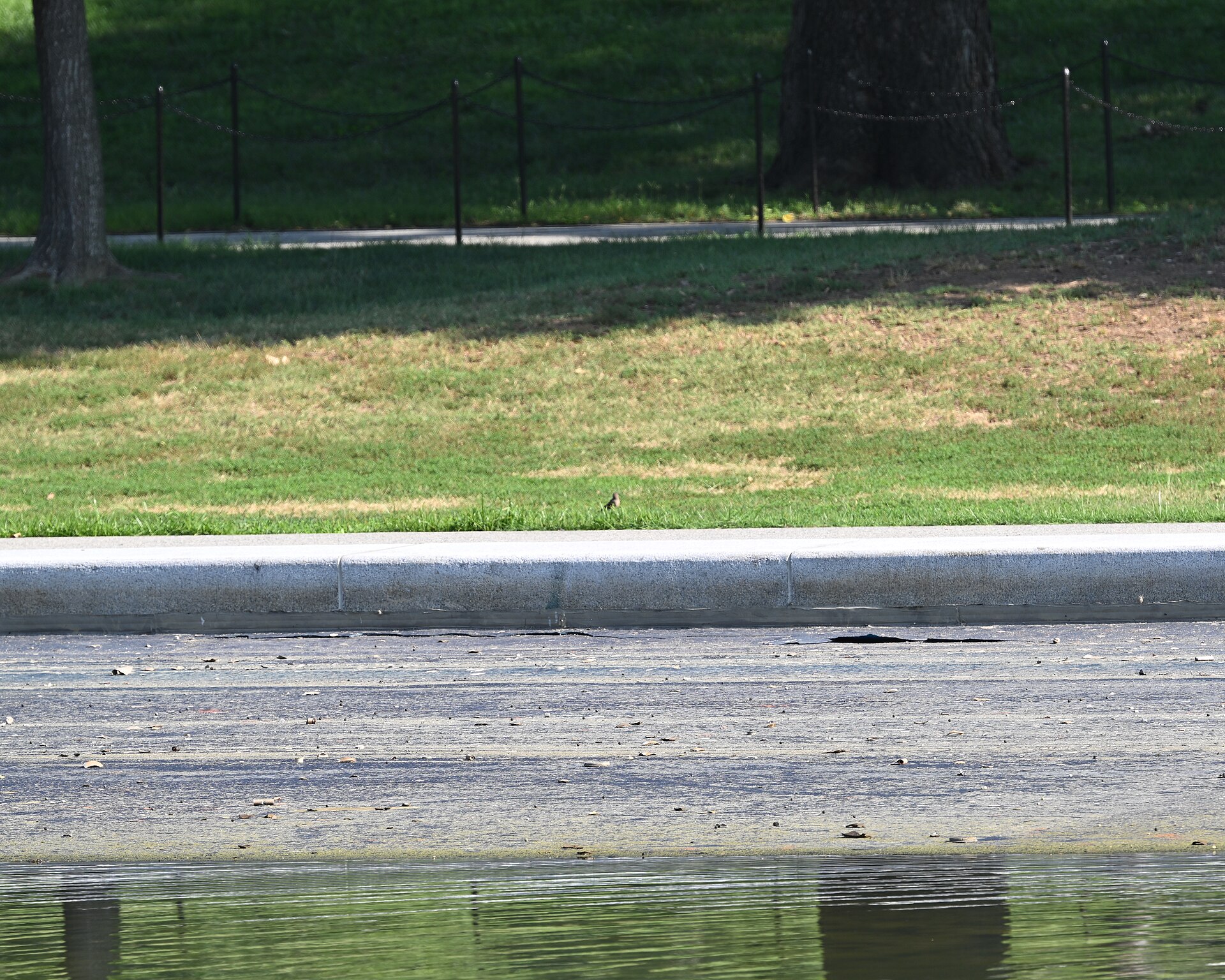
The reversal shifts attention from the accused defendant to the government’s handling of evidence, contractor work and a high-profile monument project in Washington.
The Justice Department will dismiss the Reflecting Pool vandalism charges. Prosecutors say the damage was caused by a botched installation, not vandalism, and are moving to drop the case after new Interior Department records undercut the indictment against former Olympic canoeist David “Davey” Hearn in Washington.
The reversal matters because the government is now saying its own case could not meet the basic standard needed for a conviction. It also raises a sharper question: how did a high-profile charge tied to the Lincoln Memorial Reflecting Pool move forward before prosecutors had records pointing to contractor problems?
The case unraveled in records
In a Friday court filing, a supervisor in the U.S. Attorney’s Office for the District of Columbia said prosecutors obtained information that undermined the evidentiary basis for the indictment against Hearn, according to NBC News. The office is headed by U.S. Attorney Jeanine Pirro.
Hearn had been accused in connection with damage to the Lincoln Memorial Reflecting Pool. He pleaded not guilty after being charged with destruction of property and accused of causing more than $1,000 in damage, a key figure because it supported the felony charge.
The filing said that after the July 2 indictment, the Interior Department provided additional documents to the U.S. attorney’s office. Those records indicated the June 2026 damage was tied to flawed installation by contractor Atlantic Industrial Coatings, rather than the actions prosecutors had attributed to Hearn.
That is the core turn in the case: prosecutors are not merely reducing a charge or settling a factual dispute. They are saying the evidence they later received changed the government’s understanding of what caused the damage.
Why prosecutors changed course
The Justice Department said it first became aware of information showing the damage was the result of a botched installation and not vandalism after reviewing the additional records. Prosecutors also said they were not in possession of Interior Department information suggesting another cause when they presented the case to a grand jury.
The filing, as reported by NBC News, faulted the Interior Department for not being forthcoming with information it had. Prosecutors wrote that if the department had provided the records earlier, the government would not have sought a grand jury indictment.
That is an unusually blunt explanation for abandoning a criminal case. The Justice Department is effectively saying the charging decision was made on an incomplete record, and that the missing information came from another federal agency involved with the site.
It also matters legally. To win a criminal case, prosecutors must prove the allegations beyond a reasonable doubt. The filing said that, after the evidence review, it would be difficult to attribute widespread damage at the Reflecting Pool to vandalism, let alone prove it at that level.
Trump rejected the decision
President Donald Trump publicly disagreed with the Justice Department’s move. In a Truth Social post Saturday, he said he disagreed “100%” with Pirro over the Reflecting Pool case and described the matter as vandalism.
Trump also said there may have been contractor difficulty, but argued the major damage was caused by vandals. In a later post, he shared video of the pool and said the material appeared to have been cut with a knife or box cutter.
That creates an unusual split: the Justice Department filing says the evidence no longer supports the vandalism case, while the president is publicly insisting vandalism remains the explanation. In criminal court, however, the government’s burden is not political certainty or visual suspicion. It is admissible proof.
A spokesperson for Pirro said the filing spoke for itself, according to NBC News. The White House did not immediately respond to NBC’s request for comment Friday evening.
Hearn’s defense says apology is due
Hearn’s lawyer, Steven Levin, said the case should never have been brought. In a statement reported by NBC News, Levin said the dismissal does not erase what he called an abuse of government power in arresting and charging his client.
Levin said the federal government owes Hearn an apology. That demand goes beyond the immediate legal outcome. If the case is dismissed, Hearn avoids prosecution, but he still had to face public accusation, legal costs and the stigma of being charged in connection with damage at one of the country’s most recognizable civic landmarks.
Hearn had told NBC News that the pool’s condition was the same after he put his hands in the water as it was when he arrived. That claim is now more significant because prosecutors themselves are acknowledging that the broader damage may not be attributable to alleged vandalism.
The defense also had other openings. NBC reported that a key witness had initially been unable to tell the grand jury the damage attributed to Hearn would have cost more than $1,000, the threshold prosecutors needed for the felony charge.
A monument project under scrutiny
The Reflecting Pool is not just a water feature. It sits between the Lincoln Memorial and the Washington Monument, making damage there instantly visible and politically charged. That visibility helps explain why the case drew attention before the government’s evidence picture was clear.
The damage followed a project to coat the bottom of the pool in what Trump described as “American flag blue” ahead of America’s 250th birthday. The project, according to NBC News, faced setbacks and rising costs beyond the president’s initial estimates.
After the pool was refilled, the coating began coming up and algae flooded the water. Those facts make the contractor-installation explanation more than a technical footnote. They point to a possible failure in planning, materials, application or oversight.
None of that automatically proves there was no vandalism anywhere at the site. But it does complicate the government’s original theory and explains why prosecutors no longer believe they can pin widespread damage on Hearn beyond a reasonable doubt.
What remains unresolved
The immediate legal direction is clear: the Justice Department is moving to dismiss the case against Hearn, and Pirro’s office also moved to dismiss at least one of the other misdemeanor cases connected to the Reflecting Pool, according to NBC News.
What remains less clear is whether anyone in government will formally examine why the Interior Department records were not in prosecutors’ hands before the indictment. If the filing’s account is accurate, the breakdown was not simply a courtroom problem. It was an information-sharing failure inside the federal government.
There is also the contractor question. Atlantic Industrial Coatings is identified in the filing as the contractor whose flawed installation was linked to the damage, but the public record described so far does not answer whether the company disputes that characterization, whether repairs are complete, or who will bear the cost.
The clean takeaway is narrower but important: the Reflecting Pool vandalism case is collapsing because prosecutors say the evidence now points somewhere else. For Hearn, dismissal would end the prosecution. For the agencies involved, it leaves a public record suggesting the case was brought before the government had the documents it needed.
Leave a Reply