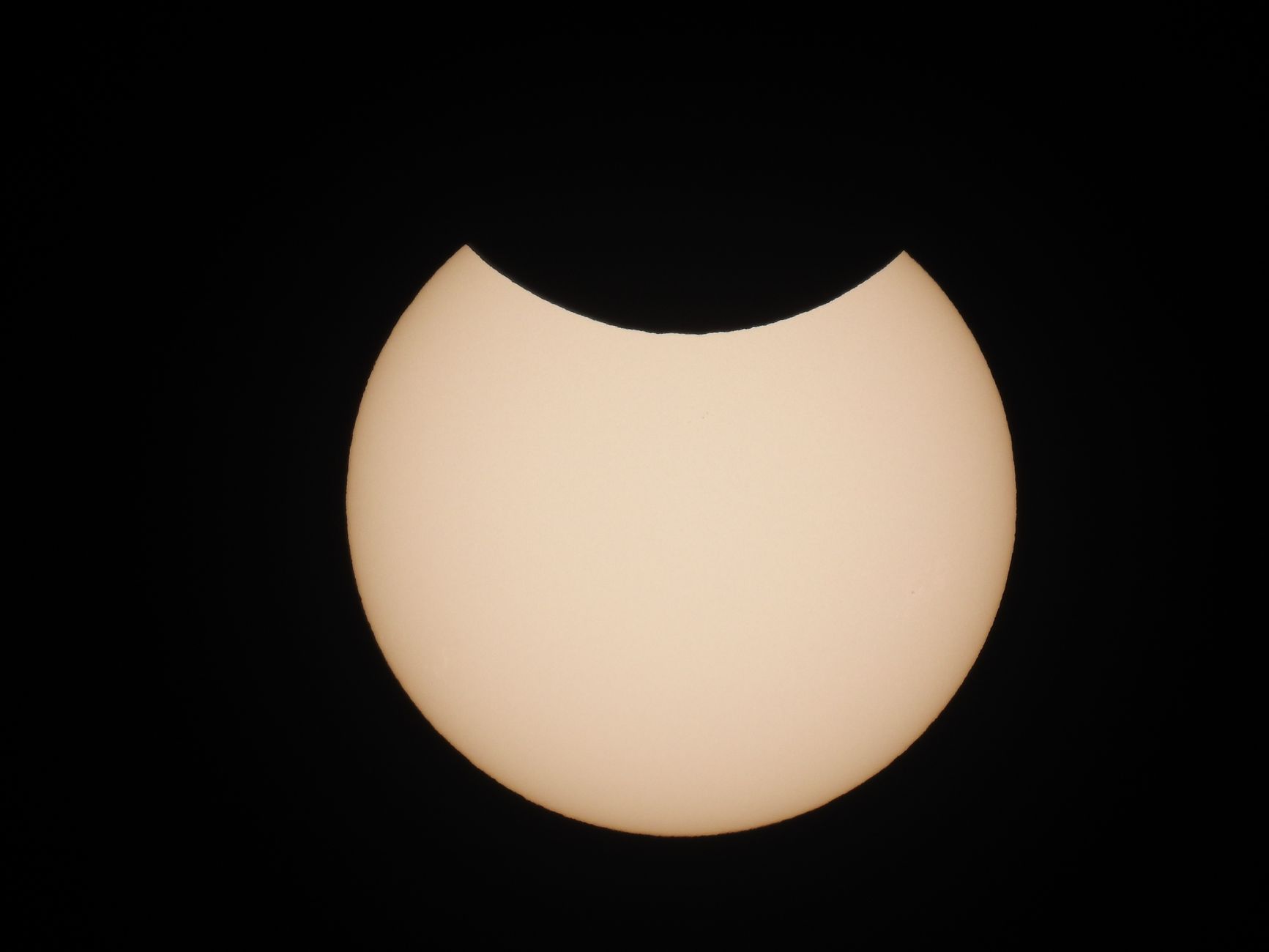
The next headline-making eclipse is not centered on North America. Its unusually long totality will make parts of North Africa and the Middle East prime viewing destinations.
A total solar eclipse will occur on Aug. 2, 2027, and the eclipse will last about six minutes at its peak — up to 6 minutes, 23 seconds, according to NASA’s eclipse data. This article explains where the eclipse will be visible, including the path of totality across parts of Africa, Europe and the Middle East.
The 6-minute solar eclipse matters because most total eclipses are shorter, including the April 8, 2024 eclipse that peaked at 4 minutes, 28 seconds. For North American eclipse chasers, the 2027 event is less a backyard spectacle than a travel decision.
The path favors North Africa
The narrow path of totality is the strip where the moon fully blocks the sun. For the Aug. 2, 2027 eclipse, that strip crosses parts of southern Europe, North Africa and the Middle East before moving toward the Horn of Africa.
NASA’s eclipse path data and maps compiled by National Eclipse show totality passing through or over portions of Spain, Gibraltar, Morocco, Algeria, Tunisia, Libya, Egypt, Sudan, Saudi Arabia, Yemen and Somalia. Places outside that central track may still see a partial eclipse, but they will not experience the full daytime-darkness effect of totality.
That difference is not a technicality. A partial eclipse can be interesting, but totality is the main event: the sky dims dramatically, the sun’s corona becomes visible and the temperature can drop. A city just outside the path can have a very different experience from one inside it.
Why the duration stands out
NASA lists the maximum duration for the 2027 eclipse at 6 minutes, 23 seconds. That is unusually long for a total solar eclipse and one reason astronomy outlets and eclipse planners have been paying attention years in advance.
For comparison, the April 8, 2024 total solar eclipse that crossed Mexico, the United States and Canada reached a maximum totality of 4 minutes, 28 seconds, according to NASA. The 1991 total solar eclipse lasted longer, reaching 6 minutes, 53 seconds at maximum, but eclipses of that length are not common.
Space.com has described the 2027 event as the longest totality until 2114. That does not mean the whole world will go dark, and it does not mean every location on the path gets the maximum duration. It means the best-positioned locations near the centerline will get an unusually long window of totality compared with most eclipses.
Duration depends on geometry: the moon’s apparent size, Earth’s distance from the sun, the angle of the eclipse track and where an observer stands inside the shadow. The closer a viewer is to the centerline near the point of greatest eclipse, the longer totality generally lasts.
Egypt may draw major attention
Not every location in the path will get the same viewing odds, infrastructure or accessibility. That is why parts of Egypt, especially areas near Luxor, are likely to be watched closely by eclipse travelers and tour operators.
Luxor is often discussed because it sits near the zone where totality will be especially long, and it already has hotels, airports within reach and a global tourism profile. Its desert climate also makes it attractive to eclipse chasers who worry about clouds spoiling a rare event.
That said, popularity brings trade-offs. High-demand eclipse destinations can see hotel rooms, tours and transportation booked well before the event. Local authorities may also need to manage crowds, road closures and heat risks, since Aug. 2 falls in the height of summer across much of the region.
Other locations along the path may offer excellent views but come with different considerations, including travel logistics, border crossings, safety guidance, weather patterns and access to open viewing areas. The best viewing site on a map is not always the easiest or safest place to stand on eclipse day.
The U.S. mostly misses it
For viewers in the United States, the 2027 eclipse will be a limited event. Time and Date projects that only parts of Maine may see a partial solar eclipse, with a brief viewing window around 5:14 to 5:19 a.m. ET on Aug. 2, 2027.
That timing creates its own problem: even where the partial eclipse is technically visible, the sun will be very low. Weather, horizon obstructions and location will matter. The vast majority of the country will not have a meaningful view.
That is a sharp contrast with the April 2024 eclipse, which put a long swath of North America inside totality and turned the event into a mass domestic travel moment. The 2027 eclipse is more international, more selective and likely more expensive for Americans who want the full experience.
It also means social media may make the event feel closer than it is. Photos and livestreams will spread quickly, but the actual path of totality is narrow and far from most U.S. viewers.
Another total eclipse comes first
The Aug. 2, 2027 eclipse is not the next total solar eclipse. NASA’s future eclipse listings show another total solar eclipse on Aug. 12, 2026, visible in Greenland, Iceland, Spain, Russia and parts of Portugal.
That 2026 eclipse may be a more realistic trip for some travelers, especially those already looking at Iceland or Spain. It also gives eclipse planners a reminder that each event has its own geography, weather risk and viewing personality.
Spain is notable because it appears in the paths of both the 2026 and 2027 total eclipses, though the viewing tracks and circumstances differ. For European observers, that creates a rare two-year stretch of major eclipse opportunities without crossing an ocean.
For everyone else, the choice may come down to priorities: shortest travel, longest totality, best weather odds, cultural itinerary or cost. The longest eclipse is not automatically the best one for every viewer.
Planning comes with caveats
If the 2027 eclipse is already on your radar, the practical advice is simple: start with the path of totality, then narrow by weather, accessibility and personal risk tolerance. A location inside the path but under clouds will disappoint; a location with clear skies but outside totality will not deliver the full eclipse.
Travelers should also be careful with early claims about best places to watch. Maps can identify the geometry, but local conditions still matter. Lodging availability, transportation, heat, safety guidance and crowd management may change between now and 2027.
- Use official maps: NASA eclipse data is the baseline for the path and timing.
- Check local timing: Totality duration varies sharply by location.
- Watch weather history: Cloud patterns can make or break the experience.
- Plan for safety: Certified solar viewers are needed whenever any part of the bright sun is visible.
The clean takeaway: Aug. 2, 2027 is shaping up as one of the most compelling eclipse dates in decades, but only a narrow part of the world gets the full show. For everyone else, the decision is whether a six-minute shadow is worth the journey.
Leave a Reply