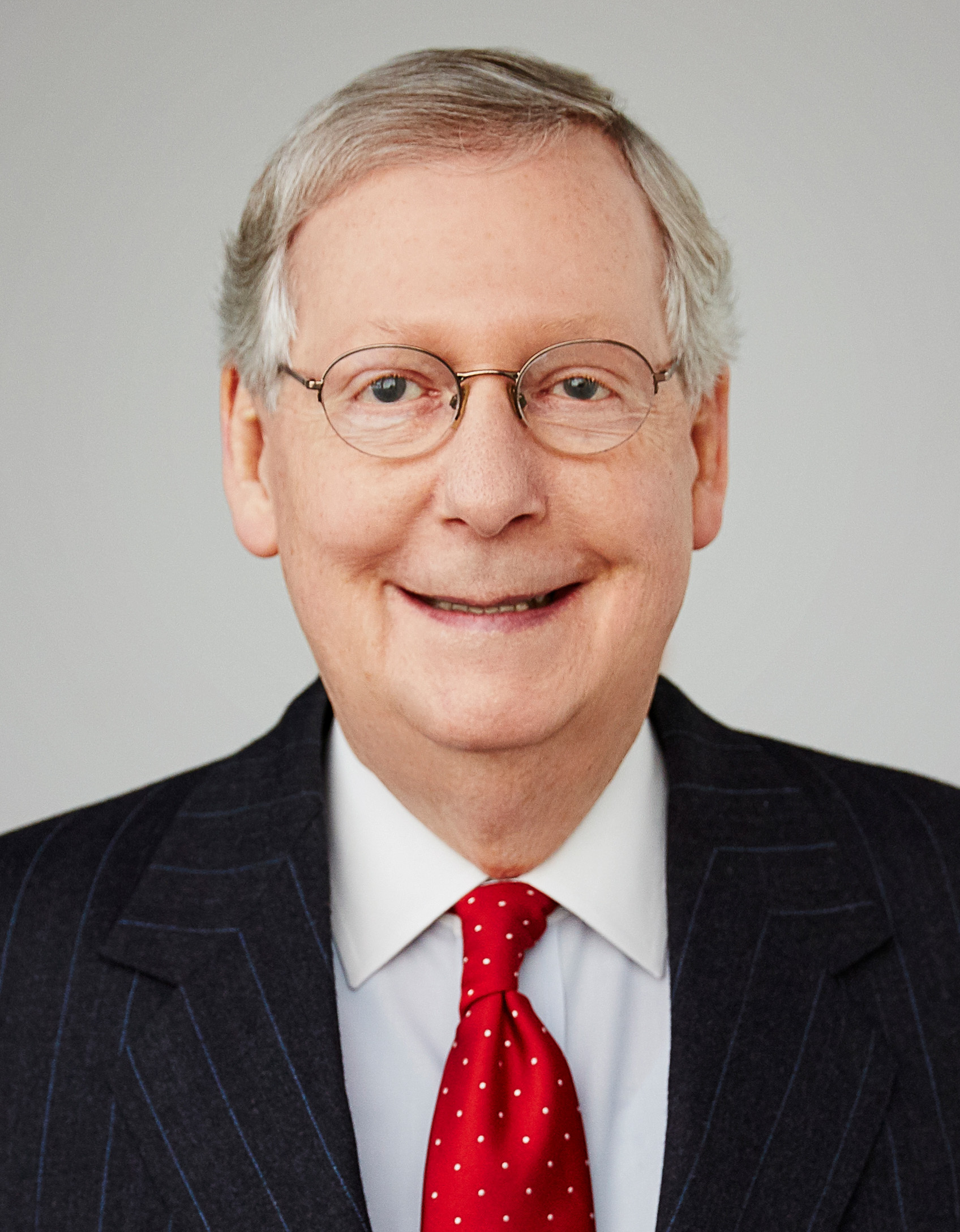
McConnell is staying in office until his term ends, but his decision has already shifted attention to Kentucky’s Republican succession fight. The open-seat race will test the pull of Trump-era politics and the limits of McConnell’s remaining influence.
Mitch McConnell will not seek reelection in 2026, and his exit starts a fight to replace him in Kentucky after a seventh term in the U.S. Senate. The announcement, made Thursday in Washington on his 83rd birthday, begins the closing chapter of one of the longest and most consequential Senate careers in modern Republican politics.
This article explains why his departure matters for Kentucky politics and Republican power in Washington: McConnell is not resigning now, but the race to inherit his seat and define the next version of the state GOP is already underway.
The seat opens before vacancy
McConnell’s decision does not immediately remove him from the Senate. His current term runs until January 2027, and, barring a change, Kentucky will not have an appointed replacement before the 2026 election.

That distinction is important because a retirement announcement can create a political vacuum even while the officeholder remains in place. McConnell still has a vote, a committee role and the relationships built over decades in the chamber.
The Associated Press reported that McConnell told colleagues he would not seek an eighth term and said his current term would be his last. AP also reported that he told senators he had unfinished business, signaling that he intends to keep working rather than fade immediately from Senate fights.
For Washington, the announcement changes the way every McConnell move will be read. He is still a senator, but he is now a senator with an end date.
Kentucky Republicans move quickly
The open seat is expected to draw serious Republican attention because Kentucky leans strongly Republican in federal races. That does not make the contest quiet. It makes the Republican primary the arena where much of the real political struggle is likely to play out.
Former Kentucky Attorney General Daniel Cameron quickly entered the race, according to AP. Cameron once worked as McConnell’s legal counsel, but he has emphasized his support for Donald Trump and presented himself as part of a newer generation of Republican leadership.
Other potential contenders were also in the conversation early. U.S. Rep. Andy Barr said he would decide soon about his future, while businessman Nate Morris was described as a possible GOP contender.
The emerging question is not simply who can win a Republican-leaning seat. It is what kind of Republican can win it in Kentucky now: a McConnell-linked institutional conservative, a Trump-aligned fighter, or someone trying to claim both lanes at once.
Trump-era politics set the terms
McConnell built his career in a Republican Party shaped by an older establishment model: pro-business, hawkish on foreign policy and deeply invested in Senate rules and institutional control. The party choosing his successor is more openly defined by Trump’s populist politics.
AP noted that McConnell’s power had diminished alongside his strained relationship with Trump and the changing dynamics of the GOP. That decline did not make McConnell irrelevant, but it did show how much the Republican Party’s center of gravity had shifted.
For candidates in Kentucky, the lesson is plain. Any serious Republican campaign will need to communicate comfortably with Trump-aligned voters, even if the candidate also has ties to McConnell’s world.
That creates an unusual political inheritance. McConnell helped Republicans secure lasting institutional victories, yet the candidates running after him may gain traction by distancing themselves from the Washington style he represented.
A legacy with two readings
McConnell was first elected to the Senate in 1984 and became the longest-serving Senate party leader in U.S. history. His career was defined less by public emotion than by vote-counting, timing and a disciplined command of procedure.
Supporters view that record as proof of effectiveness. They see McConnell as a conservative strategist who delivered major wins, particularly on the federal judiciary. Reuters described his career as one that helped shape the Supreme Court’s conservative direction, a legacy that will extend beyond his time in office.
Critics see the same methods as a source of lasting damage. To them, McConnell’s tactics intensified partisan mistrust and made institutional power feel like a permanent campaign weapon. Judicial confirmations became one of the clearest examples of that divide.
Both interpretations explain why his exit feels larger than a normal retirement. McConnell was influential because he understood the Senate, and he was polarizing because he used that understanding so aggressively.
Seniority will not transfer
Even if Republicans hold the Kentucky seat, McConnell’s successor cannot simply inherit his power. A new senator may cast similar votes, but seniority, committee influence and trust inside the chamber take years to build.
That matters for Kentucky as much as for Washington. McConnell’s long tenure gave the state unusual visibility in national Republican decision-making. An open-seat race may keep Kentucky in the political spotlight, but it does not guarantee the next senator will command the same reach.
The Senate itself is also losing a particular kind of operator: a lawmaker who spent decades learning when to block, when to bargain and when to move once votes were available. That skill set is not flashy, but it often shapes outcomes before the public sees a final vote.
Some voters will welcome the turnover, especially those who believe the Senate needs less old-guard control. Others will see the departure of institutional veterans as another step toward a more reactive, primary-driven chamber.
Democrats face a narrow path
Democrats have a more difficult map in Kentucky. Gov. Andy Beshear has shown that a Democrat can win statewide there, but AP reported that his political team reiterated he was not running for the Senate.
Without Beshear, Democrats would need another route in a race Republicans are favored to hold. The party’s challenge is not only finding a candidate, but building a credible path in a federal contest where Kentucky’s Republican lean is a central fact.
That dynamic could make the Republican primary the most important phase of the campaign. It also means national Republicans will be watching closely for signs of whether the party rewards continuity, disruption or a blend of both.
Health questions remain secondary
McConnell’s health has drawn attention in recent years, including falls and public episodes in which he appeared to freeze while speaking. AP reported that he walked gingerly to the podium for his announcement and wore a walking boot.
Those details are part of the public context, but they do not change the core fact of the announcement. McConnell has said he will retire when his term ends; he has not announced an immediate resignation.
The unresolved questions are political. How involved will McConnell be in the race to replace him? Will Kentucky Republicans choose a successor with personal ties to him, or a candidate who runs most clearly against the establishment brand? How much influence can McConnell still exert in Senate fights before January 2027?
For now, Kentucky has an open Senate race before it has an open Senate seat. McConnell remains in office, but the contest to define the post-McConnell era has already started.
Leave a Reply