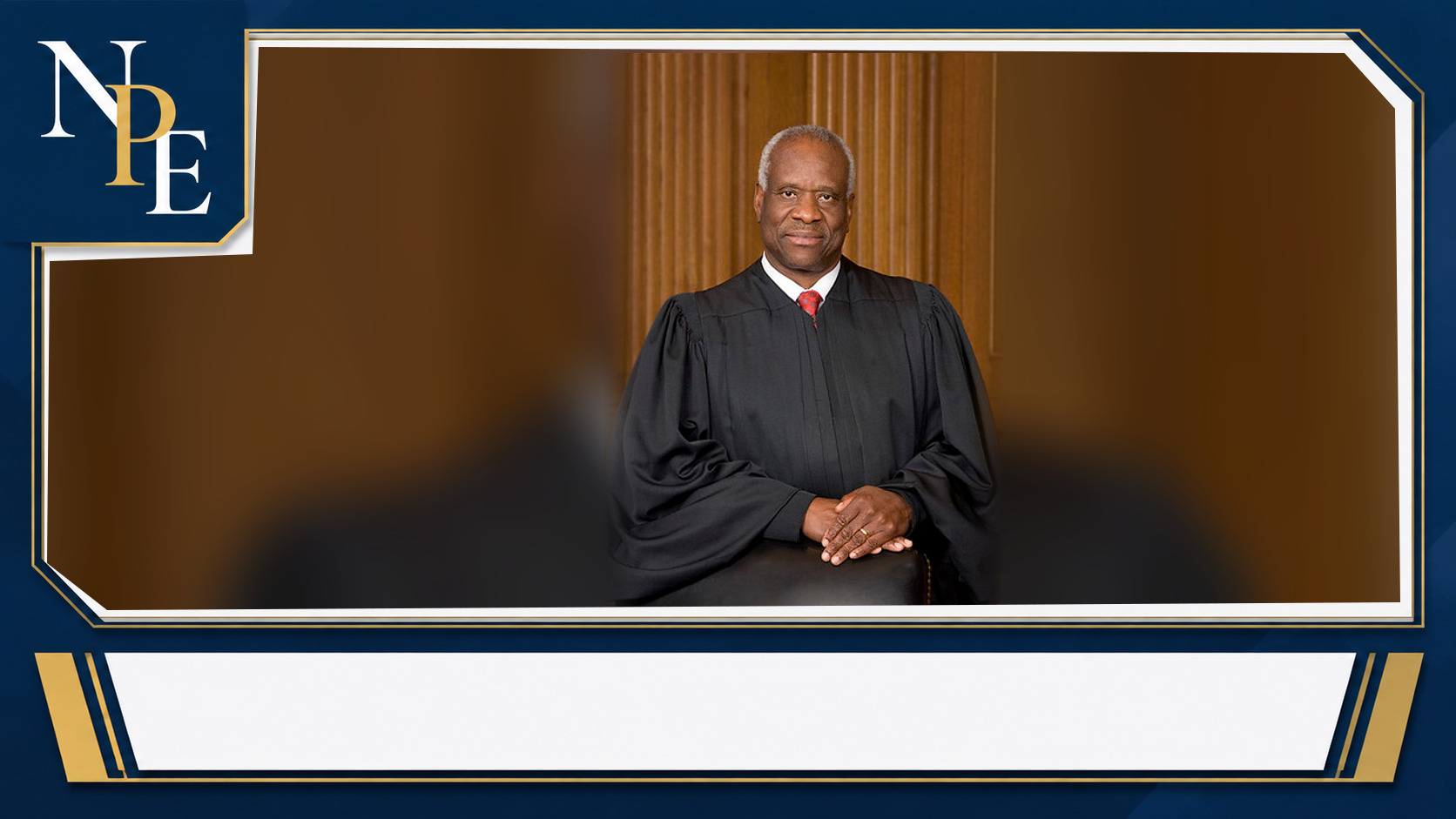
Thomas’s remarks, as described in the supplied report, target the idea that Black Americans should meet a prescribed political or ideological standard. The debate reaches beyond one phrase, touching his record on affirmative action and the limits of race-conscious policy.
Clarence Thomas criticized racial litmus tests and the policing of Black thought, using the phrase “Stay Black and die” to condemn what he sees as demands that Black Americans hold approved views. The Supreme Court justice’s wording has drawn attention because it crystallizes a conflict that has followed him for decades: whether rejecting race-conscious policies is an act of independence or a refusal to reckon with persistent inequality.
The supplied report presents Thomas’s comments as a rebuke to ideological conformity. Its central claim is clear even though the available material does not provide a full transcript, date, venue or surrounding exchange: Thomas objects to the idea that race should come with a required political script.
What Thomas appears to be arguing
“Stay Black and die” is not presented as a literal instruction. In the context supplied by the report’s headline, it is Thomas’s harsh shorthand for a perceived expectation that Black people must remain within a narrow set of socially approved opinions in order to be regarded as authentically Black.
That argument rests on an individualist view of identity. A person’s race, in this view, does not settle what that person must believe about admissions, employment policy, government power, voting, education or any other contested issue.
Thomas has spent much of his public life making versions of that case. His critics see the argument differently: they contend that race-conscious policies emerged because formal equality did not eliminate barriers created by segregation, discrimination and unequal access to opportunity.
A conflict older than this phrase
The comments fit a long and highly visible record. PBS FRONTLINE reported in 2023 that Thomas had long opposed affirmative action, including race-conscious admissions policies at colleges and universities.
Thomas’s views have also been shaped by his own experience. FRONTLINE reported that he attended Yale Law School at a time when institutions were actively trying to increase the enrollment of students of color. According to the report, he believed others assumed he had benefited from affirmative action rather than earned his place on merit.
That suspicion, and the stigma he associated with it, became central to his critique. Thomas has argued that preferences can burden intended beneficiaries with doubts about whether they were selected on their own qualifications.
Supporters of affirmative action answer that this account puts too much weight on stigma and too little on unequal starting points. They argue that admissions policies considering race were designed to widen access where historical exclusion had narrowed it—and that abandoning them can leave inequities untouched.
His Supreme Court record matters
Thomas’s perspective has legal consequences because he is not merely a public commentator. He is the longest-serving member of the Supreme Court, and his writings have consistently pressed for a stricter reading of equal protection that is skeptical of government racial classifications.
In the University of Michigan admissions cases decided in 2003, Thomas argued that race-conscious admissions violated the Equal Protection Clause of the Fourteenth Amendment. He dissented in Grutter v. Bollinger, where the Court permitted limited consideration of race in admissions to pursue student-body diversity.
Two decades later, the Court took a different course. In 2023, the Court ruled against the admissions programs at Harvard University and the University of North Carolina in the paired Students for Fair Admissions cases. Thomas joined the majority that found those programs unconstitutional.
The ruling did not end every argument over race and opportunity. Schools still consider how to recruit broadly, assess applicants’ experiences and comply with a decision that sharply narrowed the role race can play in admissions.
The divide over racial expectations
Thomas’s criticism of racial litmus tests speaks to a wider cultural argument: when does solidarity become pressure? Political communities often develop shared priorities, particularly when their members have faced common harms. Advocates say collective action can be necessary to protect civil rights and prevent those concerns from being pushed aside.
But Thomas’s formulation objects to turning shared priorities into a test of personal legitimacy. His point is that no racial group is politically monolithic, and that attaching ideological requirements to racial identity can flatten real differences among people.
That claim has appeal well beyond debates over affirmative action. It reflects a basic concern about whether public discussion permits dissent without treating a person’s identity as evidence against their credibility or belonging.
Still, the phrase also carries obvious risks. Critics may hear it as minimizing why many Black voters, scholars and civil-rights advocates support race-conscious remedies. Their position is not necessarily an attempt to police thought; it can be a response to evidence they believe shows race-neutral systems have repeatedly failed to produce equal results.
What the available account leaves unclear
The supplied source material establishes the thrust of Thomas’s remarks, but not the full setting. It does not include a transcript, identify the audience, or show what question or preceding discussion prompted the phrase.
That missing context matters. A short, forceful quotation can communicate a broad conviction while leaving uncertainty about whom Thomas was addressing and whether he was discussing a particular institution, policy dispute or public controversy.
What is not uncertain is the broader pattern. Thomas has repeatedly argued that race-based classifications carry costs, including assumptions about merit and demands for ideological conformity. His opponents have repeatedly argued that ignoring race in the name of neutrality can preserve disparities that policy was meant to confront.
The latest attention around “Stay Black and die” therefore lands on familiar terrain. It is a dispute over who gets to define racial progress, whether identity creates political obligations, and how far the law should go in recognizing race while trying to move beyond it.
Leave a Reply