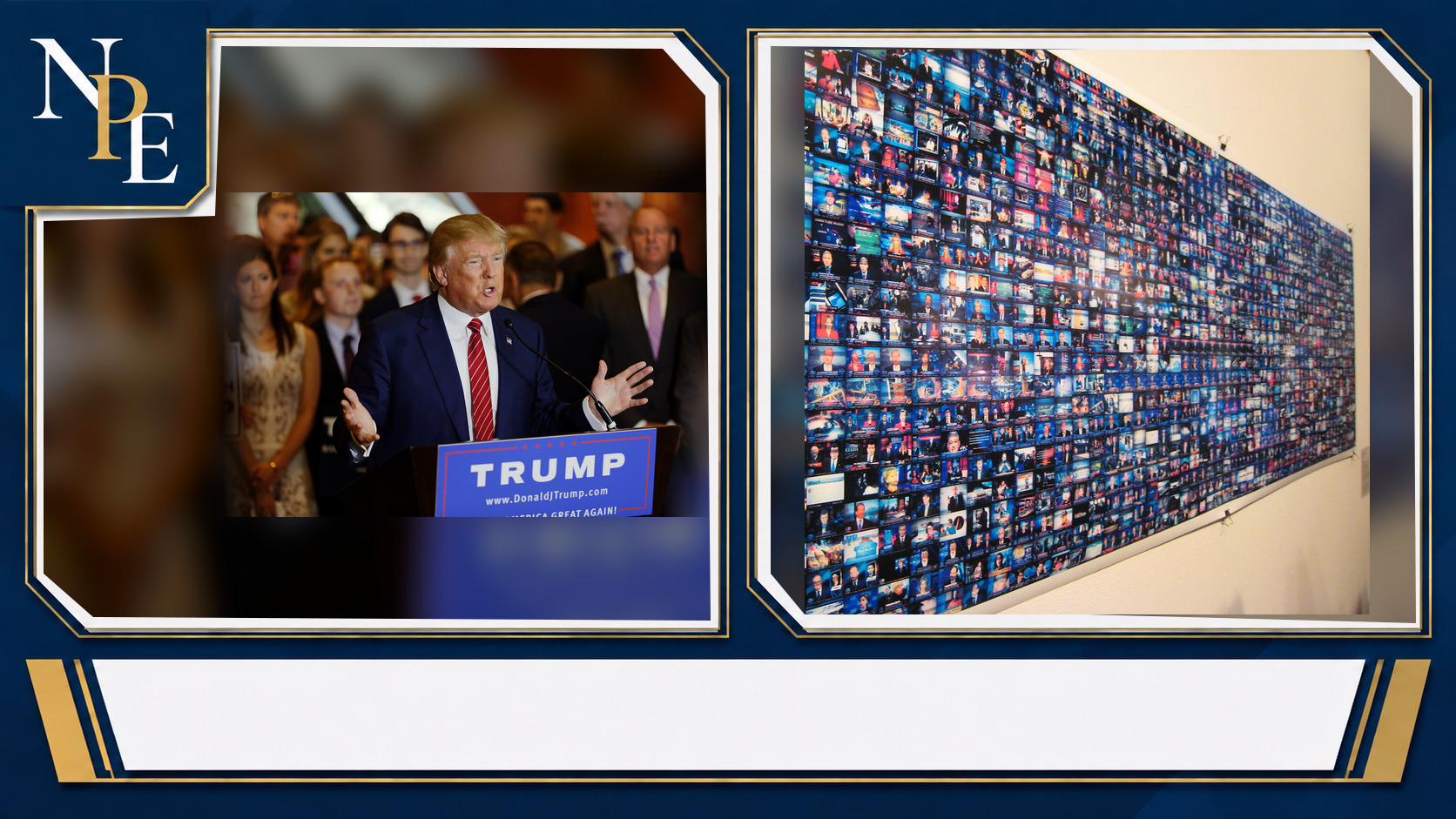
A brief moment during a Fox News broadcast became the latest flashpoint for scrutiny of President Donald Trump’s health. What viewers saw is clear enough to fuel debate, but it is not enough to confirm why he appeared that way.
Donald Trump’s face appeared to droop during a live Fox News broadcast on August 11, 2026, and the appearance prompted renewed concerns about his health among Fox News viewers and people sharing clips online. The footage from an Oval Office event fueled Trump health fears, but it does not establish that the apparent facial drooping was caused by any specific medical condition.
The episode is a reminder of how quickly a few seconds of television can become a larger political and medical conversation. Viewers focused on Trump leaning to one side and appearing fatigued while Health Secretary Robert F. Kennedy Jr. spoke about childhood vaccines.
The moment viewers seized on
Reports about the broadcast described Trump as sitting in the Oval Office during a discussion involving childhood vaccinations. The Daily Express said viewers focused on his posture, including a moment when he appeared to lean sideways in his chair and his face looked uneven on camera.

Social-media posts amplified the clip with claims that Trump had fallen asleep or was struggling to remain upright. Those posts helped shift attention away from the policy discussion and toward the president’s physical appearance.
That is the important distinction: people watching the broadcast interpreted what they saw as a possible health signal. Interpretation, however, is not a medical finding.
A clip cannot supply a diagnosis
Television images can be revealing, but they are also limited. A short segment may capture a person at an awkward angle, during a blink, while leaning, or under lighting that changes how facial features appear.
No clinician’s assessment, medical records, or official explanation identifying the cause of the apparent facial change was included in the available reporting. It would be inaccurate to treat online reactions as confirmation of a stroke, neurological condition, fatigue-related issue, or any other diagnosis.
Facial asymmetry can have many potential explanations, and the relevant details are not visible in a short broadcast clip. The responsible conclusion is narrower: viewers saw an appearance that concerned them, while the cause remains unverified.
The setting added to scrutiny
The scrutiny landed during an event about vaccines, a subject that already draws sharp public attention. According to the report, Trump argued that children should receive vaccines across five separate visits instead of receiving them on the same day.
He also repeated claims connecting changes in childhood vaccination practices and autism rates. Those claims are not supported by scientific evidence, as the report noted.
In that setting, Trump’s apparent fatigue became part of a much larger and unusually charged image: a president making disputed health-related statements while viewers debated his own condition. The combination made the moment more likely to travel online than an ordinary meeting-room clip.
Why presidential health draws attention
Questions about a president’s health are never only personal. The job requires constant public appearances, decision-making under pressure and readiness to respond to national or international developments. Any visible change in energy, balance, speech or expression can therefore take on political significance.
That dynamic has applied to presidents across parties and generations. Supporters can see selective or unfair scrutiny; critics can argue that public officials with immense authority deserve meaningful transparency. Both views collide especially quickly when the evidence is visual and incomplete.
The speed of social platforms raises the stakes. A video can be replayed, slowed down, captioned and framed as proof before basic questions are answered: Was the footage continuous? Was there another camera angle? Did the person speak normally before and after the moment? Was there an explanation from medical professionals?
What remains unconfirmed
The available reports support a limited account: Trump appeared in a Fox News-broadcast Oval Office event, some viewers believed his face appeared to droop, and online concern about his health followed. They do not substantiate a particular illness or medical event.
They also do not resolve whether the moment reflected posture, tiredness, camera perspective, a transient expression or something else. Without corroborating medical information, claims that go beyond the appearance of the footage remain speculation.
That uncertainty matters because health rumors can easily harden into supposedly settled fact, particularly when they involve a polarizing political figure. A viral clip may be newsworthy for the reaction it creates, but the reaction itself is not evidence of a diagnosis.
The takeaway from the viral debate
Trump’s Fox News appearance has renewed a familiar public argument over age, stamina and transparency in presidential politics. It also shows the limits of judging health through isolated television moments.
There is a legitimate public interest in clear, credible information about a president’s ability to carry out the office. There is not enough in this footage alone to identify a medical cause for Trump’s apparent facial drooping.
For now, the verified story is about the broadcast and the reaction to it: viewers noticed something, shared their concern widely, and turned a short Oval Office moment into another round of unresolved speculation about Donald Trump’s health.
Leave a Reply