
The Democratic and Republican senators have built a highly visible working relationship in a closely divided state. Fetterman’s comments signal how far that partnership could extend beyond Capitol Hill.
Sen. John Fetterman said he would not campaign against Sen. Dave McCormick if McCormick seeks a second Senate term in Pennsylvania in 2030. The statement puts an unusually personal boundary around a future race between two senators from opposing parties—and underscores the political partnership they have built in a critical swing state.
Fetterman, a Democrat, told the Washington Examiner that he would not move against McCormick, the Republican senator he called a friend and a “great guy.” The comments matter now because the pair have already turned their cross-party relationship into joint public appearances, legislative work and a shared fundraising effort.
Fetterman draws a line
The immediate question was straightforward: Would Fetterman support or oppose McCormick should McCormick run for reelection in 2030?
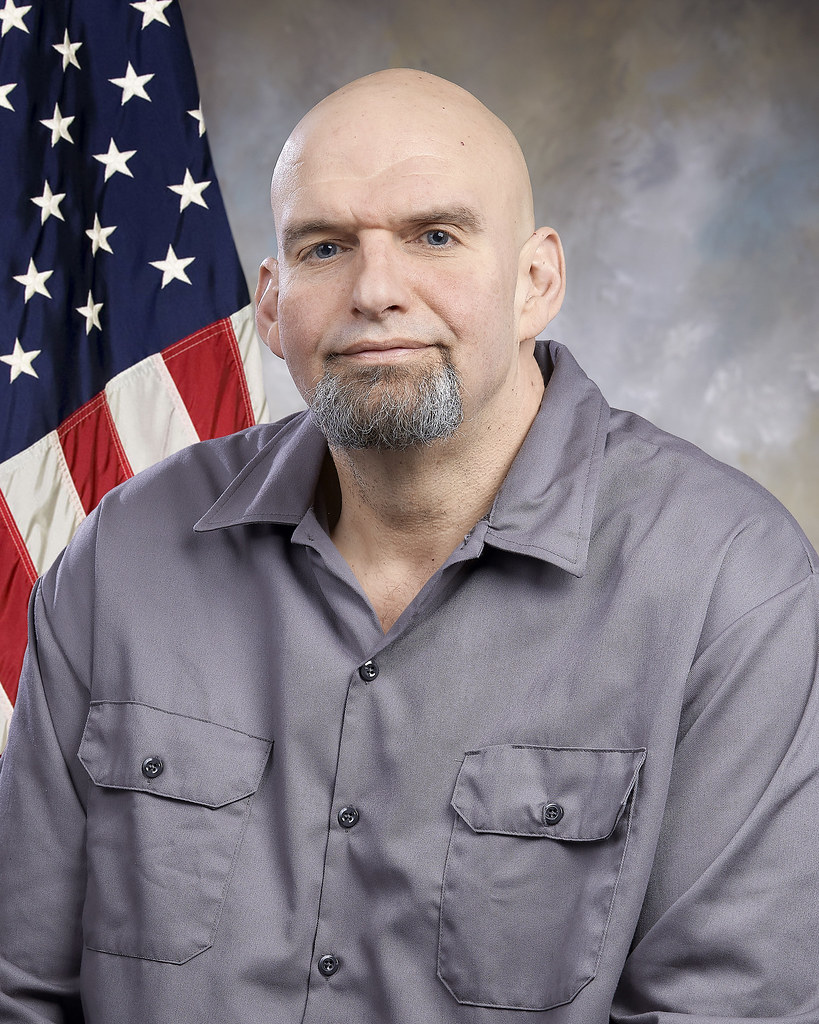
According to The Hill’s account of Fetterman’s remarks to the Washington Examiner, Fetterman’s answer was unequivocal. He said he would “absolutely never move against” McCormick.
That is not the same as an endorsement. Fetterman did not say he would actively campaign for McCormick, donate to him, or urge Democratic voters to back him. Still, declining to campaign against a sitting senator from the other party would be a notable break from the ordinary logic of competitive statewide politics.
In a state as politically consequential as Pennsylvania, even a decision to stay on the sidelines can carry weight. The state’s Senate races are routinely expensive, nationally watched contests, and party organizations generally expect their highest-profile elected officials to help defend or win seats.
A rare Pennsylvania Senate pairing
Fetterman and McCormick represent one of only three states with split Senate delegations, according to The Hill. Their party labels place them on opposite sides of many major national fights, but their relationship has been conspicuously warmer than the usual arrangement between senators from rival parties.
The two have appeared together in the media and co-sponsored legislation. Those are visible signs of cooperation, though bipartisan bills and cordial interviews do not erase the substantial ideological differences between a Democrat and a Republican serving in today’s Senate.
What makes this case more unusual is that their collaboration has reached fundraising. In July, the senators filed a joint fundraising effort called Common Ground PA, a political action committee that accepts contributions intended to support both Pennsylvania senators.
A spokesperson for the group told The Center Square that its donors value the senators’ collaboration on behalf of Pennsylvania. The arrangement gives their partnership a practical political structure, not just a message about civility.
Why the fundraising effort stands out
Joint fundraising across party lines is striking because campaigns are built around competition as much as agreement. Donors, activists and party committees generally direct money toward candidates who can advance their party’s control of the Senate.
Common Ground PA appears to offer a different pitch: support the state’s two senators together, despite their differing parties. That could appeal to contributors who value bipartisan problem-solving or simply want both offices focused on Pennsylvania priorities.
Critics could reasonably see a tension in the arrangement. A senator’s party affiliation is not ceremonial; it shapes control of committees, the Senate floor and the national agenda. Democrats may question whether Fetterman’s posture weakens his party’s future electoral position, while Republicans may wonder how far McCormick’s collaboration can go when party priorities diverge.
Supporters, meanwhile, can argue that voters benefit when senators who share a state can coordinate on issues that do not fit neatly into partisan categories. The central unresolved point is whether this model remains durable when legislation, nominations or election-year messaging becomes more difficult.
McCormick praises his colleague
McCormick has publicly embraced the relationship as well. In a Sunday appearance on “The Cats Roundtable,” he said he was fortunate to have a good partner in Pennsylvania.
The Republican also praised Fetterman for being willing to challenge what McCormick described as “craziness” within the Democratic Party. McCormick specifically referenced Democratic primary victories by progressive candidates during the 2026 midterms and said Fetterman’s positions had made him unpopular with some people in his own party.
That praise reflects a real political overlap, especially on Fetterman’s criticism of democratic socialism and parts of the progressive movement. Fetterman has also made support for Israel a defining issue, including in disputes with fellow Democrats.
Yet praise from a Republican senator can cut both ways for a Democrat. It reinforces Fetterman’s image as an independent voice, but it may also deepen skepticism among Democratic activists who already disagree with him on foreign policy and the party’s ideological direction.
Fetterman’s party status remains central
Fetterman has said he has no plans to leave the Democratic Party. At the Hill Nation Summit, however, he said he would consider departing if Democrats officially became an anti-Israel party, describing Israel as an issue of moral clarity for him.
Senate Majority Leader John Thune, a South Dakota Republican, said in late July that Republicans would welcome Fetterman if he chose to switch parties. That invitation has fueled speculation, but it is not evidence that Fetterman is preparing to leave the Democratic Party.
For now, Fetterman’s refusal to campaign against McCormick should be read as a statement about their relationship, not a formal endorsement, party switch or agreement on every issue. The distinction matters: a personal pledge of nonaggression is politically meaningful, but it does not settle how either senator will act in future Senate battles.
What to watch before 2030
McCormick has not made the potential 2030 contest the subject of a campaign announcement in the material reported by The Hill. A future race would depend on whether he runs again, who seeks the Democratic nomination and what Pennsylvania’s political landscape looks like years from now.
There is also no indication that Pennsylvania Democrats as a whole would follow Fetterman’s lead. Party committees, candidates and outside groups make their own strategic decisions, and a contested Senate election would almost certainly draw national money and attention.
Still, Fetterman’s comments offer an early measure of how unusual this partnership has become. In a Senate defined by narrow margins and sharp partisan divisions, Pennsylvania’s two senators are trying to show that cooperation can have a political life beyond one bill or one vote—even if the limits of that experiment have yet to be tested.
Leave a Reply