Three execution dates converged across Tennessee, Alabama and Oklahoma, putting renewed scrutiny on how states carry out capital punishment. One execution was confirmed by Tennessee officials, while the status of the other two cases was not established in the available records.
Three men were scheduled to be executed on the same day in the United States as the use of the death penalty rose. On Aug. 13, Tennessee, Alabama and Oklahoma had execution dates set for Anthony Darrell Hines, Jeremy Williams and Carlos Cuesta-Rodriguez. Tennessee officials later confirmed that Hines was executed by lethal injection.
The convergence matters because it put three very different death-row cases into a national debate that has become more active in several states. The BBC described a steep rise in U.S. death-penalty use, while recent concerns about failed or problematic lethal injections have kept the method itself under intense scrutiny.
One execution was officially confirmed
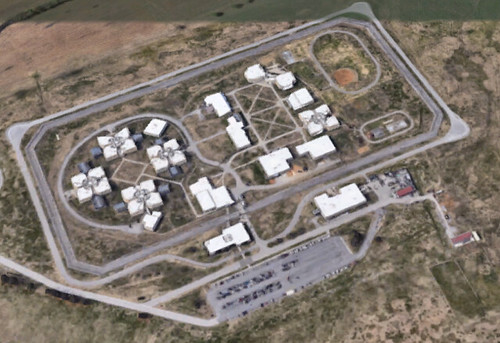
The Tennessee Department of Correction said Hines, 66, was put to death at Riverbend Maximum Security Institution in Nashville on Aug. 13. The agency said he was pronounced dead at 10:43 a.m. Central Daylight Time after lethal injection, carried out under an order from the Tennessee Supreme Court.

That confirmation is significant because execution schedules can change rapidly. Court appeals, stays, clemency decisions, medical questions and disputes over protocols can alter plans in the final hours.
The available reporting identified Hines as bedridden and said he had maintained his innocence for four years. Those claims and the circumstances of his case remained part of the public debate around his execution, but Tennessee’s official notice focused on the court-ordered sentence and the fact that it had been carried out.
Three states, three different cases
The same-day schedules involved separate state systems, separate crimes and separate legal paths. That is an important distinction: there is no single national execution authority overseeing how each state sets dates, chooses protocols or handles clemency.
- Tennessee: Hines was scheduled to die by lethal injection, and the state confirmed the execution took place.
- Alabama: BBC reporting said Williams had been convicted of the 2021 rape and murder of a 5-year-old girl. It reported that he had dismissed his attorneys and volunteered for execution, and that Gov. Kay Ivey did not plan to grant clemency.
- Oklahoma: Cuesta-Rodriguez, described by the BBC as a man in his 70s, was scheduled for lethal injection in connection with the 2003 murder of a woman. The report said he had asked for no clemency or mercy.
The records provided for this article confirm Hines’s execution but do not establish whether the Alabama and Oklahoma executions went forward, were stayed or were otherwise changed. That uncertainty is not a minor technicality; it is central to understanding capital punishment reporting, where a scheduled date is not the same as a completed execution.
Lethal injection remains the pressure point
All three men were reportedly set to be executed by lethal injection. The method has been the subject of repeated legal challenges, especially over drug availability, medical access, the qualifications of execution-team personnel and the risk that a procedure will not work as intended.
The Death Penalty Information Center, cited by the BBC, estimates that about 3% of U.S. executions from 1890 through 2010 were botched. Its analysis found lethal injection had the highest botched-execution rate among methods used during that period.
The organization also said that more than one-third of U.S. executions in 2022 were botched or highly problematic. Such assessments are contested in the broader policy fight: death-penalty opponents say they show an unacceptable risk of state-inflicted suffering, while supporters argue that states can refine procedures and that lawful sentences should be enforced.
Tennessee’s recent history illustrates the dispute. In May, officials attempted to execute Tony Von Carruthers by lethal injection for more than an hour before the procedure did not proceed. Witness statements described him expressing pain. Gov. Bill Lee granted a one-year reprieve, but said the episode was not a botched execution and that a doctor had been unable to establish IV access.
Why execution numbers are rising
The U.S. death penalty has not returned evenly across the country. Some states have abolished it, imposed moratoriums or rarely seek execution dates. Others have moved more aggressively to carry out sentences that had remained unresolved for years or decades.
Florida has drawn particular attention for pursuing a larger number of executions, according to the BBC’s reporting. But the Aug. 13 cluster showed that the renewed activity is not confined to one state: Tennessee, Alabama and Oklahoma were all preparing to use capital punishment on the same day.
That does not mean the country has reached the execution levels seen in earlier decades. The long-term picture is more complicated. Death sentences and executions declined substantially from their late-20th-century highs, and the number of states permitting executions has narrowed. Yet a rise in scheduled or completed executions in a smaller group of states can still reshape the national conversation.
For victims’ relatives and supporters of capital punishment, executions can represent the completion of a sentence after years of litigation. For defense lawyers, civil-liberties groups and many medical ethicists, the same process raises questions about fairness, age and health, competent legal representation, innocence claims and the state’s ability to carry out an execution without serious error.
The legal process is never simple
Capital cases typically move through a long chain of state and federal appeals. Even after those appeals are exhausted, lawyers may seek a stay based on newly raised evidence, mental competency, intellectual disability, medical condition, execution procedures or access to religious advisers and counsel.
Executives also retain varying clemency powers. In Alabama, the BBC reported that Ivey did not intend to intervene in Williams’s case. In Tennessee, Lee’s earlier reprieve for Carruthers showed that a governor can pause an execution even when a death warrant is in place.
States must also contend with practical constraints. Pharmaceutical suppliers have restricted the use of some drugs in executions, contributing to protocol changes and litigation. Several states have considered or adopted alternatives to lethal injection, including nitrogen hypoxia, firing squads or electrocution, each of which has prompted separate legal and ethical challenges.
A single day, a wider reckoning
The Aug. 13 schedules were unusual because three cases were set to culminate on one day in three different states. But the larger significance lies in what they exposed: capital punishment is neither dormant nor uniform in the United States.
Hines’s execution is confirmed by Tennessee’s correction department. The final outcomes of the Alabama and Oklahoma cases were not available in the supplied records. What is clear is that every scheduled execution now unfolds under two overlapping pressures—demands to enforce final criminal judgments and mounting questions about whether the systems and methods used can meet legal, medical and moral scrutiny.
As states pursue more execution dates, the focus will extend beyond the number carried out. It will also rest on who is executed, how each state handles last-minute challenges, and whether the procedures meant to deliver a sentence can withstand the scrutiny that comes with using the state’s ultimate punishment.
Leave a Reply