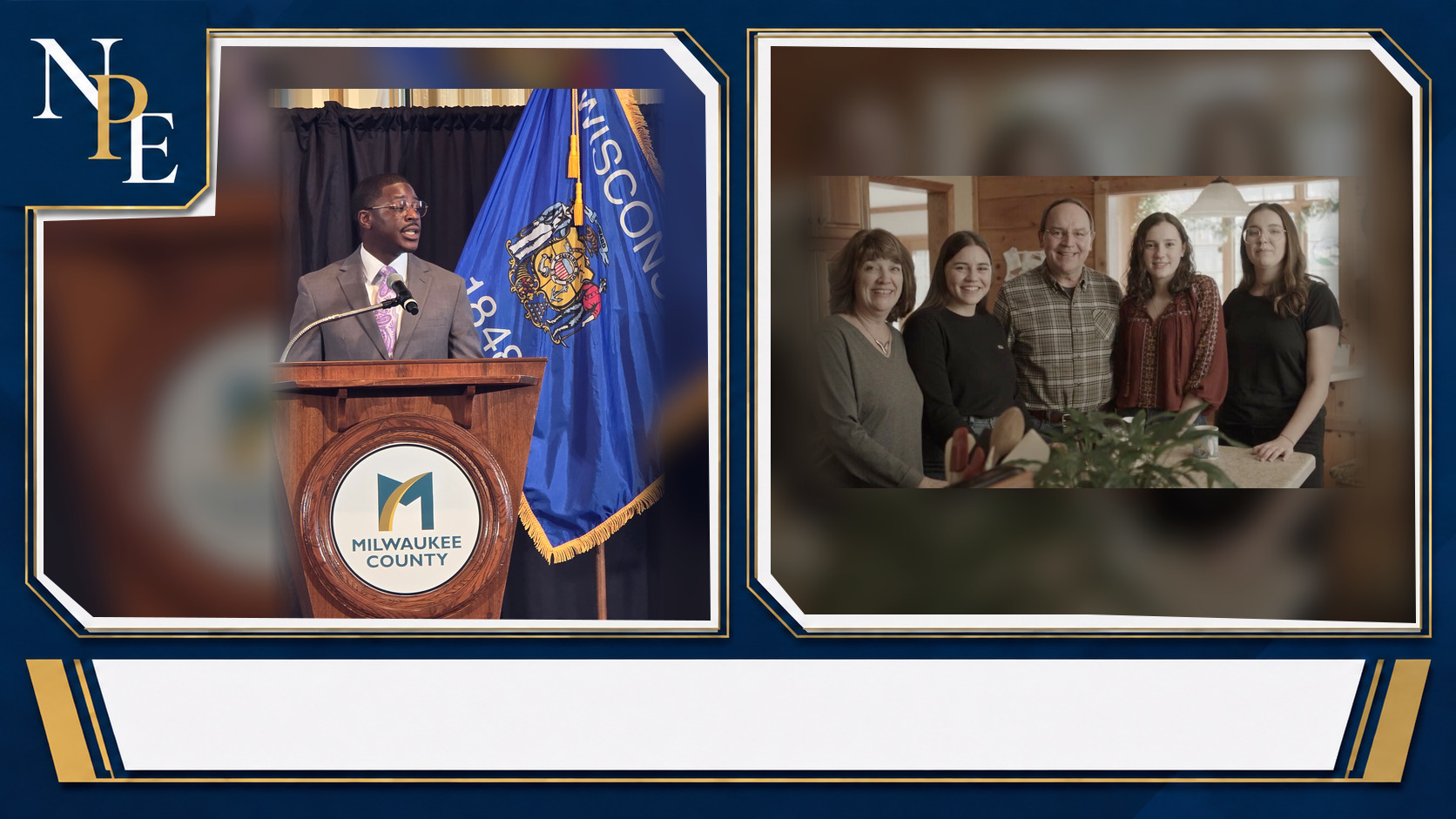
Crowley’s Democratic primary victory clears the way for a possible Wisconsin governor’s race against Republican Tom Tiffany. The primary map offers early clues, but it does not settle how the two candidates would fare with the broader November electorate.
David Crowley won the Wisconsin Democratic primary for governor, setting up the possibility of a Wisconsin governor’s race against Tom Tiffany, the Republican primary winner. Crowley’s chances of beating Tiffany now turn on whether his primary coalition can expand beyond the voters who chose him in a crowded Democratic field.
The early answer is not a simple one. County results reported by NBC News show Crowley winning in a range of places, while rival Francesca Hong ran strongly in several Democratic-leaning counties. That creates both an opening for Crowley and a test: he must unite Democratic voters while preparing for a very different contest against Tiffany.
Primary victory is not the finish line
A party primary answers one essential question: who will carry the nomination. It does not automatically show how that nominee will perform in a two-candidate race, when turnout, campaign spending, independent voters and issue priorities can all shift.
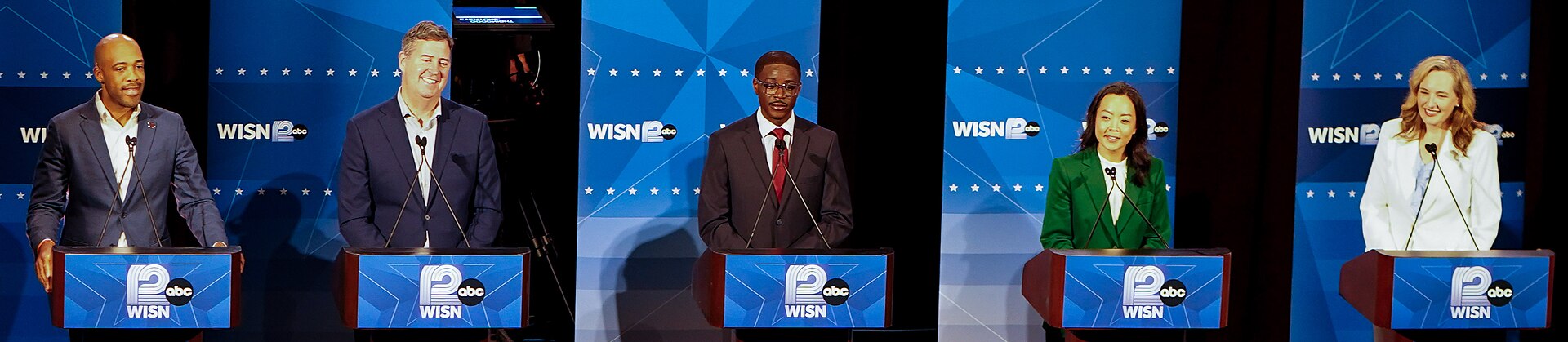
Crowley emerged from a Democratic field that included Hong, Kelda Roys, Mandela Barnes, Sara Rodriguez, Joel Brennan and Missy Hughes. Winning that field gives Crowley a clear mandate from enough Democratic primary voters to take the next step, but it also means substantial groups of Democratic voters first backed someone else.
That distinction matters. A general election requires less of a contest over ideological preference within one party and more of an argument to voters who may not have participated in either primary, including persuadable voters and people motivated by particular local concerns.
Tiffany, meanwhile, enters the potential matchup as the Republican primary winner. The central question is no longer whether Crowley can lead a Democratic ballot; it is whether he can build a statewide coalition large enough to defeat a Republican nominee.
Crowley showed reach beyond one region
The available county results give Crowley a useful early case to make. NBC News’ results showed him ahead of Hong in counties including Adams, Barron, Buffalo, Burnett, Calumet, Clark, Columbia, Dodge, Door, Fond du Lac, Grant, Green, Green Lake and Iowa.
Those reported results do not amount to a complete blueprint for November, but they suggest Crowley was not reliant on one pocket of the state. In Adams County, for example, NBC’s tally showed Crowley at 47.7% to Hong’s 30.5%. In Columbia County, he led 44.6% to 31.8%.
His margins varied, and that is significant. In some counties he held a clearer advantage; in others, the contest was tighter. A broad enough primary footprint can help a nominee tell a statewide story, but general-election success depends on where that support is concentrated and whether it holds when turnout rises.
For Crowley, the encouraging reading is that he found support across several parts of Wisconsin. The more cautious reading is that primary county wins cannot reveal how voters who preferred other Democrats—or voters who skipped the Democratic primary—will behave later.
Hong’s results expose a unity task
Hong’s performance shows why Crowley cannot treat the Democratic nomination as a full consolidation of the party. NBC News’ county returns showed Hong ahead in Ashland, Bayfield, Brown, Dane, Douglas, Dunn and Eau Claire counties.
In Dane County, the reported count had Hong at 44.0% and Crowley at 36.7%. Hong also led in Brown County, 40.7% to 35.9%, and in Eau Claire County, 46.0% to 32.9%.
Those numbers are not evidence that Crowley cannot win a general election. They are evidence that he has work to do with Democrats who saw another candidate as the better choice during the primary. Every nominee faces that task, especially after a multi-candidate contest.
Party unity is more than endorsements and campaign appearances. It means addressing the issues that motivated supporters of Crowley’s former rivals, maintaining volunteer energy and persuading voters that a nominee they did not initially select can still represent their priorities.
The Tiffany test will be different
A Crowley-Tiffany contest would put the Democratic nominee against a Republican candidate rather than against fellow Democrats competing for the same party’s voters. The arguments, audiences and incentives would change immediately.
Crowley’s strongest case would likely begin with his ability to present a coalition that reaches across the county map shown in the primary returns. His campaign would need to make that reach credible to voters beyond the Democratic base, while also preventing slippage in places where Hong ran well.
Tiffany’s opportunity would be to turn the race into a choice between competing governing visions and to consolidate Republican voters behind him. Because the research provided here does not include general-election polling, fundraising figures, issue-specific polling or complete statewide vote totals, any claim that either candidate is favored would be premature.
That uncertainty is the key takeaway from the primaries. The nomination results establish the potential opponents, not the eventual winner. Primaries offer a snapshot of party coalitions; a statewide general election tests whether those coalitions can grow.
What to watch before November
The next phase will provide more meaningful measures of Crowley’s prospects against Tiffany than a single primary night can. The most important signs will be whether Crowley quickly brings former Democratic rivals and their supporters into a unified campaign, and whether Tiffany consolidates Republican support just as effectively.
- Coalition building: Can Crowley retain support in counties he won while improving with voters who backed Hong and other Democrats?
- Turnout: Will both campaigns motivate voters who were absent from the primaries?
- Geographic competition: Can either candidate improve in counties where the other party is expected to be stronger?
- Campaign evidence: Polling, fundraising and debate performances would offer more direct evidence about the eventual matchup.
For now, Crowley has cleared the first hurdle: winning the Democratic nomination for Wisconsin governor. A potential contest with Tiffany begins with real opportunities for both sides—and far more unanswered questions than the primary results alone can resolve.
Leave a Reply