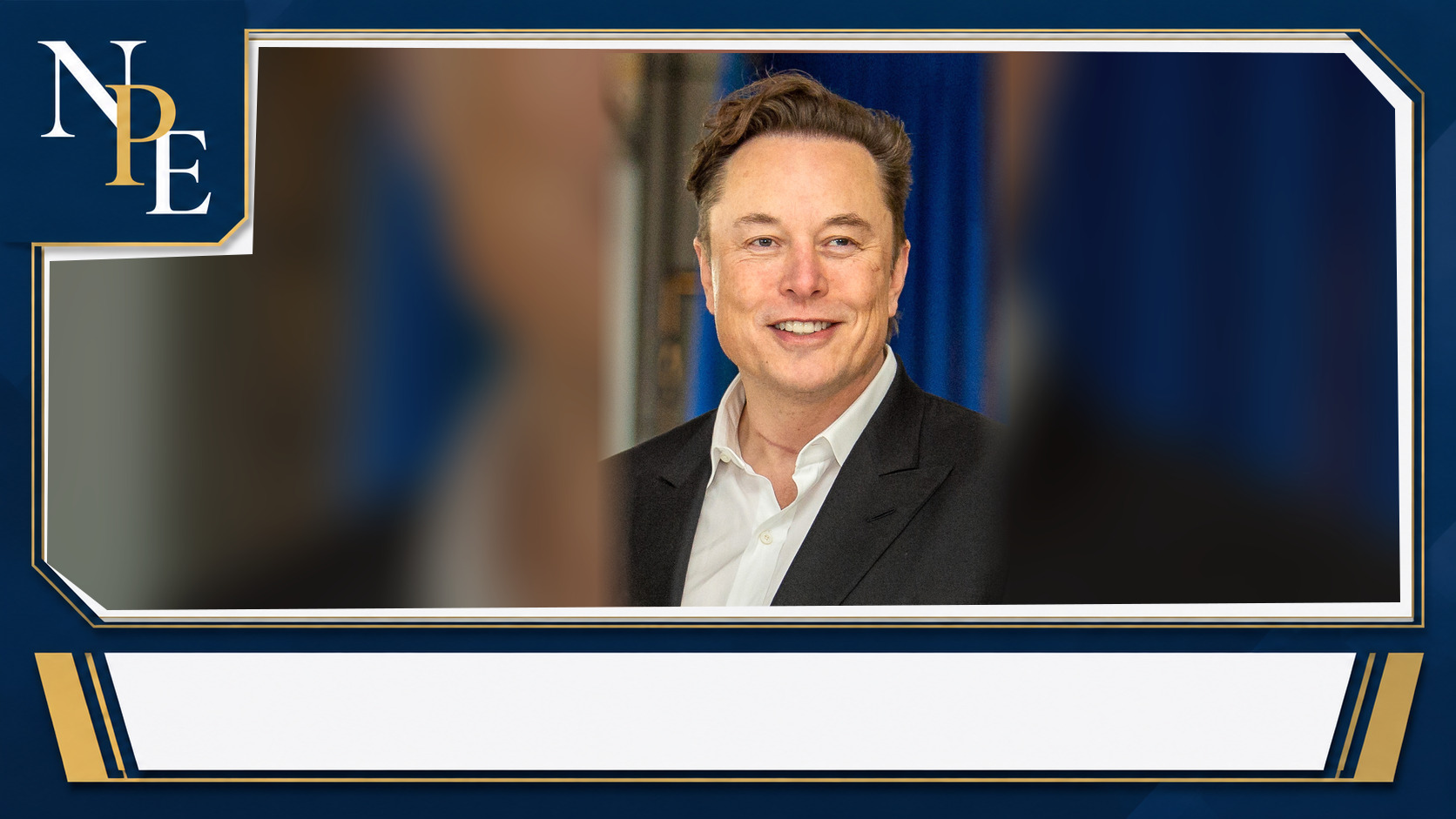
Musk’s stark language is drawing attention because federal debt and interest costs are rising in official long-term forecasts. His proposed answer is not a conventional budget deal, but a surge in technology-driven productivity.
Elon Musk warned that America is “1,000%” headed for bankruptcy and could “fail as a country” unless the United States gets a major technological breakthrough. Musk’s proposed way to save America is a dramatic rise in productivity, particularly through artificial intelligence and automation, that could make the economy grow faster than federal debt and interest costs.
The warning is deliberately extreme, but it lands amid a real fiscal debate. Congressional Budget Office projections point to rising federal debt and growing net interest costs over the next decade — even as they do not predict an imminent U.S. bankruptcy or national collapse.
Musk’s argument starts with productivity
Musk’s core case is that Washington cannot indefinitely borrow and spend faster than the country’s capacity to produce goods, services and tax revenue. In that framing, the debt problem is not simply about cutting a program here or raising a tax there. It is about changing the economy’s underlying output.
That is where Musk places his bet on AI, robotics and other technologies capable of automating tasks, lowering production costs and expanding what fewer workers can produce. He has argued that a technological “miracle” is needed to prevent debt from becoming unmanageable.
The appeal of that idea is straightforward: faster economic growth can improve the ratio between debt and gross domestic product. If incomes, profits and output rise strongly, tax collections can rise as well, potentially making a large debt load easier to carry.
But that is a very different claim from saying technology automatically pays off government debt. Productivity gains have to arrive at a large scale, spread beyond a small group of companies and translate into durable economic growth.
The debt pressure is not imaginary
Federal budget projections provide the serious backdrop to Musk’s rhetoric. The Congressional Budget Office has projected that debt held by the public will continue rising as a share of the economy under current-law assumptions, with net interest costs accounting for a growing portion of federal spending.
In one CBO outlook, debt held by the public reaches 120% of GDP by 2036. The agency has also said higher interest costs are a major reason projected deficits and debt rise over time.
That matters because interest is money the federal government must pay on borrowing already undertaken. When interest rates are higher, refinancing debt becomes more expensive. The CBO’s 2026 outlook projected rates on 10-year Treasury notes rising from 4.1% in 2026 to 4.3% in 2027, adding to the sensitivity of the budget to borrowing costs.
The U.S. Treasury describes the national debt as a collection of obligations, much as a household can have several types of loans. The comparison has limits: the federal government borrows in its own currency, has taxing authority and operates at the center of a vast financial system. Still, rising debt service can leave less room for other priorities.
Bankruptcy is not a literal forecast
“Bankruptcy” is powerful shorthand, but it can obscure more than it explains when applied to the United States. A country with the dollar’s global role and the ability to issue Treasury securities is not equivalent to a household or company that runs out of cash.
A more plausible fiscal deterioration would involve a sequence of pressures: persistently large deficits, rising interest payments, higher borrowing costs, political fights over taxes and spending, and reduced investor confidence. Those risks can damage living standards and constrain government choices long before any event that resembles a corporate bankruptcy.
Critics of Musk’s formulation also argue that a promised technology boom is not a fiscal plan. Automation can lift output, but it can also displace workers, concentrate gains among asset owners and require costly investments in energy, chips, data centers and infrastructure.
Supporters counter that failing to encourage innovation would be its own risk. If AI and robotics materially raise productivity, they could expand the economy’s productive capacity at a moment when aging demographics and debt costs are weighing on the outlook.
Growth alone may not close gaps
Economic growth helps public finances, but budget analysts generally treat it as one part of the equation rather than a substitute for choices on taxes and spending. A faster-growing economy can produce more revenue, yet deficits can remain high if outlays and interest costs rise just as quickly.
That is the tension inside Musk’s argument. The breakthrough he envisions would need to be exceptionally large and sustained — not merely a burst of excitement around AI stocks or a few highly profitable technology companies.
There is also a timing problem. Federal interest payments are rising now, while the biggest promised gains from general-purpose AI and humanoid robotics remain uncertain. Businesses are investing heavily, but the size, timing and distribution of broad productivity gains are still unsettled.
- Optimistic view: AI and automation create a large enough productivity boom to raise output, incomes and tax revenue.
- Skeptical view: New technology boosts selected firms but does not arrive fast enough to change federal debt dynamics.
- Middle view: Technology improves the outlook, but policymakers still need a credible mix of revenue, spending and benefit reforms.
The policy debate cannot wait
Musk’s warning resonates because it turns a technical issue — debt-to-GDP ratios, deficit projections and interest-rate assumptions — into a vivid national question. Yet the budget challenge will not be decided by one entrepreneur’s prediction.
Congress and future administrations will determine tax policy, discretionary spending and the path of major benefit programs. The Federal Reserve’s inflation and interest-rate environment, global demand for Treasury securities and the pace of economic growth will matter as well.
The unanswered question is not whether AI can make parts of the economy more productive; it almost certainly can. The harder question is whether those gains will be broad, fast and large enough to offset debt pressures that official forecasts already show building.
What Musk’s warning gets right
Musk’s “1,000%” language goes beyond what official budget forecasters say. The CBO does not forecast that America will suddenly go bankrupt or fail as a country. Its work instead illustrates a slower, more familiar danger: rising debt and interest costs can narrow the country’s fiscal options over many years.
His broader point — that productivity growth matters enormously — is harder to dismiss. A stronger economy makes every fiscal choice easier, while weak growth makes every fight over taxes, benefits and spending more severe.
Technology may be part of the answer Musk describes. It is unlikely to be the entire answer. The real test will be whether the United States pairs innovation with fiscal decisions that keep debt costs from consuming an ever-larger share of the national budget.
Leave a Reply