The dispute over criticism of Israel has become a local test of political rhetoric, public safety and trust. For Jewish New Yorkers, the concern is not only what officials say, but how City Hall responds when threats are reported.
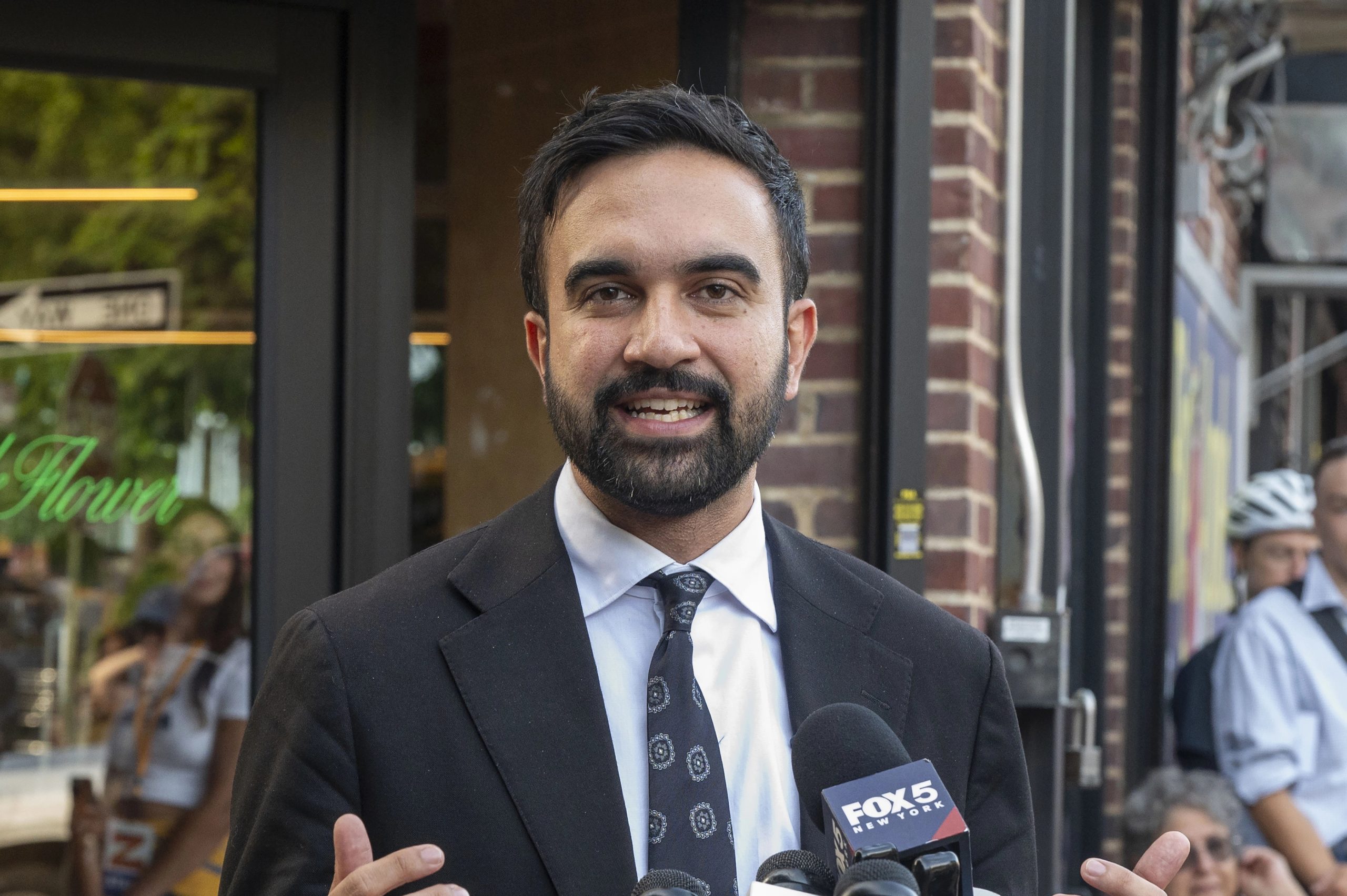
Zohran Mamdani is facing backlash over accusations of antisemitism as New York City reported a 2% rise in anti-Jewish hate crimes. The dispute centers on whether Mamdani’s criticism of Israel and Israeli Prime Minister Benjamin Netanyahu is political speech or language that Jewish residents believe can deepen hostility and fear.
Mamdani has rejected the claim that he is encouraging antisemitism, saying there is “no tolerance for antisemitism in this city.” The stakes are sharpened by an Upper West Side stabbing case under investigation by the NYPD and the U.S. Department of Justice’s Civil Rights Division.
A safety debate beyond rhetoric
The central question is not simply whether New Yorkers agree with Mamdani’s views on Israel. It is whether elected officials can make forceful arguments about a foreign government while making unmistakably clear that Jewish people and Jewish religious life are not targets of blame.
According to CBS News New York, Mamdani has said criticism of a nation-state and its policies must remain focused on the nation-state and its policies, rather than turning into criticism of a people or a faith. That distinction is the foundation of his response to the backlash.
Critics do not accept that the issue ends with the intended target of the message. Some Jewish New Yorkers have argued that rhetoric framed as anti-Israel can, in practice, be heard as anti-Jewish hostility or make people feel more exposed at a time of heightened concern about antisemitic incidents.
The disagreement therefore has two parts: a political dispute over Israel and an immediate local concern about the safety of Jewish residents. Neither question cancels the other out.
The 2% figure has limits
CBS News New York reported that NYPD data showed about a 2% increase in anti-Jewish hate crimes citywide so far that year. The figure is relatively small, but it carries greater weight in a climate where residents are already focused on threats, harassment and alleged bias-motivated violence.
Police data cannot provide a complete measure of all hostility in a city. It reflects incidents known to authorities and may change with reporting patterns, classifications and later investigative updates.
That limitation does not make the data irrelevant. It helps explain why broad assurances from political leaders may not fully answer residents who want to know how agencies will respond to reports of antisemitism and possible hate crimes.
For City Hall, the challenge is practical as well as rhetorical: communicate clearly, support credible investigations and avoid language that leaves any community uncertain about whether its safety concerns are being taken seriously.
Upper West Side case raises stakes
The public-safety backdrop includes a recent stabbing case on Manhattan’s Upper West Side. CBS reported that Raul Morales, 51, was arraigned on two counts of second-degree attempted murder as a hate crime in connection with the stabbing of a Jewish man and an Asian man.
Both victims were expected to survive, according to CBS. The NYPD and the Justice Department’s Civil Rights Division were investigating.
The case remains in the legal process, and the allegations are subject to court review. It should not be treated as proof of anyone else’s political intent or responsibility.
Its significance in the Mamdani debate is context. When a community is reacting to an alleged hate-motivated attack, political messages that might otherwise be seen solely through the lens of foreign policy can take on a more immediate local meaning.
Netanyahu video became flashpoint
CBS reported that Jewish New Yorkers gathered in July on the Upper West Side for a rally against antisemitism and hate following the neighborhood stabbings. Some participants also focused their criticism on a video in which Mamdani addressed Netanyahu.
According to CBS, Mamdani said Netanyahu was not welcome in New York City. He also recognized that he lacked authority to arrest the Israeli leader and called for federal action instead.
At the rally, some critics characterized the video as inflammatory. One participant told CBS that Mamdani was “throwing gasoline on the fire” and turning communities against one another.
That reaction does not establish that Mamdani intended to fuel antisemitism. It does illustrate why language about Israel can quickly become part of a New York City public-safety debate when residents believe antisemitic threats are rising.
Jewish voices are not uniform
Mamdani’s supporters have offered a different interpretation. They argued that his criticism was directed at Zionism and the actions of the Israeli government, rather than Judaism or Jewish people.
Rabbi Yisroel Dovid Weiss of Jews United Against Zionism told CBS that Mamdani was seeking to make clear that Jewish people should not be blamed for what Weiss described as Zionist actions.
That defense reflects a meaningful divide both within Jewish communities and across the city. Jewish identity, religious observance, Zionism and views about Israeli policy do not align in the same way for every person.
Still, disagreement about Israel does not lessen the importance of addressing antisemitic conduct. New Yorkers who warn that anti-Israel rhetoric can cross into anti-Jewish hostility are raising a safety concern, whether or not they share Mamdani’s politics.
The standard City Hall faces
Mamdani’s statement that New York City has no room for antisemitism, hate or bigotry sets a clear benchmark. The unresolved issue is how consistently that principle will be applied when incidents are reported and political conflict becomes more intense.
The measure will not be one rally, one video or one public statement. It will be whether city officials can distinguish protected criticism of governments from conduct that targets people because they are Jewish, while responding credibly to reported threats and violence.
For Jewish New Yorkers, the debate is ultimately about more than rhetoric. It is about whether a city confronting a reported rise in anti-Jewish hate crimes can maintain both vigorous political debate and an unambiguous commitment to residents’ safety.
Leave a Reply