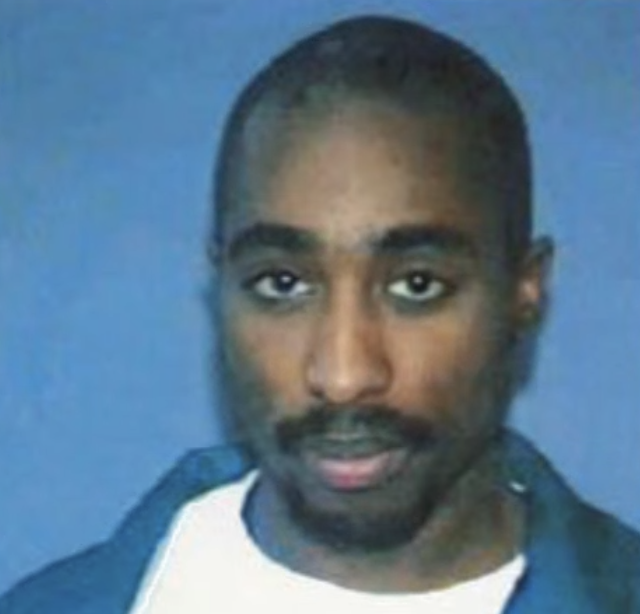
The long-delayed case is about more than a historic criminal allegation. It is also revisiting the loss of an artist whose death became inseparable from the story of 1990s hip-hop.
Tupac Shakur’s legacy is back in focus as Duane “Keffe D” Davis faces a murder trial nearly three decades after Shakur’s death. Jury selection is beginning in Las Vegas in the case tied to the rapper’s 1996 killing, bringing a long-unsolved crime into a courtroom while renewing attention on why Shakur’s cultural impact has endured.
The proceeding may address one question of legal responsibility, but it cannot settle the much larger story around Shakur: an artist whose music, public image and violent death became defining reference points in discussions of 1990s hip-hop.
A case that waited decades
Shakur was killed in a drive-by shooting in Las Vegas in 1996 after leaving a boxing match. For years, the case produced intense public interest but no arrest, making it one of the most closely watched unresolved killings in modern music history.
Davis is the only person ever charged in connection with Shakur’s death, according to CNN. He was indicted in 2023 on one count of murder with a deadly weapon.
That timing is central to the renewed attention. A case that had existed for decades in documentaries, interviews, books and public speculation is now moving through the more structured, narrower process of criminal court.
What the charge does—and does not—mean
A charge is an accusation, not a finding of guilt. Davis is entitled to the presumption of innocence, and prosecutors carry the burden of proving the allegation beyond a reasonable doubt.
The start of jury selection does not reveal what evidence a jury will ultimately hear, how witnesses will perform under questioning, or whether the prosecution can meet that burden. Those are issues for the trial, not conclusions that can be drawn from the filing of a charge.
Reporting from Reuters, CNN and The Washington Post identifies Davis as facing the murder count in the 1996 killing. Public discussion of the case often runs ahead of the legal record, especially because Shakur’s death has been debated for so long. The courtroom process is designed to test claims under rules of evidence rather than through rumor or cultural mythology.
The attention is bigger than one defendant
The legal case is focused on Davis and the specific allegation against him. The public response, however, reaches well beyond a single defendant because Shakur’s death has long stood as a symbol of an era marked by extraordinary creativity, rivalry, media attention and real-world violence.
For many listeners, Shakur remains a musician first: a rapper and actor whose work explored poverty, racial injustice, vulnerability, ambition and conflict. For others, his killing is the entry point, because the unanswered questions surrounding it became part of how his career was remembered.
Those two frames can compete. A murder trial can encourage renewed examination of the circumstances of his death, while fans and critics may argue that the scale of the case coverage risks reducing Shakur to the way he died rather than the work he made.
Why Shakur’s legacy still carries weight
Shakur’s death did not freeze his reputation in 1996. His recordings, performances and public statements continued to reach new audiences, while his image became embedded in the history of hip-hop and popular culture.
That endurance helps explain why a legal development decades later is still national news. The case is not simply reopening an old file; it is revisiting a loss that remained culturally present even as the investigation went unresolved.
There is also a wider lesson in the attention surrounding the trial. When a prominent person’s death is unresolved for years, the absence of legal answers can become part of the person’s public identity. Each new development may bring clarity, but it can also revive old theories and arguments that are not evidence.
A trial cannot tell the whole story
The eventual verdict, whenever it comes, could answer an important legal question about the charge against Davis. It will not provide a complete account of every relationship, motive, cultural tension or public narrative tied to Shakur’s death.
Nor can a criminal proceeding fully explain Shakur’s influence. A courtroom determines facts relevant to an alleged crime; cultural legacy is built through music, memory, debate and the continued ways audiences connect with an artist’s work.
That distinction matters now. The beginning of jury selection offers the possibility of overdue legal scrutiny in a case that went without an arrest for decades. At the same time, it gives the public a reason to look again at Shakur as more than the subject of an infamous unsolved killing.
What remains to be decided
The immediate next stage is selecting a jury in Las Vegas. From there, the case will turn on the evidence presented in court, the legal arguments made by both sides and the jury’s assessment of the charge.
It remains unclear how long the trial will last and what final picture the evidence will present. What is clear is that the case has returned Shakur’s name to the center of public conversation 30 years after his death—this time with a legal proceeding that may separate established facts from the speculation that has surrounded the killing for so long.
Leave a Reply