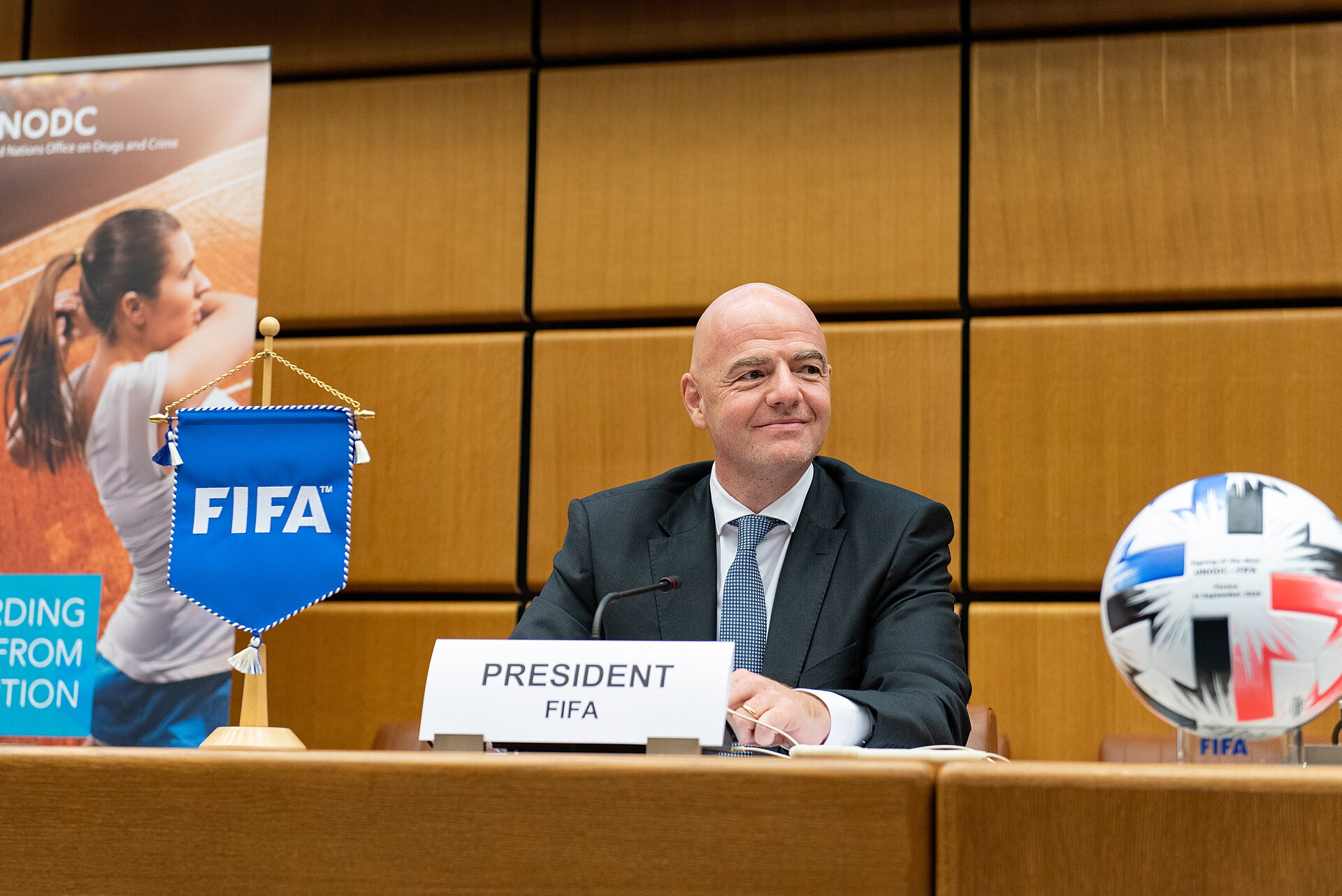
The fight is not a standard fan boycott. It is a governance revolt over whether private investors should own a piece of FIFA’s biggest competitions.
Gianni Infantino and FIFA are facing a World Cup boycott threat as nations are taking action over Gianni Infantino and FIFA’s sale plan. On Thursday, UEFA’s 55 members voted to boycott FIFA competitions, including the World Cup, after a Tuesday proposal sent to FIFA’s 211 member associations; the dispute now runs toward 19 September and the end of October as football bodies decide whether to accept, reject or force changes.
This article tracks the updated list of countries or federations involved, including UEFA’s collective stand and the North American soccer body CONCACAF’s rejection of the plan. The key issue is whether FIFA can spin off commercial rights into a private-investor-backed structure without triggering a wider rupture across national associations.
The boycott threat is sweeping
UEFA’s position, as reported by The Associated Press, is not limited to the men’s World Cup. The European soccer body said its national associations would not participate in FIFA competitions while the proposal remains alive, unless it is abandoned and binding assurances are given against private ownership of FIFA governance or competitions.
That makes this less a symbolic protest and more a threatened shutdown of participation by Europe’s national teams across FIFA events. It could touch World Cups, youth tournaments and other FIFA-run competitions if the dispute is not defused.
The timing matters because FIFA’s calendar does not pause for political fights. AP noted that the Women’s Under-20 World Cup in Poland was scheduled within weeks, while the four British federations are also tied to a bid to host the 2035 Women’s World Cup.
The tracker so far
UEFA: The 55-member European body is the center of the boycott threat. After an urgent online meeting, UEFA said its national associations would not participate in FIFA competitions while the proposal remains active.
CONCACAF: The 41-member Confederation of North, Central America and Caribbean Association Football did not announce a FIFA competition boycott, but it rejected Infantino’s plan later Thursday. Its statement cited concerns over due process, the short deadline and the lack of review by FIFA governance bodies.
AFC: The Asian Football Confederation has not matched UEFA’s boycott threat in the reporting available, but its president, Sheikh Salman bin Ibrahim Al Khalifa, warned members that FIFA’s unilateral actions appeared to undermine the foundations of continental football. That is notable because Asia has often been a key base of support for Infantino.
In practical terms, the opposition now includes one confederation threatening non-participation, one rejecting the proposal outright, and one continental leader issuing unusually sharp public criticism. That is a serious spread across three of FIFA’s six continental power centers.
Which UEFA associations are covered
Because UEFA acted as a bloc, the action covers its 55 national associations rather than a handful of isolated governments. UEFA members include Albania, Andorra, Armenia, Austria, Azerbaijan, Belarus, Belgium, Bosnia and Herzegovina, Bulgaria, Croatia, Cyprus, Czechia, Denmark, England, Estonia, Faroe Islands, Finland, France, Georgia, Germany, Gibraltar, Greece, Hungary, Iceland, Ireland, Israel, Italy, Kazakhstan, Kosovo, Latvia, Liechtenstein, Lithuania, Luxembourg, Malta, Moldova, Montenegro, Netherlands, Northern Ireland, North Macedonia, Norway, Poland, Portugal, Romania, Russia, San Marino, Scotland, Serbia, Slovakia, Slovenia, Spain, Sweden, Switzerland, Türkiye, Ukraine and Wales.
That list is important because football politics often move through federations, not national governments. England, Scotland, Wales and Northern Ireland are separate FIFA and UEFA members. So are territories and microstates that play international football under UEFA’s umbrella.
There is still a distinction between a collective UEFA threat and the operational details of who would miss which match. Fixtures, suspensions, tournament entries and eligibility rules would all require further decisions if the standoff reaches an actual competition deadline.
What FIFA wanted to create
The fight centers on a proposed structure called FIFA Forward Enterprise, or FFE. According to AP, Infantino’s plan would spin off FIFA’s commercial operations into a new 20 billion dollar subsidiary, with private investors owning 20 percent.
The core investor, AP reported, would be a New York investment firm created by Joshua Kushner, the brother of Jared Kushner. Infantino presented the proposal to FIFA’s 211 member associations as a way to increase development funding around the world.
The financial pitch was direct. FIFA members were told that approving the plan would double their promised basic funding for the next four years from 10 million dollars to 20 million dollars, with projected funding through 2038 rising from about 36 million dollars each to 86 million dollars each.
That is why the proposal may appeal to smaller and less wealthy federations. Many depend heavily on FIFA money. To them, extra development funding could mean better facilities, more coaching programs and broader participation.
Why opponents are alarmed
UEFA’s argument is that the World Cup is not just another media property. Its warning is that once outside investors own a stake in FIFA competitions, commercial return becomes a built-in obligation that could shape decisions about scheduling, formats, hosting, ticketing and governance.
CONCACAF took a more procedural line in its rejection. It said members had deep concerns about the lack of due process, the short timeline and the absence of approval from relevant FIFA governance bodies. It also questioned why outside investment was needed after what it called the most profitable World Cup in history.
FIFA’s response has been to deny the central charge. In a statement reported by AP, the organization said nobody is selling football and said FFE would not be established without support from FIFA’s 211 member associations.
That statement matters because it creates a possible exit ramp. FIFA can argue the idea was part of a consultation rather than a done deal, while opponents can claim their pressure forced the organization to slow down or retreat.
What happens next
The immediate question is whether FIFA formally withdraws the plan or tries to revise it enough to win over skeptical members. UEFA’s language suggests a partial edit may not be enough if private ownership of competitions remains on the table.
The larger question is political. AP reported that Infantino’s presidency, which had recently looked secure, could now face new pressure. FIFA has a deadline in November for potential presidential candidates before a vote scheduled next March in Rabat, Morocco.
For fans, the most visible risk is disruption to international tournaments. For federations, the deeper issue is who controls football’s most valuable assets and whether development money is worth sharing commercial ownership with investors.
The cleanest takeaway: this is not yet a collapsed World Cup, and it is not a blanket boycott by every FIFA member. It is a fast-moving revolt by major football bodies over a private-investor plan that FIFA now says cannot proceed without broad member support.
Leave a Reply