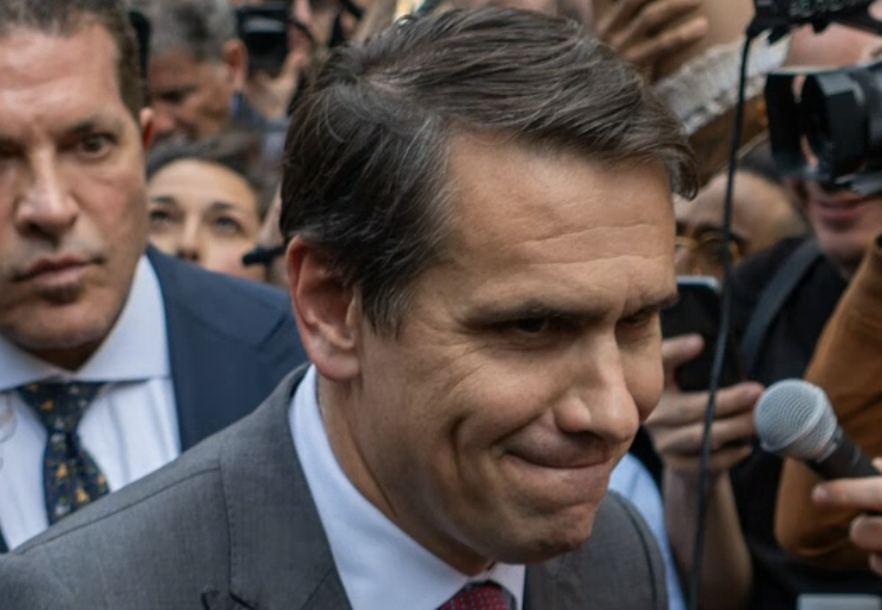
The fight has left Todd Blanche serving as acting attorney general without a Senate confirmation vote. At issue is whether the Justice Department will clarify an audit-immunity provision that senators say could benefit President Trump, his family and his businesses.
Todd Blanche’s attorney general nomination has stalled after two Republican senators withheld support over a tax-related Justice Department settlement involving Donald Trump. Senators John Cornyn and Thom Tillis are seeking written details about an immunity provision tied to audits of Trump’s past tax returns, putting Blanche’s path to U.S. Senate confirmation at risk.
The dispute is significant because Blanche remains acting attorney general while Republican senators press the Justice Department for answers. The standoff is not a final rejection, but it has stopped a planned Senate Judiciary Committee vote and turned a personnel decision into a broader argument about oversight of a settlement that may affect the president, his family and his businesses.
Two Republicans hold up Blanche
Cornyn of Texas and Tillis of North Carolina refused to back Blanche without further information about the settlement that resolved Trump’s lawsuit against the Internal Revenue Service, according to NPR. Their position prompted the Senate Judiciary Committee to call off its planned vote on the nomination.
That committee vote matters because it is ordinarily a key step before a nomination can move to the full Senate. By withholding support at this stage, the two senators have gained leverage to seek documents or commitments before Blanche’s nomination advances.
NPR reported that the other 10 Republican members of the Judiciary Committee appeared to support Blanche. Still, Cornyn has said the concern is not limited to him and Tillis, leaving open the question of whether the nomination could face wider resistance if it reaches the full Senate.
The settlement at the center
The immediate controversy involves a Justice Department agreement that ended Trump’s lawsuit over leaked tax returns. One component involved a nearly $1.8 billion anti-weaponization fund, which Blanche has said will not proceed.
Cornyn and Tillis are focused instead on a separate part of the agreement: a broad immunity arrangement concerning audits of Trump’s past tax returns. NPR reported that the provision remains in effect and could extend to Trump’s family and businesses.
The senators have asked the Justice Department for written assurances defining the scope of that tax immunity. According to NPR, they say they have not received the commitments they need.
The exact boundaries of the agreement remain central to the impasse. The administration has not publicly provided the written assurances requested by the senators.
Why confirmation became leverage
Blanche is caught in the dispute because the attorney general leads the same department that negotiated the settlement now under scrutiny. A confirmation process gives senators a formal opportunity to question a prospective department leader and demand information from the administration.
That does not establish that Blanche personally negotiated every provision of the agreement, nor has the Senate reached a conclusion about its legality. The present fight is narrower: whether the Justice Department will provide enough clarity to persuade skeptical Republicans to let the nomination proceed.
Blanche’s supporters can argue that a nominee should not become a stand-in for every legal dispute involving the president. The opposing view is that confirmation is precisely the point at which senators should test whether Justice Department leadership will provide oversight and respond to requests for information.
Cornyn has framed the concern around equal treatment and transparency, arguing that the arrangement could give Trump audit protection that other taxpayers do not receive. That concern has made the issue difficult for the White House to treat as a routine partisan confirmation fight.
Acting role leaves a gap
Blanche continues to lead the Justice Department as acting attorney general, so the delay does not halt the department’s day-to-day operations. But acting authority is different from holding the position after Senate confirmation.
A confirmed attorney general has a stronger institutional mandate, and the confirmation process gives lawmakers a chance to examine a nominee’s views, commitments and plans for managing the department. The delay therefore carries consequences beyond the timing of one vote.
The case also puts the Justice Department’s independence under added scrutiny. The underlying settlement concerns the president’s own tax records, while the official awaiting confirmation would lead the department responsible for the agreement.
For Senate Republicans, the conflict presents competing pressures: supporting a Republican president’s nominee while protecting the chamber’s advice-and-consent role. The unusual feature of the standoff is that the obstacle has come from within Trump’s party rather than solely from Democratic opposition.
Trump raises a withdrawal option
Trump has praised Blanche and criticized Cornyn and Tillis. He has also said he could temporarily withdraw the nomination if they do not abandon their opposition, then submit it again after both senators leave office at the end of the year.
Cornyn is leaving Congress at year’s end after Trump backed his primary challenger. Tillis is retiring and did not seek reelection. Neither faces another general-election campaign, though both retain the ability to influence the confirmation process while they remain in office.
A temporary withdrawal could spare the administration an immediate defeat or a prolonged committee deadlock. It could also extend the period in which the Justice Department lacks a Senate-confirmed attorney general and draw criticism that the White House is waiting out oversight demands rather than addressing them.
What could break the deadlock
The most direct route forward would be written clarification from the Justice Department that satisfies Cornyn and Tillis about the audit-immunity provision. The outcome could also involve a revised arrangement, a later vote, or Trump following through on a temporary withdrawal.
None of those paths is certain. What is clear is that Blanche’s nomination now hinges on more than support for the nominee himself: it has become a test of how much transparency the Justice Department will provide when its decisions overlap with the president’s personal financial and legal interests.
The episode shows how narrow Republican resistance can reshape a president’s personnel plans. Even with most Judiciary Committee Republicans appearing to support Blanche, two senators have been able to keep a Senate confirmation from moving ahead while they seek answers the administration has not publicly supplied.
Leave a Reply