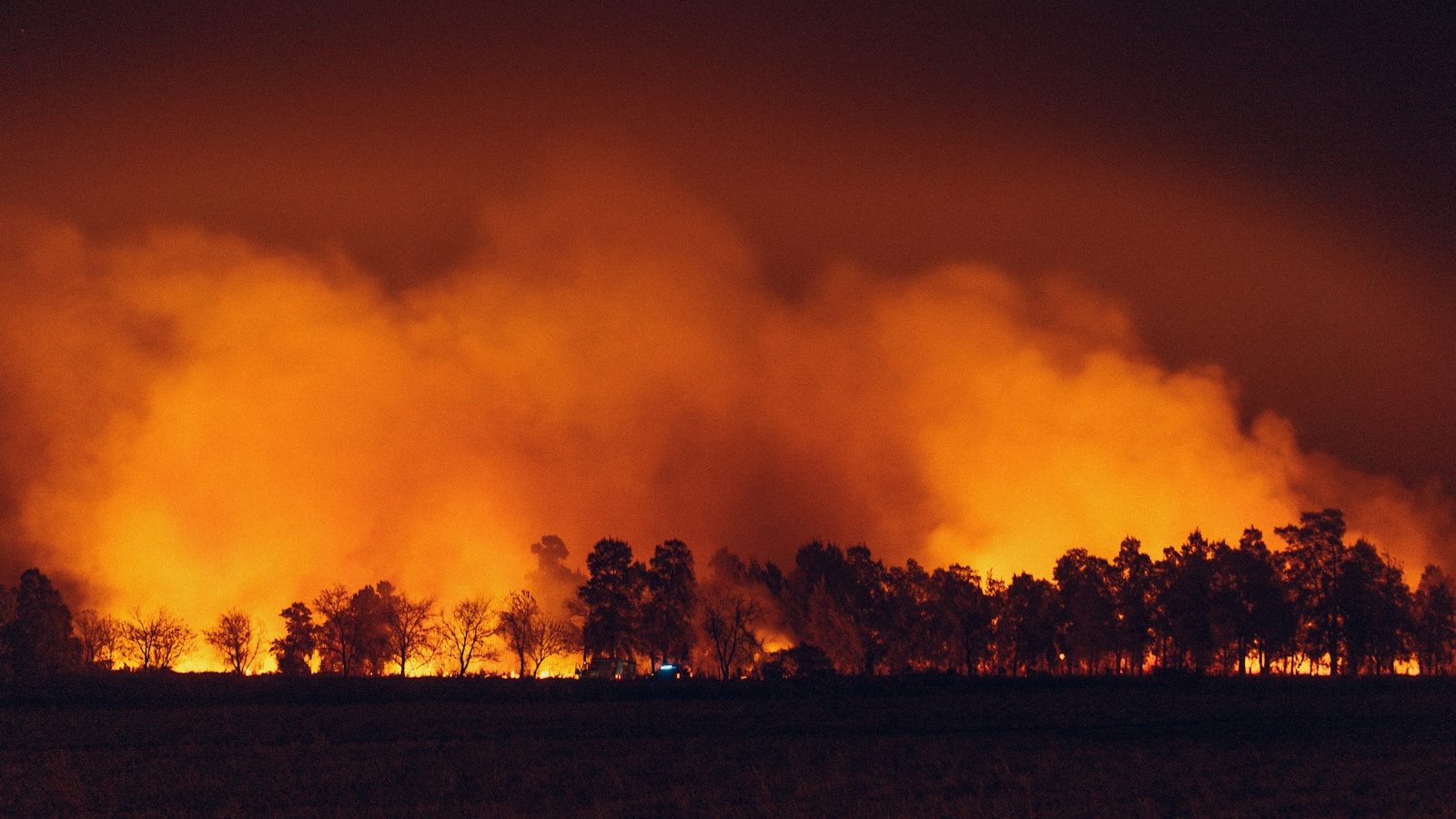
A more favorable weather window gave crews an opportunity to strengthen their position around Spokane. But renewed fire weather could affect containment, evacuation decisions, power restoration and the timeline for residents to return.
Spokane wildfire crews are preparing for renewed fire weather as challenging conditions are expected to return to the Pacific Northwest. The weather threat could complicate efforts to battle destructive wildfires in Spokane, where firefighters are working the Spokane Complex and thousands of evacuees remain affected by the disaster.
According to a CNN report, stronger winds and dry air could again influence a response that had benefited from a period of more helpful conditions. The question now is whether crews can turn that earlier progress into durable control before the weather favors faster fire spread.
Weather could reshape the response
Wildfire operations can change quickly when wind rises and the air dries out. Winds can push flames into unburned vegetation, send embers ahead of the main fire and make aircraft work more difficult or unsafe.
Dry air reduces moisture in grasses, brush and other fuels. That does not mean every fire will make the same kind of run, but it can make spot fires more likely to grow and make the edges of an existing fire harder to hold.
For Spokane-area crews, that makes the calmer period especially important. Firefighters can use a less threatening weather window to reinforce control lines, remove fuel near vulnerable places and identify weak points before conditions deteriorate.
The forecast is consequential because weather remains beyond the control of even a large, coordinated emergency response. More personnel can improve planning and protection, but wind direction, wind speed and fuel dryness still help determine where the danger is greatest.
The destruction already is extensive
Even before the prospect of returning difficult weather, the Spokane-area fires had caused sweeping disruption. NBC News reported on Aug. 2 that the three fires known as the Spokane Complex Fire had burned 8,026 acres and were uncontained at the time of that report.
Officials said roughly 65,000 people in the Spokane area had been evacuated. Spokane County Fire District 3 Chief Cody Rohrbach said the Old Trails Fire alone destroyed 640 structures.
Authorities had not yet determined how many of the damaged or destroyed buildings were homes, businesses or schools. That unresolved detail matters because a final accounting of loss is still separate from the immediate task of protecting communities while fire conditions remain unstable.
A renewed weather threat does not require a dramatic new fire run to deepen the emergency. It can delay returns, interrupt damage assessments and force agencies to keep attention fixed on active protection rather than longer-term recovery.
Three fires create competing demands
Federal incident-management information cited by NBC News identified three major fires in the Spokane Complex: the Old Trails Fire, the Fairview Fire and the Autumn Lane Fire. A multi-fire response can stretch resources because each fire presents its own terrain, access routes, vulnerable structures and evacuation footprint.
Outside assistance has become part of the response. Federal Interagency Incident Management Teams took command after federal deployment began, while the California Department of Forestry and Fire Protection, known as Cal Fire, said two California-based national incident management teams were coordinating in Washington.
That added capacity gives commanders more ability to plan, protect structures and reinforce priority areas. It does not remove the underlying tension: resources can be deployed strategically, while the weather can change which fire edge or community becomes most urgent.
The result is a response in which containment gains matter, but are not necessarily permanent. Firefighters may secure a portion of a perimeter during calmer conditions only to face new challenges if wind carries embers or drives flames toward fresh fuels.
Evacuations hinge on more than flames
Fire-weather forecasts affect decisions well beyond the fire line. Emergency managers use them when considering evacuation notices, road restrictions, staffing and where to position equipment.
Utilities and public works crews also must account for outages, blocked routes and damage that may be harder to reach if conditions worsen. PowerOutage.us data cited by NBC News showed that nearly 12,000 utility customers in Washington, most of them in Spokane, had lost power by Sunday.
Restoring service in a fire zone can take time because crews must confirm that roads, poles, lines and surrounding areas are safe. For people forced from home, weather forecasts can therefore help indicate whether officials may soon ease restrictions or need to maintain a more cautious posture.
Spokane Mayor Lisa Brown said it could take a week or weeks before many evacuees can return. Active flames are only part of that calculation; road conditions, utility safety, hot spots, air quality and any new fire movement also matter.
A break in weather is not containment
Earlier cooler temperatures and more favorable conditions raised hopes that firefighters could make significant gains, NBC News reported. Such periods can give crews time to build lines and reduce the chance that fire will reach additional neighborhoods.
Still, favorable weather is not the same as final containment. Large fires can retain heat underground, generate embers when winds increase and threaten areas well away from the most visible flames.
The situation can be particularly unpredictable where dry vegetation, steep ground or scattered homes limit access. That is why the current outlook holds two realities at once: crews may be able to build on earlier progress, while returning wind and dry air may make officials reluctant to treat that progress as secure.
Key answers remain unsettled
The available reports establish the scale of Spokane’s losses, but several key questions remain unanswered. Officials had not provided a firm timeline for most evacuees to return, and the final count and type of destroyed structures were not yet known in the NBC report.
The near-term test is whether firefighters can consolidate their work before the next challenging fire-weather period takes hold. For Spokane, the forecast is not just a measure of fire behavior; it will shape the pace of evacuation decisions, infrastructure recovery and the uncertain path back for displaced residents.
Leave a Reply