The actor’s appearance at Larry David’s HBO premiere was not tied to a new announcement. It instead showed why Johnson remains a recognizable presence across generations of television viewers.
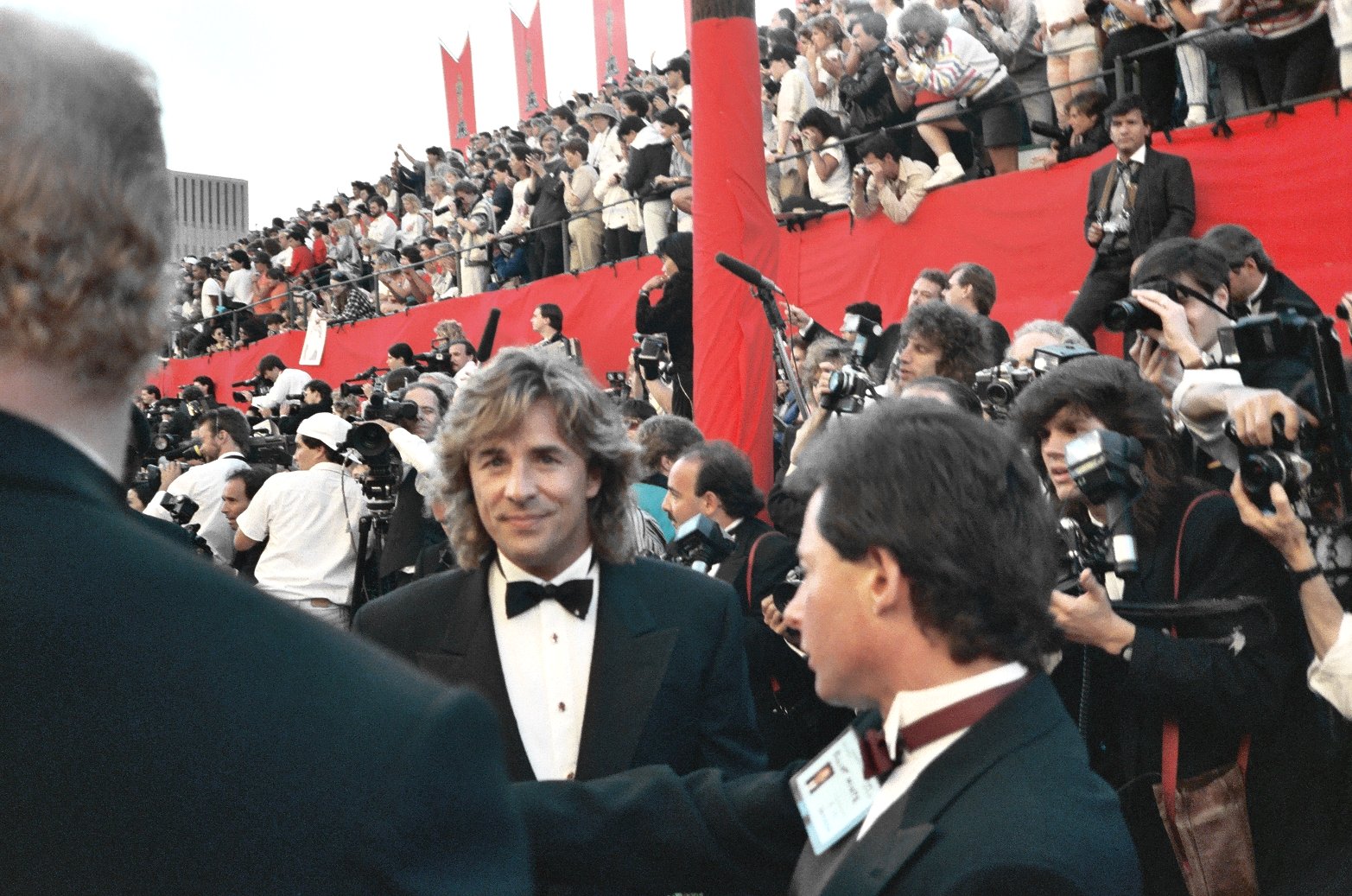
Don Johnson made a rare red-carpet appearance at the Los Angeles premiere of Larry David’s HBO series, Life, Larry and The Pursuit of Unhappiness. Johnson, 76, supported David at the event and attracted attention for his silver hair and polished look.
The outing did not come with news of a new Don Johnson project, reunion or personal milestone. Its appeal was simpler: the former Miami Vice star remains instantly recognizable, still connected to Hollywood and still able to turn a supportive appearance into a reminder of a television career that spans decades.
A low-key appearance drew notice
According to Parade, Johnson attended the premiere at the Hollywood Legion Theater in Los Angeles in support of David. The event marked David’s HBO Original series, and Johnson stood out in part because red carpets have not been a regular feature of his recent public profile.
Parade described him as looking dapper with gray hair. That detail quickly became part of the interest around the appearance, though the available reporting gives no indication that Johnson was there to unveil a new film, series, memoir or other career development.
That distinction matters. Celebrity premieres often become opportunities for announcements or carefully timed publicity, but this was presented as a gesture of support for David. Johnson’s visibility at the event came from the audience response to a familiar screen presence, not from a campaign to relaunch his career.
Why the Miami Vice image endures
For many viewers, seeing Johnson on a red carpet inevitably recalls Detective Sonny Crockett, the character he played on NBC’s Miami Vice. The series made him a household name and, according to the Hollywood Walk of Fame, brought him major success and a Golden Globe win.
The show’s influence extended beyond its police-drama premise. Its glossy Miami settings, music-driven storytelling and distinctive fashion helped define a particular 1980s television style. Johnson’s Crockett, known for loose tailoring and an unconventional detective persona, became one of the era’s most recognizable characters.
That legacy explains why an ordinary public appearance can generate outsized interest. For people who watched the series during its original run, Johnson can represent a direct connection to a defining period of television. For others, the character remains part of the broader cultural memory of the decade.
His career did not stop there
Johnson’s name may be closely linked to Crockett, but his career has not been limited to one role. The Hollywood Walk of Fame identifies him as an actor, singer, songwriter, producer and director, and also notes his starring role in the 1990s police drama Nash Bridges.
Playing San Francisco detective Nash Bridges gave Johnson a second major television lead in a different decade and setting. That follow-up is important because performers associated with an iconic role can sometimes struggle to move beyond it. Johnson instead established another successful law-enforcement character without simply replaying Crockett.
More recently, Parade pointed to his appearances in Rian Johnson’s Knives Out and the television series Doctor Odyssey. Those roles have been smaller than his leading television work, but they keep him present for audiences who did not encounter him first through either of his best-known cop dramas.
Two generations know the name
Johnson’s public profile also reaches audiences through actor Dakota Johnson, one of his five children, as noted by Parade. Her film career has given the family name renewed currency with a younger generation.
Still, Don Johnson’s standing does not rely on that connection. His Hollywood Walk of Fame star, Golden Globe recognition and leading roles in two major TV dramas provide an independent foundation for the attention he receives when he reappears in public.
The result is a split but durable form of recognition. Some people see the actor behind Sonny Crockett and Nash Bridges; others know him through recent supporting roles or as Dakota Johnson’s father. Those entry points are different, but each helps keep his work in circulation.
Not every appearance needs a message
There is a tendency to treat an older celebrity’s appearance as a verdict on whether that person is “aging well.” Johnson’s red-carpet moment invites a more limited reading. His gray hair drew notice partly because it differs from the sun-bleached, stylized image associated with Crockett, not because it cancels out that earlier image.
Some viewers may simply appreciate that he looked sharp and recognizable. Others may see a broader change in celebrity expectations, in which performers are not required to reproduce the look they had at their commercial peak. Neither response needs to make appearance a measure of personal worth.
A red carpet also cannot reveal the full reality of anyone’s health, relationships or private life. What it can show is that Johnson remains comfortable making selective public appearances and that his presence still carries weight in an industry built around recognition.
What the premiere does not confirm
The reporting does not indicate that Johnson’s Los Angeles appearance was tied to a major new project. There is no confirmation of a series, film, reunion or memoir connected to the event, so viewers looking for that kind of news will need to wait for more concrete information.
Yet the lack of an announcement may be why the moment landed. Johnson appeared as a friend and fellow entertainment figure at Larry David’s premiere, rather than as the subject of a retrospective or a revival. The response showed that he does not need a major reveal to remain part of the conversation.
At 76, Johnson is still associated with the white suits, speedboats and cool detachment of Miami Vice. His Los Angeles appearance offered a current counterpart: a silver-haired veteran actor, sharply dressed and visibly at ease with the distance between the star he was and the working performer he continues to be.
Leave a Reply