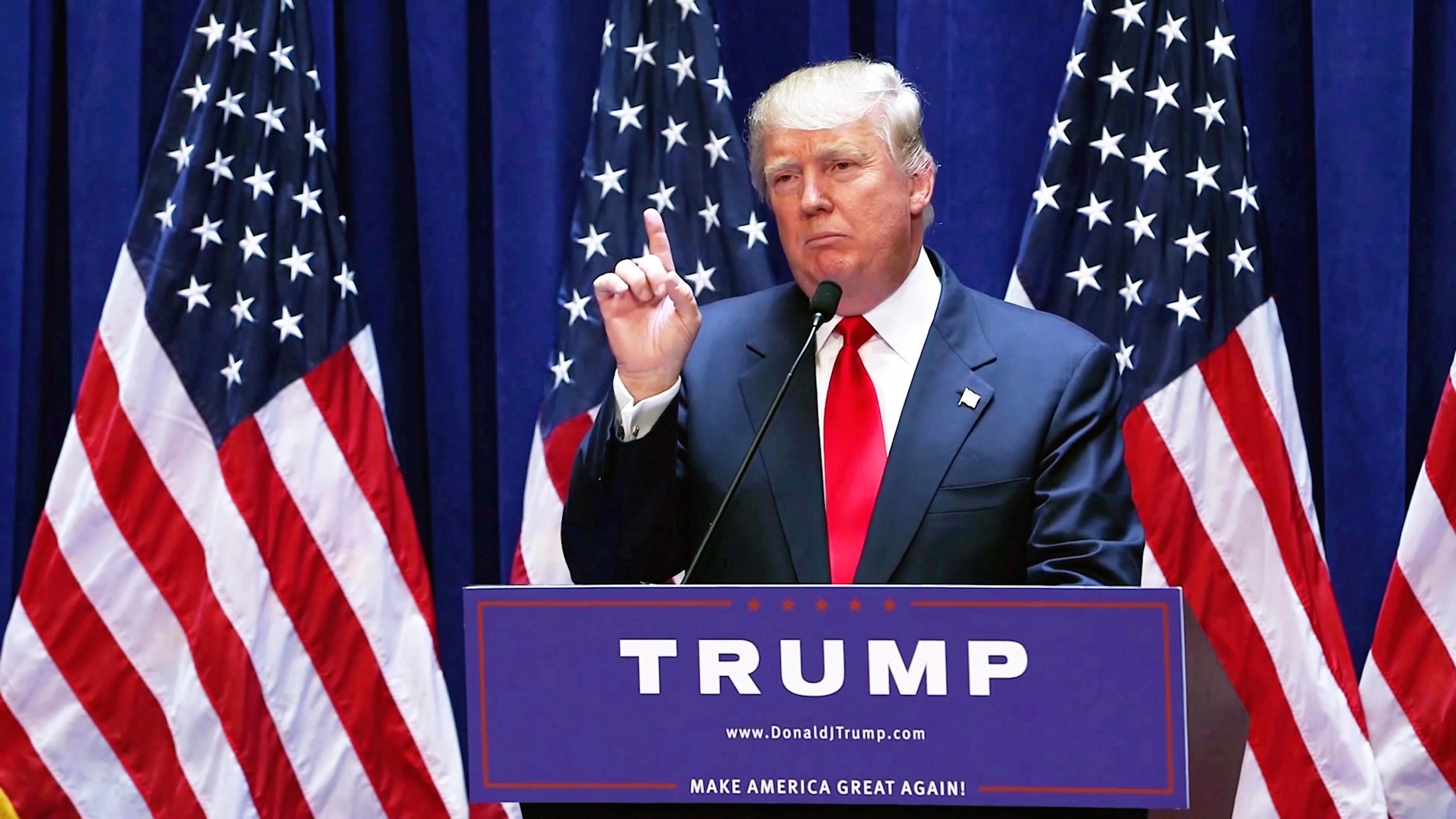
The clash is simple but consequential: the White House says election risks need urgent attention, while some of the federal offices built to answer those risks are smaller or weaker.
In the United States, President Donald Trump has warned about election threats in a July 16 White House address, saying U.S. elections face foreign interference and technical vulnerabilities ahead of the 2026 midterms. But independent federal agencies have been cut or weakened, and these agencies normally handle election security issues—raising questions after the 2024 cycle about who can verify threats, correct false claims and help states.
The tension is newly urgent on July 17, 2026: Trump says his administration will help fix vulnerabilities, while election experts say the federal support system that once reassured voters and local officials is thinner than before.
The warning and the gap
Trump used his White House remarks to argue that American elections are vulnerable to foreign interference. According to USA TODAY, he also claimed China meddled in the 2020 election and said Americans had been misled about the security of voting machines and ballot-counting systems.
Those claims could not immediately be verified, the outlet reported. That matters because election-security warnings are most useful when voters can separate real risks from political claims, rumors or pressure campaigns.
The contradiction is the core of the current fight. Trump is sounding alarms about election systems while his administration has reduced or disrupted parts of the federal network that would typically test systems, share threat information and serve as a neutral public voice.
Which agencies lost capacity
The most visible example is the federal Election Assistance Commission, the only federal agency devoted solely to helping local election officials prepare and run elections. USA TODAY reported that Trump terminated two of the commission’s three members on July 9, weakening the agency ahead of the 2026 midterms.
The Cybersecurity and Infrastructure Security Agency, known as CISA, is also central to the story. CISA helps states prepare for cyber threats and has played a major role in election-security coordination in recent cycles.
Over the past year and a half, CISA has lost election-security staff and funding, according to USA TODAY. That does not mean states are defenseless, but it does mean fewer federal resources are available at the exact moment the president is warning that elections face serious threats.
For voters, the practical question is not bureaucratic. If a county has a cybersecurity concern, a disinformation surge or a technical vulnerability, who is available to help quickly, credibly and without a partisan cloud?
The 2020 shadow remains
CISA became a political target after the 2020 election, when Trump falsely claimed widespread fraud after losing to Joe Biden. The agency and a coalition of election-security groups said at the time that the election was the “most secure in American history.”
CISA also said there was “no evidence that any voting system deleted or lost votes, changed votes, or was in any way compromised.” That assessment was joined by election-security organizations, including the National Association of State Election Directors.
Days later, Trump fired CISA Director Christopher Krebs. The episode still shapes today’s debate because it showed how a federal agency’s factual pushback could collide directly with the president’s preferred narrative.
That history is why cuts to election-security capacity are drawing scrutiny now. The concern is not only whether agencies can spot threats, but whether they can publicly contradict inaccurate claims when the political stakes are high.
States now carry more weight
The Constitution gives states the main role in running elections. Federal agencies do not administer most voting. They support, advise, test, warn and coordinate.
That supporting role has grown more important as election systems face cyber risks, foreign influence operations and domestic misinformation. Local election offices often have small staffs and limited budgets, while hostile actors can move fast online.
Election experts told USA TODAY that, with federal voices weakened, state and local officials will have to defend the security of elections more directly. That means secretaries of state, county clerks and election directors may become the front line not just for voting logistics, but for public trust.
Trump has said his administration is committed to working with states and local jurisdictions to help them “fix and patch known technical vulnerabilities” before the midterms. Critics argue that pledge is harder to square with staff reductions, lost funding and leadership changes at the agencies that would normally do much of that work.
Experts split on the danger
Wendy Weiser, director of the Democracy Program at the Brennan Center for Justice at New York University School of Law, told USA TODAY that the administration’s moves should “raise eyebrows.” She argued that federal programs available to help states with election administration and security have been gutted while the president is claiming elections face sweeping threats.
Weiser’s broader warning is about credibility. If voters do not trust federal election-security agencies, and those agencies have fewer people and less authority, false claims can travel farther before officials can correct them.
There is another view inside Trump’s argument: if vulnerabilities exist, the federal government should expose them and force states to fix them. Election systems should be tested, questioned and improved, not treated as immune from criticism.
The dispute is over method and evidence. Security experts generally distinguish between identifying specific vulnerabilities and making broad, unverified claims that can weaken confidence in elections before voters know the facts.
Facts may beat reassurance
Jennifer Gaudette, an assistant public policy professor at the University of California, Riverside, told USA TODAY that election officials should respond quickly with facts about how elections are run in their own jurisdictions. Her research has found that people are less likely to trust election misinformation from a president when facts are presented alongside it.
That is a subtle but important point. Simply telling voters not to worry may not work. Explaining how ballots are counted, how machines are tested, how audits operate and how bipartisan safeguards function may be more effective.
Oregon Secretary of State Tobias Read, a Democrat, told USA TODAY that state and local officials should respond with specifics when elections are described inaccurately. “Elections are important,” he said, “and when people talk about them in inaccurate ways, that is dangerous.”
The next test will come before the 2026 midterms, when warnings, rumors and genuine security alerts may arrive at the same time. If the federal referees are weaker, the states will have to be louder, faster and more precise.
What remains unclear
Several key questions are still unresolved. It is not clear how much election-security work CISA can sustain with fewer staff and less funding. It is also unclear how the Election Assistance Commission will function after losing two of its three members.
There is also the political question of whether voters will believe federal agencies if they do speak up. The agencies that once pushed back on Trump’s false 2020 fraud claims are now operating in a very different environment.
The risk is not that every election problem becomes a crisis. The risk is that real problems and unsupported claims blur together, leaving voters unsure whom to trust.
That is why this story matters now. Trump is warning that elections are under threat, but the country’s election-security support system has less capacity to answer those warnings with clear, independent evidence.
Leave a Reply