
The dispute is about more than one think tank report: it puts the administration’s crime narrative and a nonprofit’s right to challenge it on a potential legal collision course. No lawsuit had been announced as of the reported Friday retraction deadline.
Donald Trump threatened legal action against the Washington, D.C.-based Center for American Progress over a report questioning whether National Guard deployments reduced crime. Trump’s attorney demanded a retraction by Friday or said the left-leaning think tank could face a $5 billion defamation lawsuit; the center declined. The threat, reported Aug. 22, 2026, centers on competing claims about what drove falling violent-crime rates in cities targeted by the administration.
The immediate dispute is narrow: whether the report unfairly accused Trump of taking credit for a decline already underway. But it also places the White House’s public-safety messaging, an influential policy group’s data analysis and the high bar for defamation claims involving public figures in the same confrontation.
The report Trump wants retracted
The Center for American Progress published its analysis on July 13. It examined the administration’s National Guard deployments and argued that Trump was claiming credit for a historic decline in violent crime even though the trend had begun before those interventions.
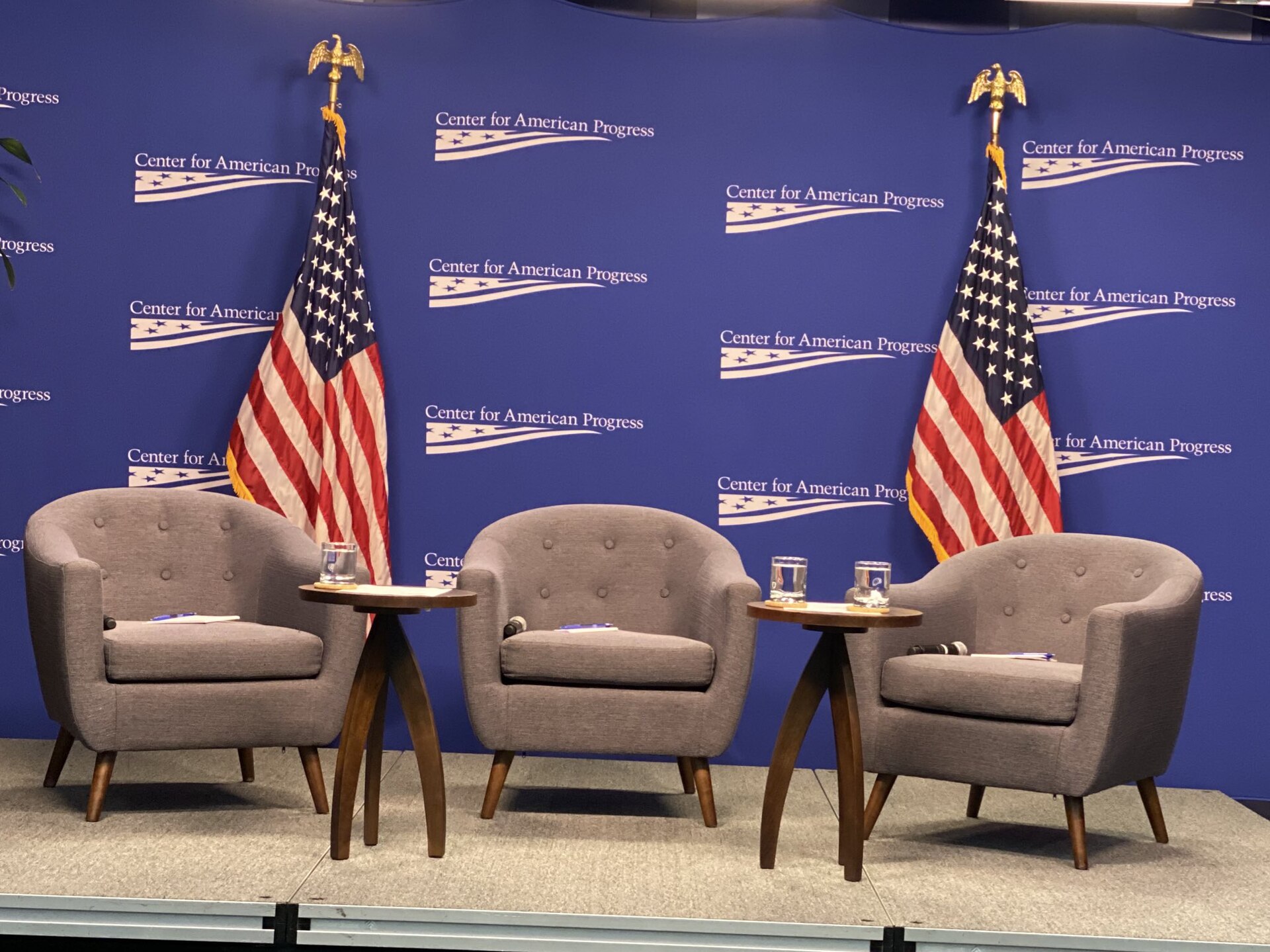
Its conclusion was direct: the deployments had “no measurable effect on violent crime trends,” according to reporting by The Associated Press published by PBS NewsHour. The report also criticized the administration’s use of the Guard in cities it said had already been seeing declines in violence.
That conclusion matters because crime data rarely produce a simple cause-and-effect answer. Crime rates can move for many reasons at once, including local policing strategies, prosecutions, economic conditions, seasonal patterns, changes in reporting and longer-running public-safety trends.
The disagreement, then, is not merely over whether crime fell. It is over who can credibly claim responsibility for the decline and whether the report’s criticism crossed from political analysis into defamatory accusation.
A demand backed by $5 billion
Trump attorney Alejandro Brito sent the demand letter Monday, according to the AP account. It told the Center for American Progress to immediately retract what it called false, malicious and defamatory statements about Trump.
The letter objected in particular to language saying Trump was exploiting the fact that violent crime and murder were already declining in cities his administration targeted with what the report called “extreme interventions.” Brito said that without a retraction, Trump would seek remedies for alleged financial and reputational harm.
The requested deadline was the end of business Friday. The Center for American Progress did not retract the report, according to the AP report. The material provided does not indicate that Trump had filed a lawsuit as of the report’s publication.
That distinction is important. A demand letter is a legal threat and an assertion of a position; it is not a court case. If litigation follows, a complaint would identify the precise statements at issue, the alleged harm and the legal theory supporting the claim.
Center for American Progress refuses
Neera Tanden, the nonprofit’s president and chief executive, called the threatened suit “a transparent attempt to silence us.” She said the organization would not “cower nor bend” in response.
Kevin Metz, the group’s general counsel, offered an equally forceful legal response. He said the defamation allegation was “utterly absurd,” arguing that truth cannot be defamation and describing the governing standards as well established and protective of speech.
The center says its conclusions rest on its analysis of crime data, not on a personal attack. From that perspective, the letter seeks to punish an organization for reaching a politically unwelcome conclusion about a major administration policy.
Trump’s side sees it differently. The attorney’s letter portrays the report as a false portrayal of the president’s record and motives, one severe enough to cause reputational damage. The potential fight would hinge on evidence, wording and the relationship between disputed claims and the underlying data.
Why defamation is a difficult path
Defamation law generally distinguishes between demonstrably false statements of fact and protected opinion, criticism or interpretation. Political arguments often contain both, which can make them difficult to sort out in court.
Public figures also face a particularly demanding standard in U.S. defamation cases. They typically must show that a challenged false statement was made with knowledge of its falsity or reckless disregard for whether it was true, a principle designed to protect robust debate about public officials.
That does not mean public officials cannot bring defamation claims, or that policy groups are automatically shielded from liability. It means the context and evidence matter greatly. A court would likely look closely at the report’s methodology, the data available when it was written, the meaning a reasonable reader would take from its language and whether the disputed passages assert facts that can be proven false.
The $5 billion figure underscores the pressure behind the demand, but an amount named in a letter is not an award and does not establish damages. Any actual recovery would depend on a lawsuit, factual findings and legal rulings that have not occurred.
The broader fight over crime credit
The confrontation arrives as crime statistics have become central to arguments over federal power, immigration, policing and the role of the National Guard. Administrations understandably point to favorable results; critics often challenge whether those results followed from the policies being advertised.
Both sides can point to a basic truth: a drop in crime is meaningful to people living in affected communities. The harder question is what caused it. That is where public claims can move faster than the research needed to isolate the impact of any one intervention.
Supporters of Trump’s approach may argue that deployments, heightened federal attention or the possibility of additional enforcement helped create safer conditions. Critics may counter that correlation is not proof, especially when a decline predates the action being credited.
Those are legitimate policy disagreements, but the threatened lawsuit raises the stakes. It shifts the disagreement from a public contest over evidence to a potential court fight over language, intent and the legal limits of sharp political criticism.
What remains unresolved
The Center for American Progress has refused the requested retraction, while Trump’s lawyer has outlined a potential defamation claim. As of the AP report, it remained unclear whether Trump would proceed with a filing, which statements would be included in a complaint or where a case might be brought.
It is also unclear whether either side will release more of the underlying correspondence or additional analysis of the crime data. Those details could shape the public understanding of the dispute before any judge ever sees it.
For now, the episode leaves two separate questions on the table. One is empirical: did National Guard deployments materially reduce crime in the cities at issue? The other is legal: can a think tank’s highly critical answer to that question be shown to meet the demanding threshold for defamation?
Until a lawsuit is filed or the parties reach some other resolution, Trump’s threat remains just that—a high-dollar warning attached to an unresolved argument over crime statistics and presidential credit.
Leave a Reply