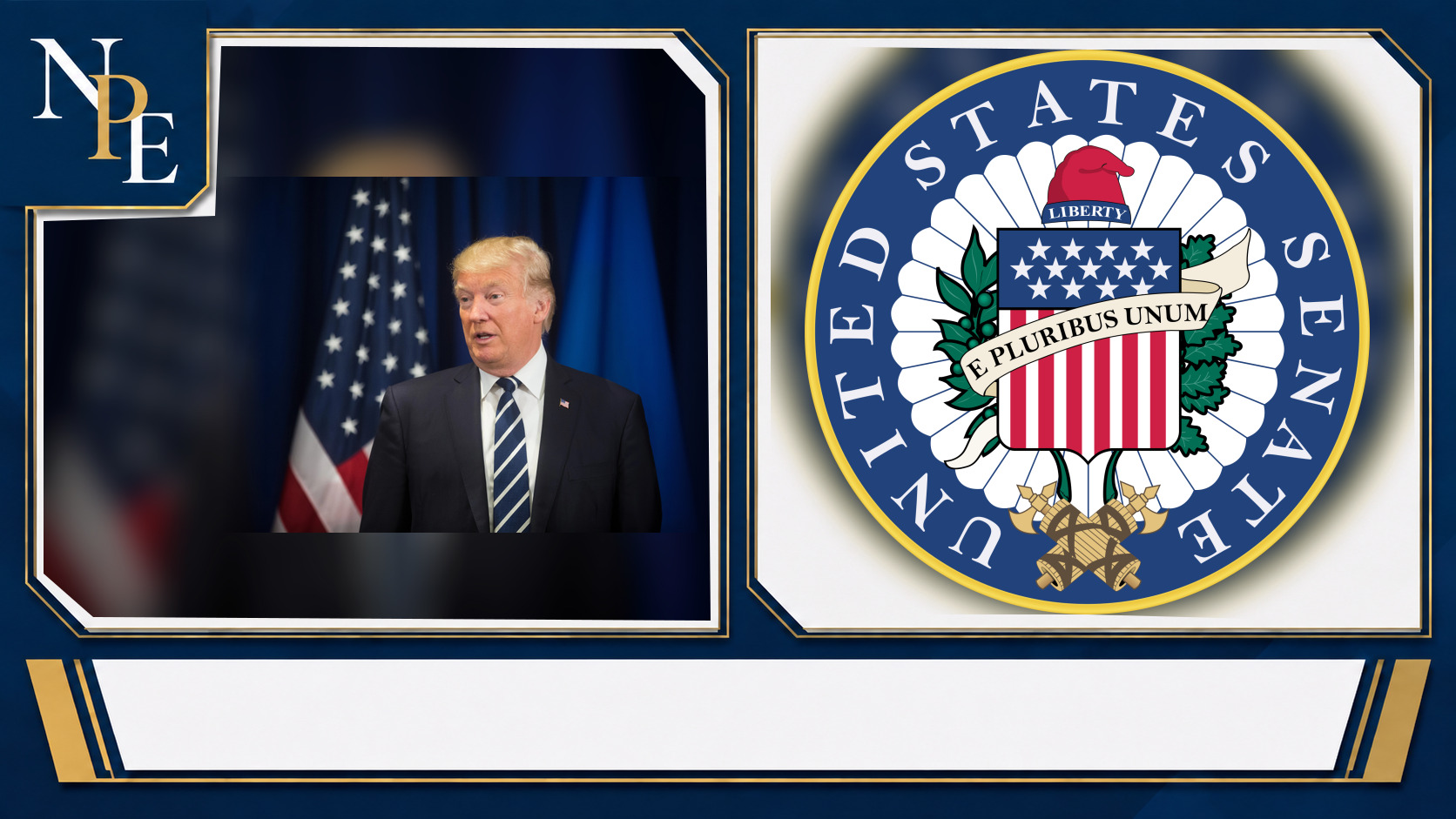
President Donald Trump pressed Senate Republicans to stay in Washington until they acted on the voting bill. The chamber’s recess leaves a major Trump priority unresolved and keeps a fight over election rules alive ahead of the midterms.
The SAVE America Act remained unpassed as the U.S. Senate left for recess, despite President Donald Trump backing the legislation and urging Republican leaders not to leave Washington without acting. The unresolved bill puts a spotlight on a basic political problem for Senate Republicans: support from a president and a party majority does not automatically create the votes needed to pass a contentious national voting measure.
Trump has made the legislation a priority ahead of the midterm elections. But the Senate’s departure means the bill, formally called the Safeguard American Voter Eligibility Act, faces the same central obstacle when lawmakers return: Republicans do not have enough votes to overcome a filibuster under the chamber’s current rules.
Trump’s priority meets Senate math
Trump publicly called on Senate Majority Leader John Thune to keep senators in session until they passed the SAVE America Act. He also pressed Thune to end the legislative filibuster or find another route around the 60-vote threshold that applies to most Senate bills.
Republicans hold a 53-47 majority, which gives them control of the chamber but not the 60 votes generally needed to move major legislation over Democratic opposition. Thune has said Republicans lack the votes both to advance the bill and to change Senate rules to make passage easier.
That distinction matters. A simple majority can be enough in limited circumstances, but most legislation cannot be passed by one party alone when the filibuster remains in place. The recess therefore reflects a vote-count reality, not simply a decision to postpone a floor vote.
What the SAVE America Act would do
The bill would establish new federal requirements for voter registration and voting. Under the proposal, Americans registering to vote would generally have to provide documentary proof of U.S. citizenship, such as a passport or birth certificate.
It would also require voters to present valid photo identification before casting a ballot. Some states already have voter-ID requirements, but the SAVE America Act would create a broader national framework rather than leaving those choices principally to state law.
Supporters argue that proof-of-citizenship rules would protect elections from noncitizen voting and strengthen public confidence in the results. Trump has framed the measure as essential to election integrity.
Opponents respond that noncitizen voting in federal elections is already illegal and that the proposal could make voting harder for eligible citizens who do not have ready access to the required documents. The core debate is not whether citizens should be the only people voting in federal elections; that is already the law. It is whether the proposed paperwork rules are an effective and proportionate way to enforce it.
The fight over voter documents
Critics, including voting-rights advocates and election experts cited in reporting on the measure, warn that millions of Americans may not possess an up-to-date passport, a certified birth certificate or other qualifying documents. Replacing those records can involve fees, travel, bureaucratic delays and name-matching problems, particularly for people whose names changed through marriage or adoption.
Those concerns do not mean every voter would be affected in the same way. Many citizens already have acceptable documents. The policy question is whether the burden on people who do not is justified by the bill’s intended safeguards.
Backers see the documentation requirement as a clear, standardized rule. Detractors see it as a barrier that could fall most heavily on older voters, lower-income voters, naturalized citizens, people with disabilities and residents of rural areas where records offices may be difficult to reach.
The legislation’s future would also depend on its precise administrative details: which documents qualify, how officials verify them, what alternatives are available, and how states would handle registration applications that are incomplete or disputed.
Why Thune did not have a route
Thune’s position has put him between a president demanding action and a Senate where the votes are not apparent. He previously kept the SAVE Act on the floor for an extended period in an effort to build support, but the measure did not gain the backing needed to proceed.
A group of Republican senators, including Utah Sen. Mike Lee, has pushed leadership to find a way forward. Yet a leadership strategy cannot resolve the underlying arithmetic if no Democrats join the effort and enough Republicans will not support changing the Senate’s rules.
Trump’s calls to abolish the filibuster add a separate layer to the dispute. Supporters of eliminating it argue that an elected majority should be able to govern. Defenders say the rule forces broader consensus and protects the minority party, although each party’s view of the filibuster has often shifted depending on who controls Washington.
Other routes remain uncertain
House Republicans have explored using the budget reconciliation process, which can allow certain measures to pass the Senate with a simple majority. A House-approved budget framework included $10 billion for voting-related changes aligned with the SAVE America Act.
But reconciliation has strict limits. Provisions must have a sufficiently direct budgetary effect and must comply with Senate rules, making it an uncertain vehicle for broad changes to election administration. Thune has also indicated that the votes were not available for that approach.
That leaves several possibilities when the Senate returns: Republicans could seek a narrower proposal, attempt to negotiate bipartisan elements, revisit a reconciliation strategy, or continue to press for a rules change. None offers an obvious quick solution.
Recess delays a larger election debate
The timing carries political weight because the bill is tied to the approaching midterms, when senators will be spending more time in their home states campaigning. Trump’s demand that lawmakers remain in Washington turned the recess into a test of whether Senate Republicans would prioritize his voting agenda over an already crowded legislative calendar.
Senate leaders also face government funding deadlines, other policy priorities and politically difficult races. Those pressures can make it harder, not easier, to devote floor time to legislation with no clear path to passage.
For now, the clearest outcome is limited but consequential: the SAVE America Act did not become law before the Senate recessed. Trump’s backing has kept the proposal at the center of the party’s election-policy debate, while the Senate’s vote count has shown how far political pressure can go without the numbers to turn it into legislation.
Leave a Reply