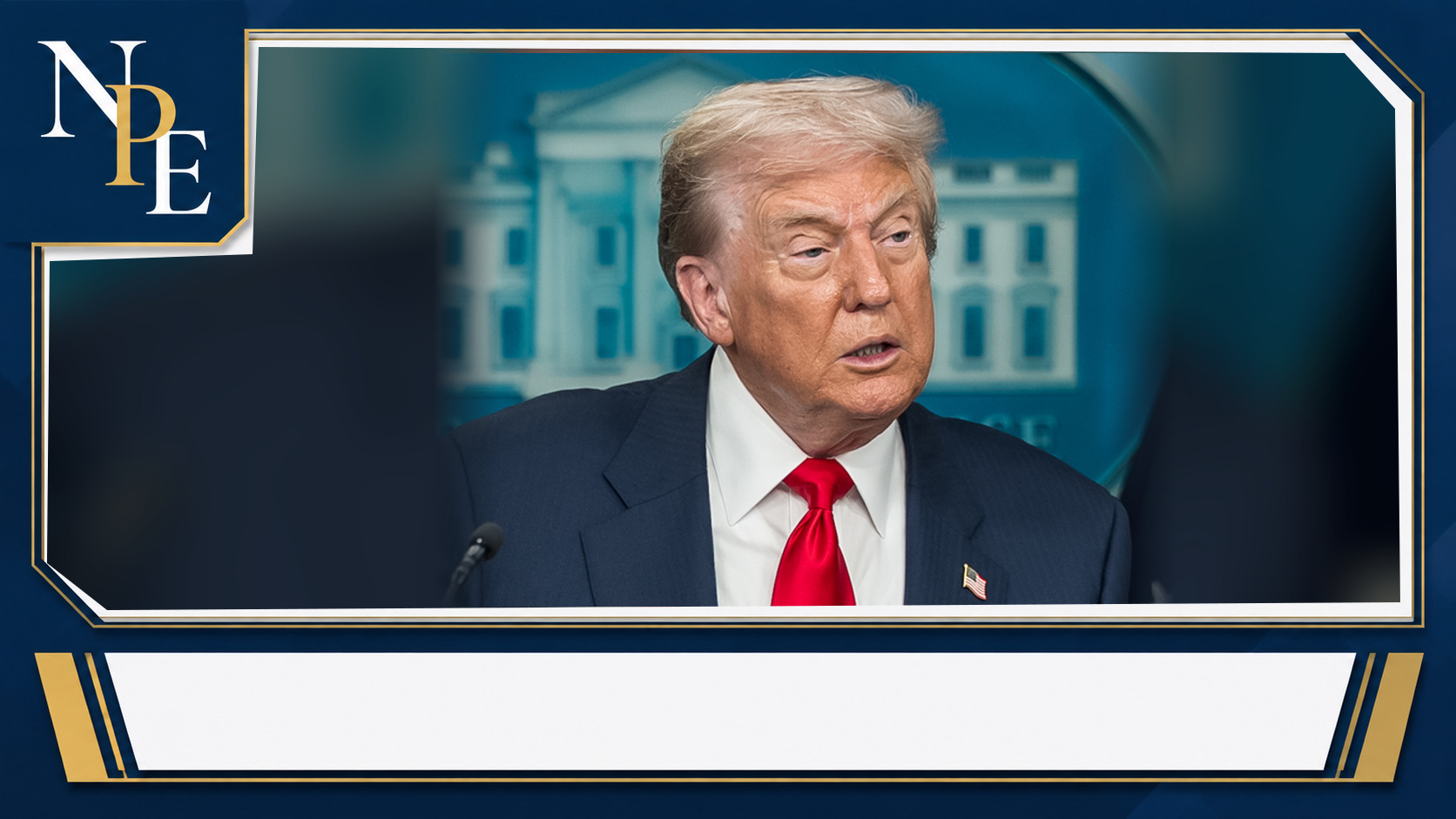
Trump responded to the White House Correspondents' Association dinner shooting by framing the danger around him as a consequence of political significance. His comments have renewed attention on the security breach, the people in the room and the rhetoric surrounding political violence.
Donald Trump commented dismissively on assassination attempts against him after a shooting at the White House Correspondents’ Association dinner in Washington, D.C. Trump said consequential presidents face greater danger of being shot, turning a frightening security episode into a claim about his political stature.
The shooting disrupted a dinner attended by Trump, the vice president, Cabinet members, lawmakers and journalists. What is known so far is that a gunman tried to get past security at the Washington Hilton, shots were fired, and the president was moved from the stage as people in the ballroom took cover.
Trump answered danger with defiance
In a phone interview cited by NPR, Trump was asked about the possibility of injuries after the gunfire. He said he was not worried and added, “We live in a crazy world.”

He then connected the risk to his standing as a president. NPR’s transcript records Trump saying that a “consequential president” is in much more danger than one who is not consequential.
That formulation is slightly more qualified than the sharper wording in the trending headline that Trump said “only consequential presidents get shot.” But the political message is similar: Trump presented the threat around him as evidence of significance, not simply as a failure of public safety or a warning about political violence.
For supporters, the response may read as characteristic resilience from a president who has repeatedly put personal danger into a larger political narrative. Critics may see it as an unnecessarily self-referential answer to an incident that put thousands of attendees and security personnel at risk.
A security breach near the ballroom
NPR reported that the gunman was one floor above the ballroom and attempted to run through a security checkpoint toward stairs leading down to the event. The person was tackled before reaching the ballroom, according to the account cited by NPR.
Still, people inside heard what NPR reporter Tamara Keith described as a muffled, rapid burst of gunfire. Secret Service agents rushed into the room, and Trump and the vice president were pulled from the stage while attendees sheltered in place.
The scale of the gathering made the scare especially acute. NPR reported that about 2,600 people were in the ballroom, including officials in the presidential line of succession. In an event built around close proximity among political leaders, reporters and invited guests, even a short disruption can create confusion about who is safe and where the threat is located.
Acting Attorney General Todd Blanche described the incident on NBC’s Meet the Press as extraordinarily dangerous while also saying the system worked because those present were safe. Both parts of that assessment matter: intervention prevented an even worse outcome, but the breach exposed a risk that authorities will need to examine.
Why the venue carries history
The White House Correspondents’ Association dinner has long been held at the Washington Hilton, a hotel with security arrangements shaped in part by its history. President Ronald Reagan was shot outside the hotel in 1981.
When a sitting president attends the dinner, the Secret Service takes over security for the presidential portion of the event, NPR reported. Guests entering the ballroom show tickets and go through airport-style screening, while the president has a separate entrance and secure holding area behind the stage.
But hotel security cannot make a large, active property risk-free. The venue also has ordinary guests and staff moving through spaces beyond the tightly screened ballroom. The reported incident illustrates the challenge of protecting a president at a public-facing event without sealing off an entire hotel.
That challenge is not unique to Trump or this dinner. Public appearances are central to presidential politics, and the security apparatus around them must balance access, scheduling, crowd movement and rapidly changing threats.
Political violence is not a talking point
Trump’s remark also lands in a country already alert to threats against political figures. NPR noted that Trump has previously been targeted by potential assassins, a history that gives his comments a personal dimension.
Yet personalizing the danger can narrow the meaning of an episode that affected many others. The people in the ballroom included journalists, elected officials, staff members, hotel workers and security personnel. The consequences of a security failure would not have been confined to the president.
Trump later criticized the press and blamed Democratic rhetoric for political violence, according to NPR. That reflects a familiar partisan dispute: political figures often accuse opponents, media outlets or overheated public language after acts or threats of violence.
The unresolved problem is that condemnation can become selective when every side treats political violence chiefly as proof of an adversary’s bad faith. A more durable response requires protecting public events, investigating specific threats and resisting the temptation to turn every security scare into campaign validation.
Questions officials still must answer
Authorities have not publicly resolved every question raised by the incident in the material available here. The public will want clarity about how the gunman got through a checkpoint, what weapons were involved, whether the person acted alone and whether warning signs were missed.
There is also a practical security question: what changes, if any, will be made before future events at the Washington Hilton or other venues hosting a president. The fact that the gunman was stopped before reaching the ballroom is important, but it does not eliminate scrutiny of how close the threat came.
Trump’s defiant response may dominate the political conversation because it fits his public style. The more consequential outcome may be quieter: whether the security review produces lessons that reduce risk for presidents, public officials, journalists and everyone else caught inside a crowded political event.
The WHCA dinner shooting was a reminder that political theater and real-world danger can collide quickly. Trump chose to frame that danger as a marker of consequence. Investigators and security officials now face the less rhetorical task of determining what happened and how to prevent a repeat.
Leave a Reply