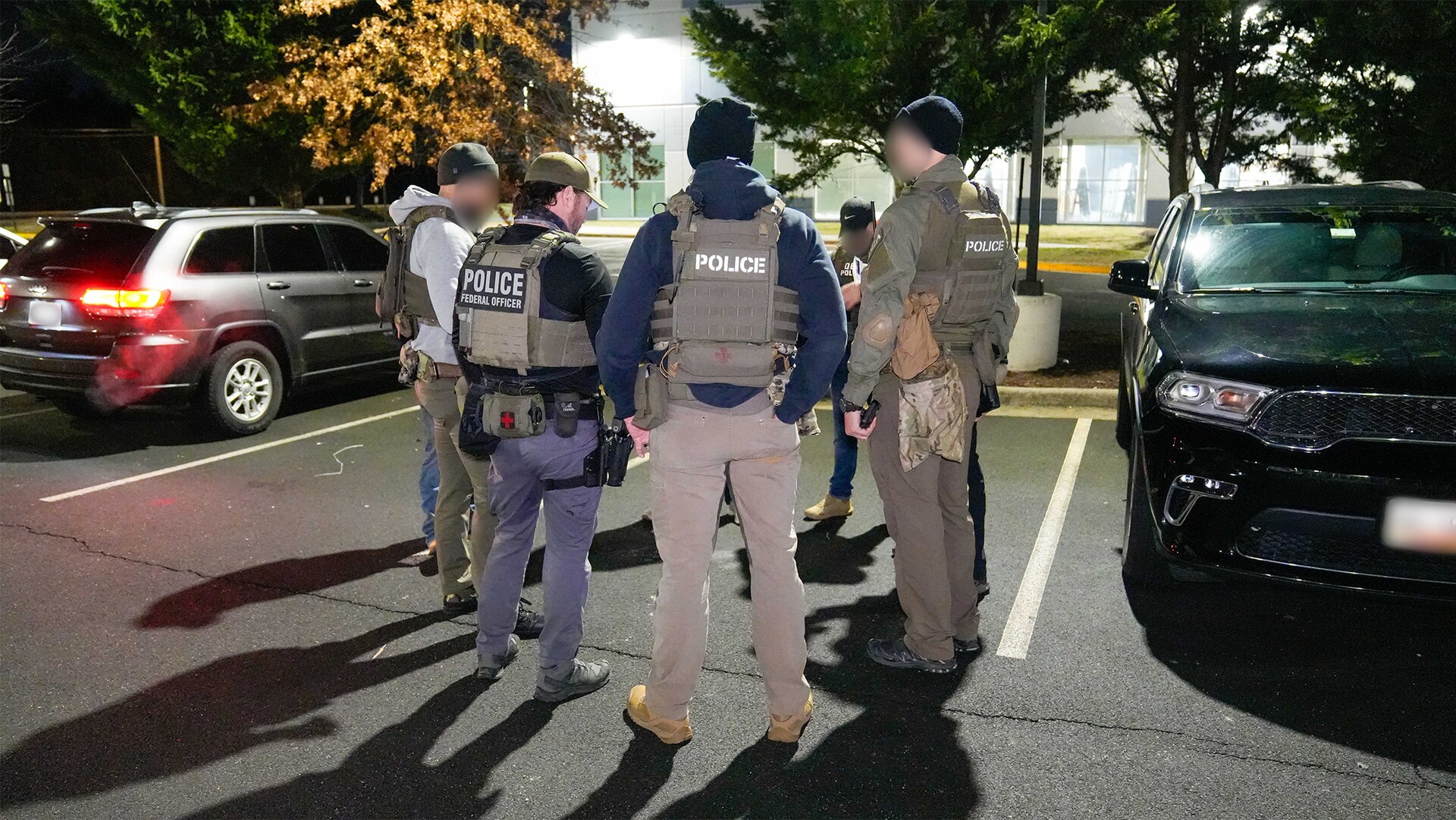
The administration says it is putting the “worst first.” The dispute now centers on who else is being swept into the system — and what the surge means for families, detainees and ICE itself.
Donald Trump’s ICE crackdown has had a harsh human impact across the United States: U.S. Immigration and Customs Enforcement is arresting some non-criminal immigrants as well as criminals, while the agency says it has rapidly expanded arrests and deported immigrants at record pace. ICE’s own first-100-days numbers from Trump’s second term show 66,463 arrests and 65,682 removals, with “three in four” arrests described as criminal cases.
That is the ICE crackdown revealed by the available public record: a campaign sold as a drive against dangerous offenders, but one that also reaches immigrants without criminal records. Reuters has reported that ICE figures showed a rise in non-criminals being picked up, and that the crackdown was taking a toll inside the agency, too.
The numbers tell two stories
ICE’s April 29, 2025 release framed the opening stretch of Trump’s second term as “record-breaking immigration enforcement in the U.S. interior.” The agency said it had arrested 66,463 people and removed 65,682 in the first 100 days.
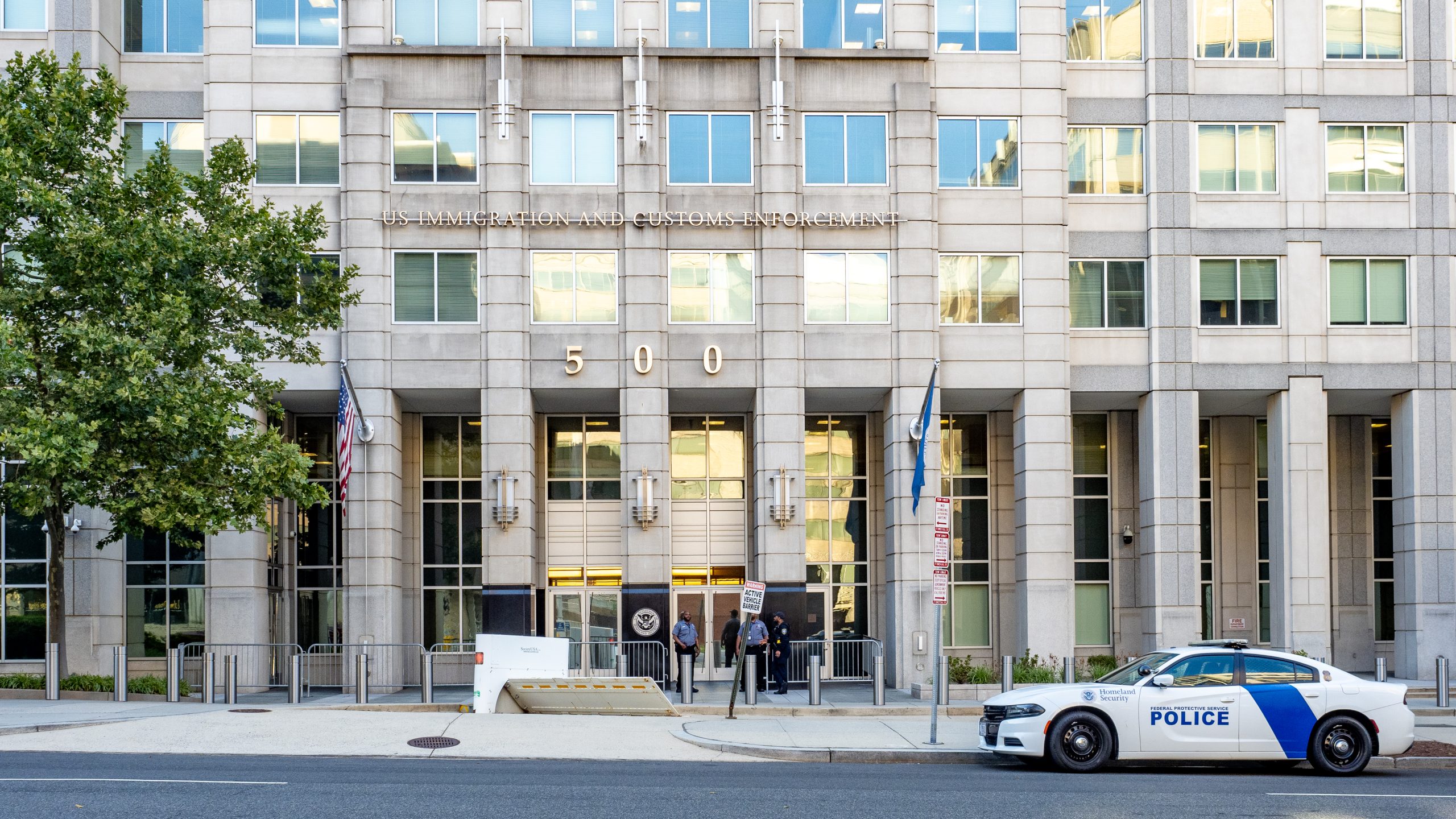
The public-safety argument was front and center. ICE said three in four arrests were “criminal illegal aliens,” and acting Director Todd M. Lyons said the agency was removing “public safety and national security threats” from communities.
The agency highlighted arrests involving people it said were gang members, people accused or convicted of sex offenses, and people accused or convicted of murder. It also listed thousands of assault, DUI/DWI and weapons-related cases among those arrested.
But the same headline statistic also points to the controversy. If three in four arrests were categorized by ICE as criminal cases, then a meaningful share were not. That does not automatically answer who those people were, whether they had prior immigration violations, pending cases, old removal orders or other factors. It does show that the dragnet was not limited to the narrow image of violent criminals.
Non-criminal arrests test Trump’s claim
Trump has repeatedly described his immigration enforcement agenda as focused on the “worst of the worst.” That phrase matters because it sets a public expectation: that ICE is primarily pursuing people who pose a clear danger.
Reuters reported in August 2025 that, inside ICE, Trump’s migrant crackdown was taking a toll on officers and that ICE figures showed a rise in non-criminals being picked up. That reporting tracks with the tension in ICE’s own public release: the agency emphasized criminal arrests while acknowledging, through its percentage, that not all arrests fell into that category.
For supporters of the policy, that distinction may not change much. They argue that immigration law itself should be enforced, and that people who lack legal status or have final removal orders can be lawfully detained or removed even without a separate criminal conviction.
For opponents, the distinction is the heart of the issue. A campaign presented as a public-safety operation can look very different when it sweeps in workers, parents, long-term residents or people whose main violation is civil immigration status.
A wider net changes daily life
The human impact is not only measured in arrest totals. For immigrants and detainees, the practical consequences can arrive suddenly: a workplace stop, a home arrest, a missed court date because of detention, or a family scrambling to find legal help and childcare.
Removal numbers are also not abstract. ICE said it removed more than 65,000 people to countries around the world in the first 100 days. Each removal can mean a family split across borders, a wage earner gone, or a person returned to a place they may not have lived in for years.
The impact also reaches people who are not arrested. When enforcement expands, immigrant communities often change routines: avoiding public places, skipping appointments, moving children between caregivers or staying away from work if rumors of raids spread. Those choices can be rational even when a person is not a target, because the line between “targeted” and “caught up” can feel uncertain on the ground.
That uncertainty is why non-criminal arrests carry such political weight. They complicate a simple law-and-order message and make the policy debate less about whether dangerous offenders should be removed, and more about how broad the government’s enforcement power should be.
ICE says safety is the point
ICE’s official position is that the surge makes communities safer. In its release, Lyons credited Trump and Homeland Security leadership with allowing the agency to use “every tool at its disposal” to enforce immigration laws.
The agency also said it had arrested 2,288 gang members from Tren de Aragua, MS-13, 18th Street and other gangs. It said 1,329 people arrested were accused or convicted of sex offenses, and 498 were accused or convicted of murder.
Those figures are central to the administration’s defense. They give the crackdown a concrete public-safety rationale and allow ICE to argue that its resources are being aimed first at serious threats.
The unanswered policy question is what “first” means in practice. Prioritizing certain targets is not the same as excluding everyone else. When the enforcement machine expands, the number of people outside the top-priority category can rise, too.
The machinery has expanded
ICE’s release points to a broader enforcement architecture, not just more arrests by federal agents. The agency said it had ramped up arrests and removals with help from state and local law enforcement through the 287(g) program.
According to ICE, its Enforcement and Removal Operations directorate had 579 pending and signed agreements with police departments and sheriff’s offices nationwide. The agency said 444 new 287(g) agreements had been added since Jan. 20.
That matters because immigration enforcement becomes more pervasive when local law enforcement is formally linked to federal removal operations. A traffic stop, jail booking or local encounter can become a path into ICE custody.
ICE also said Homeland Security Investigations had increased worksite enforcement, arresting more than 1,000 workers and proposing more than $1 million in fines against businesses accused of exploiting or hiring unauthorized workers. Worksite actions can hit employers, employees and entire local economies at once.
What remains unclear
The available figures do not fully explain who the non-criminal arrestees were. “Non-criminal” can cover many situations, including people with no criminal record, people with civil immigration violations, people with final removal orders, or people arrested during operations aimed at someone else.
The numbers also do not show how many detainees had lawyers, how long they remained in custody, how many challenged removal, or how many had U.S. citizen children or close family ties in the country. Those details are often where the public-policy debate becomes personal.
There is also the internal strain. Reuters reported that the crackdown was taking a toll on ICE officers, a reminder that large-scale enforcement campaigns can pressure the people carrying them out as well as the people targeted by them.
The clearest takeaway is that Trump’s ICE crackdown is not one story. It is a public-safety operation by the administration’s account, a mass-enforcement campaign by its numbers, and a life-altering event for immigrants and detainees caught in its path. The controversy grows from the space between those descriptions.
Leave a Reply