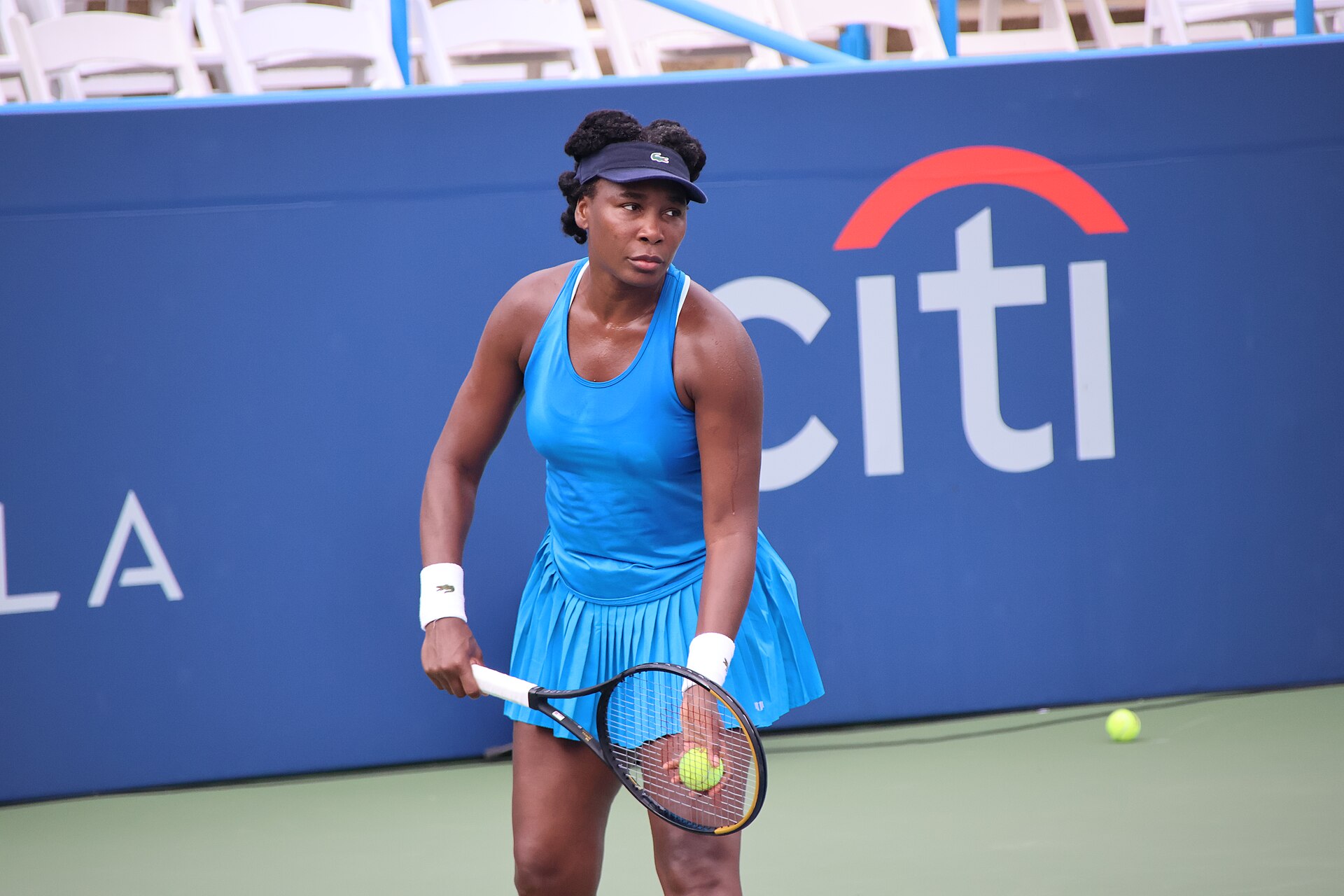
The score was straightforward, but the context is not: Williams is still taking wildcards, still drawing attention, and still searching for a singles win after a full year without one.
Venus Williams lost in the first round in Washington on Tuesday, as Anastasia Potapova beat her at the Mubadala DC Open 6-3, 6-3. The defeat pushed Williams’s singles losing streak to 12 matches and means her singles losing streak has reached one year.
The loss also fits a sharper recent pattern: Williams closed 2025 with three straight singles defeats, then lost her first nine singles matches of 2026. For a seven-time Grand Slam champion playing on a wildcard, the question is no longer just whether she can win a match, but what these appearances mean now.
Potapova took control quickly
The match began with Williams doing enough to stay level. Tennis World reported that she held serve through her first three service games, a small but important sign that the opening set had not immediately run away from her.
Then Potapova raised the pressure. She won seven consecutive games, turning a competitive start into a 6-3, 3-0 lead. From there, the match had the shape of a controlled straight-sets win rather than a late escape.
The service numbers told the story. Potapova converted all three break points she earned and did not face a break point on her own serve, according to Tennis World. Against a player trying to end a long losing run, that kind of clean match management leaves very little room for belief to build.
Reuters also reported the 6-3, 6-3 first-round result at the Mubadala DC Open, underscoring that this was not a narrow loss decided by a few late points. Williams needed pressure on return and did not get it.
A streak with a clear timeline
The phrase “one-year losing streak” can sound vague until the calendar is laid out. Williams returned to singles action in Washington last year and beat Peyton Stearns in her opener. She then lost to Magdalena Frech in the round of 16.
After that, the losses kept stacking up. She exited in the first round in Cincinnati and at the US Open, ending her 2025 singles season on a three-match skid.
This season has not offered a reset. The Washington defeat was her ninth singles loss to open 2026, bringing the run to 12 consecutive defeats across two seasons.
That number matters because tennis losing streaks are not like team-sport slumps. There is no teammate to hide behind, no role change to soften the result. Each match is a fresh public test of movement, timing, serve pressure and confidence.
The respect remains visible
Potapova’s win was professional, but her post-match tone was deferential. Tennis World quoted her saying she had grown up watching Williams win tournaments and was happy to have the chance to play her.
That reaction explains part of the tension around Williams’s late-career matches. Opponents want the win because ranking points and tournament progress matter. They also understand they are facing one of the defining players in modern tennis.
Williams’s résumé still travels with her: seven Grand Slam singles titles, a former world No. 1 ranking and a career that changed the scale of power tennis. None of that wins return games in 2026, but it does explain why her matches draw attention even when her current ranking and results point in another direction.
For younger players, beating Williams is not just a line in a draw sheet. It is also a collision with tennis history, even if the current competitive gap is plain.
Wildcards bring opportunity and scrutiny
Williams entered the Mubadala DC Open with a wildcard, a common route for major champions whose rankings no longer guarantee entry. Tennis World listed her current ranking at No. 664, which makes direct entry into top WTA events difficult without tournament discretion.
Wildcards are meant to serve several purposes. They can reward past champions, help returning players rebuild match rhythm, give local or young players a chance, and bring fans through the gates.
Williams fits the star-power side of that equation more than the rankings side. That is where the debate sits. Supporters see a legend earning the right to choose her schedule and compete as long as tournaments invite her. Skeptics see valuable main-draw spots going to a player who has not won a singles match in a year.
Both views can be true at once. Her presence still matters to fans and opponents. Her results also make every new wildcard a little more difficult to separate from the streak attached to it.
Potapova’s draw moves forward
For Potapova, the win was not only about the name across the net. It moved her into the Washington round of 16, where Tennis World reported she is set to face Diana Shnaider, this year’s French Open semifinalist.
That is a meaningful next test. Potapova came into Washington with stronger current form than Williams, described by Tennis World as a Linz runner-up and Madrid semifinalist. A clean first-round match keeps her from spending extra energy before the draw tightens.
Her performance against Williams also showed the value of not getting caught in the occasion. She served without facing a break point and took every break chance she created. Against a famous opponent, that kind of emotional control can be as important as the tactical edge.
The danger now is a different one: moving from a match loaded with history to a match defined purely by current level. Shnaider will not carry Williams’s aura, but she will bring a much more relevant benchmark for Potapova’s week.
Toronto now carries the question
Williams’s next listed stop is the WTA 1000 event in Toronto, where Tennis World reported she has also received a wildcard. That gives her another chance to avoid a 13th consecutive singles defeat.
What remains unclear is how Williams and her team are measuring progress. A win is the obvious marker, but late-career players often look for narrower signs first: better serving patches, cleaner movement, longer rallies against top-100 opponents, or simply the ability to recover and compete again the next week.
The public scoreboard is less patient. Twelve straight singles losses and a full year without a win make every draw feel like a referendum, even when the player may be focused on smaller competitive steps.
The clean takeaway from Washington is that Williams is still present on the tour, still respected, and still capable of making a tournament feel bigger. The tougher takeaway is that the tour is not pausing for sentiment. Potapova won the match in straight sets, and Toronto now becomes the next measure of whether Williams can turn participation back into results.
Leave a Reply