A White House order frames museums and monuments as battlegrounds over patriotism, race and national memory. The fight is really about who gets to decide what public history should teach.
Donald J. Trump is promoting a specific version of American history, and this article explains what Trump wants emphasized in the nation’s historical narrative: pride, unity, American greatness and what his White House calls “truth” over “divisive” accounts of race, power and oppression.
The clearest blueprint is Trump’s March 27, 2025, executive order, “Restoring Truth and Sanity to American History,” which targets the Smithsonian Institution, federal cultural institutions, public monuments and Independence National Historical Park as places where his administration wants to restore or reshape how American history is presented.
Trump’s preferred history lesson
The order argues that American history has been “rewritten” in recent years by a movement that casts the United States and its founding principles in a negative light. Trump’s White House says that approach replaces “objective facts” with ideology and leaves Americans with shame instead of shared purpose.
In its place, the order calls for federal historic sites, parks and museums to become “solemn and uplifting public monuments.” The preferred story is one of extraordinary national heritage, steady progress toward a more perfect union, and a record of advancing liberty, prosperity and human flourishing.
That framing matters because public history is not just a museum label or a school-trip stop. It helps define which national stories are elevated, which are treated as distortions, and who gets authority to decide the difference.
The Smithsonian is the centerpiece
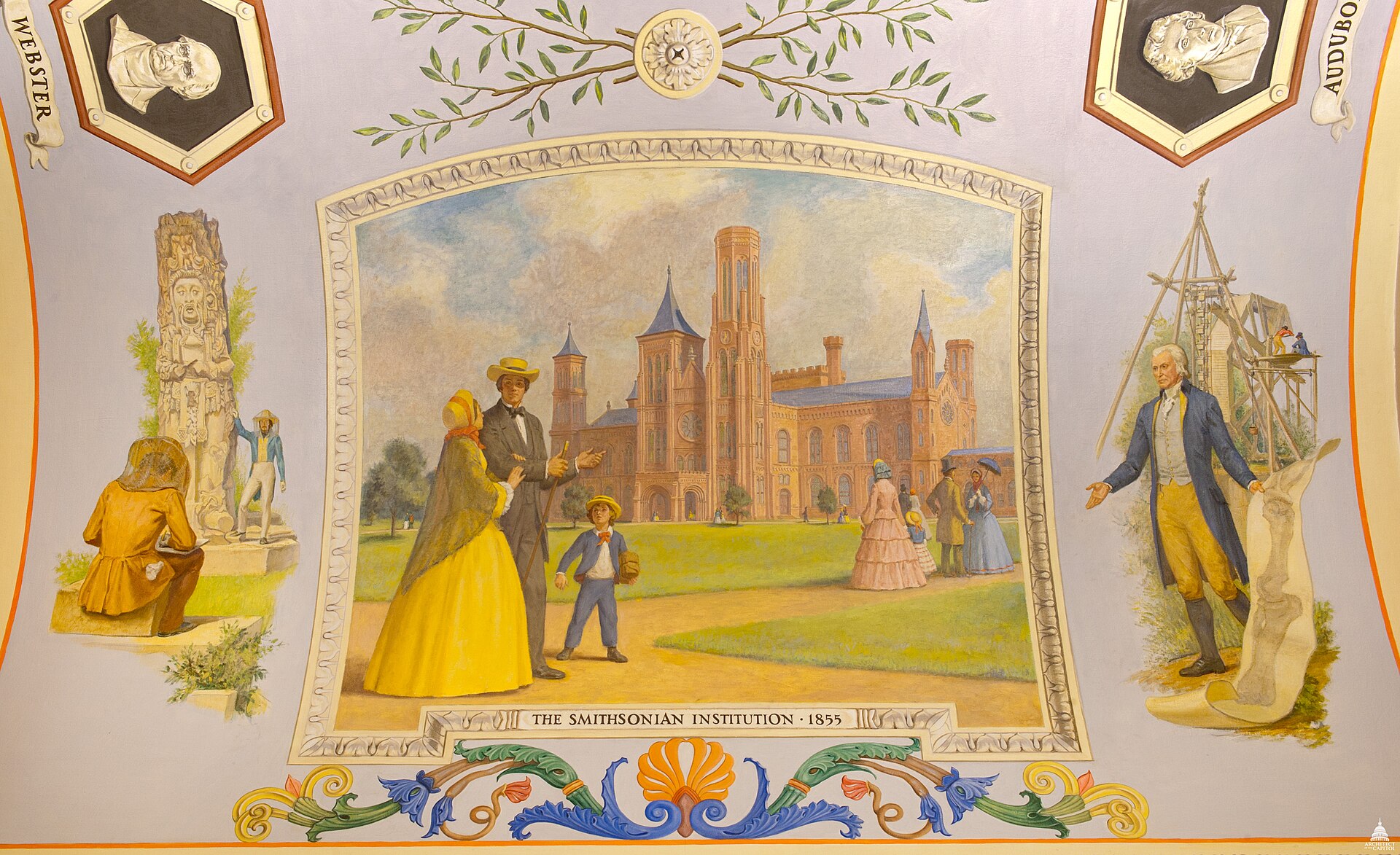
The Smithsonian Institution sits at the center of the order. Trump’s directive says the Smithsonian has “come under the influence” of what it calls a divisive, race-centered ideology, and it names specific museums and exhibits as examples of what the administration wants changed.
The order criticizes the Smithsonian American Art Museum exhibit “The Shape of Power: Stories of Race and American Sculpture,” citing its statements about race, power, privilege and scientific racism. It also criticizes the National Museum of African American History and Culture for material that, according to the order, described “hard work,” “individualism” and “the nuclear family” as aspects of “White culture.”
The White House also takes aim at the planned Smithsonian American Women’s History Museum, saying future funding should ensure it celebrates women’s achievements and does not recognize men as women “in any respect” in that museum. That provision folds the administration’s position on gender into a broader dispute over historical presentation.
The practical goal is blunt: “restore the Smithsonian Institution” as a symbol of inspiration and American greatness. In other words, the administration is not only objecting to particular exhibits. It is trying to reset the institution’s public mission.
How the order applies pressure
The executive order does not simply complain about museum narratives. It lays out tools the administration wants to use.
It directs the vice president, working with White House officials, to use his role on the Smithsonian Board of Regents to advance the policy. It also calls for recommendations on additional actions needed to carry out that goal.
The order says the vice president and the Office of Management and Budget director should work with Congress on future Smithsonian appropriations. The funding language is designed to prevent federal money from supporting exhibits or programs that, in the administration’s view, degrade shared American values, divide Americans by race, or promote ideas inconsistent with federal law and policy.
It also directs officials to seek citizen members of the Smithsonian Board of Regents who are committed to the administration’s approach. That points to a longer game: changing not just one exhibit, but the governance and incentives around federal cultural institutions.
Monuments are part of it
The order also reaches beyond the Smithsonian. It directs the Interior secretary to review whether monuments, memorials, statues, markers or similar properties under Interior Department jurisdiction have been removed or changed since Jan. 1, 2020.
The standard in the order is politically charged. The department is asked to look for removals or changes that, in the White House’s view, perpetuated a false reconstruction of American history, minimized certain historical events or figures, or included improper partisan ideology.
Where appropriate, the order calls for those pre-existing monuments or markers to be reinstated. That could put the administration on a collision course with communities, historians and public officials who supported removals or reinterpretations after national debates over Confederate symbols, colonial violence, racial injustice and other contested parts of the past.
The order also singles out Independence National Historical Park in Philadelphia, where the Declaration of Independence was adopted. It directs funding, as available, to improve infrastructure there by July 4, 2026, the 250th anniversary of the signing of the Declaration of Independence.
The dispute under the dispute
Trump’s argument is that public institutions have drifted from education into ideological indoctrination. Supporters of that view see museums and federal historic sites as too focused on national failure, racial grievance and elite academic language that alienates many visitors.
Critics of this approach are likely to see a different danger: political control over cultural institutions that are supposed to present evidence, complexity and debate. A history that emphasizes uplift can inspire, but it can also flatten conflict if officials decide that accounts of racism, exclusion or dispossession are inherently unpatriotic.
The hardest question is not whether American history contains achievements. It plainly does. Nor is it whether American history includes injustice. It plainly does. The fight is over proportion, tone and authority: how much weight public institutions should give to triumph, harm, contradiction and unfinished promises.
That is why the Smithsonian matters so much. Its museums are often treated as national classrooms. When an administration tries to redefine what those classrooms should say, the argument quickly becomes a proxy war over citizenship itself.
What remains unclear
The order sets direction, but many details remain uncertain. It does not, by itself, rewrite every museum label or reinstall every monument. Much depends on agency decisions, congressional funding, Smithsonian governance and how broadly officials interpret phrases such as “improper ideology” or “shared American values.”
There may also be practical limits. Museums build exhibits through curators, historians, boards, donors and long planning cycles. Federal agencies can change priorities, but cultural institutions do not always move at campaign speed.
Still, the order gives a clear answer to the question of what American history Donald J. Trump wants the public to see. It is a patriotic narrative centered on greatness, unity, founding ideals and national progress, with much less patience for interpretations that frame the country’s past around systems of race, power or oppression.
The next test is whether that vision becomes a lasting institutional shift or remains another front in the country’s long-running fight over how to tell its own story.
Leave a Reply