
The tribute spotlights one of South Carolina’s most durable political figures. It also raises a careful distinction between honoring public service and assessing a career that shaped national Republican politics.
South Carolina is honoring Senator Lindsey Graham’s decades of service in a final salute and farewell tribute reported by WTOC on July 29, 2026. The moment matters because Graham, a Republican tied closely to South Carolina politics for a generation, has been one of the state’s most recognizable figures in Washington, with influence across defense, courts, foreign policy and party leadership.
The available source material identifies the tribute but offers few public details about the ceremony itself. What can be said with confidence is that Graham’s career spans state office, the U.S. House and the U.S. Senate, making the South Carolina honor a marker of both political longevity and complicated public legacy.
A tribute with few public details
WTOC published the video item under the headline, “A final salute: South Carolina honors Sen. Lindsey Graham’s decades of service.” The MSN-distributed listing preserved the same central framing: South Carolina honors Sen. Lindsey Graham and looks back at decades of service.
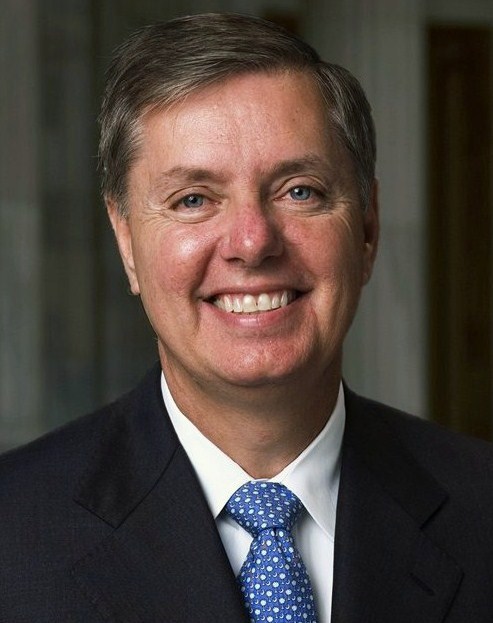
That wording points to a formal tribute or farewell-style recognition, but the extracted source text does not include a full transcript, a list of speakers, the location of the event, or the exact language used by South Carolina officials. That matters for accuracy. A tribute can be ceremonial, political, military-themed or institutional, and those details shape how readers should understand it.
So the safest reading is narrow: South Carolina publicly marked Graham’s long service, and the report presented it as a “final salute.” The broader meaning comes from the record of the career being honored.
From Central to Washington
Graham’s public identity has long been rooted in South Carolina. Official congressional and Senate biographical materials identify him as a native of Central, South Carolina, and a University of South Carolina graduate who trained as a lawyer before entering public life.
Before becoming a U.S. senator, Graham served in the South Carolina House of Representatives. He then won a seat in the U.S. House, representing South Carolina’s 3rd Congressional District, and later moved to the Senate after winning election in 2002. He took office in the Senate in 2003.
That path gave Graham an unusually long runway in public office. By the time South Carolina honored his decades of service, his career had already touched local politics, congressional representation and national decision-making.
His military background is also central to his public biography. Graham served in the U.S. Air Force and later in the Air Force Reserve, retiring as a colonel. That service has often informed how he spoke about national security, military policy and America’s role abroad.
Why the state connection matters
For South Carolina, Graham has been more than a name on a Senate roll call. Senators from smaller states can become highly visible intermediaries between local needs and federal power, especially on issues such as military installations, disaster aid, infrastructure, agriculture and judicial nominations.
South Carolina’s political culture has also given Graham a distinctive platform. The state is a major stop in Republican presidential politics, and its conservative electorate has helped shape national GOP debates. Graham’s long tenure meant he was not just reacting to those debates; he was often part of them.
Supporters have typically described him as a forceful advocate for the military, veterans and conservative judicial appointments. Critics have viewed him as too combative, too closely aligned with partisan battles, or too willing to adapt his public posture as Republican politics changed around him.
That tension is part of why a tribute to Graham is not just a local ceremony. It is also a reminder of how one state’s senator can become a national political character, admired by some voters and sharply opposed by others.
A national Republican profile
Graham’s Senate career made him a familiar figure well beyond South Carolina. He became known for hawkish foreign policy views, his work on the Senate Judiciary Committee, his long alliance with the late Sen. John McCain, and his role in major confirmation fights.
His political image has shifted over time. Earlier in his Senate career, Graham was often described as a Republican willing to negotiate on immigration, national security and judicial issues. In the Trump era, he became one of Donald Trump’s most visible Republican defenders after first being a critic during the 2016 primary campaign.
That evolution is a major part of his legacy. To allies, it reflected political realism and a focus on conservative policy wins. To opponents, it showed how party pressure and polarization changed the incentives for even experienced senators.
A South Carolina tribute may choose to emphasize service, loyalty and achievement. A fuller public assessment also has to account for controversy, because decades in office inevitably leave a paper trail of votes, alliances and reversals.
What a farewell tribute can miss
Public honors tend to flatten careers into ceremonial language. Words like “service,” “salute” and “legacy” are meant to unify a room, not litigate every vote. That is understandable, especially when an event is designed to recognize a long-serving official.
But Graham’s career cannot be separated from the era he helped shape. His time in office overlapped with the post-9/11 wars, fights over Supreme Court nominations, the rise of Tea Party politics, the Trump presidency and a period of deepening mistrust in Congress.
For many South Carolinians, his durability may be the central fact: he kept winning elections and maintained influence in Washington. For others, the question is what that influence produced and whether it matched the state’s needs.
That is the real value of revisiting a political career during a tribute. It gives readers a chance to separate the ceremony from the record and to see how public service can be both honored and examined.
What remains unclear
The biggest unanswered questions are about the tribute itself. The available source text does not specify where in South Carolina the final salute took place, which officials participated, whether Graham spoke, or whether the event was tied to a retirement, an institutional recognition or another milestone.
It also does not provide direct quotations from Graham or from South Carolina officials. Without those details, it would be premature to describe the tone of the event beyond the reported framing: South Carolina honored Sen. Lindsey Graham’s decades of service.
What is clear is why the story travels. Graham’s name carries weight in South Carolina and in national Republican politics. A farewell-style tribute to him is not just a local news item; it is a snapshot of how states remember powerful officeholders while the arguments over their records continue.
That duality is the takeaway. South Carolina can honor Graham’s long career, and the public can still weigh that career in full: the service, the influence, the controversies and the unanswered questions that come with decades in power.
Leave a Reply