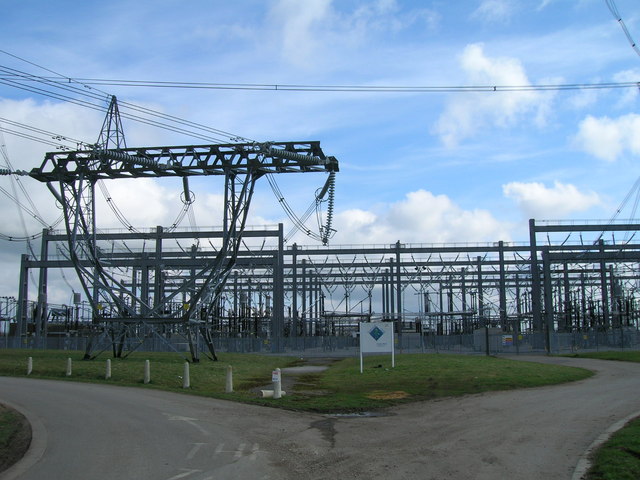
Data centres power AI, cloud computing and everyday apps, but their electricity needs can land hard on local networks. The fight now is over who gets scarce grid capacity first, and on what terms.
The energy regulator has launched a crackdown on data centres over concerns they are clogging up Britain’s electricity grid, adding to the strain on the electricity grid and delaying power connections for other users.
The scrutiny matters because data centres sit behind cloud storage, streaming, banking systems and artificial intelligence. As demand rises, regulators face a harder question: how to support digital growth without letting a handful of power-hungry projects absorb grid capacity that homes, factories and clean-energy projects also need.
Why the grid is tightening
The pressure is not just about how much electricity Britain can generate. It is also about whether power can reach the right place at the right time through wires, substations and local networks that were not designed for today’s wave of large new loads.
Data centres can ask for huge connections because they need reliable electricity around the clock. Unlike many buildings that peak at certain times of day, a large server campus can behave more like an industrial plant: steady, demanding and difficult to interrupt.
That creates a planning problem. If a data centre books capacity but does not build quickly, it can still sit in a queue ahead of other projects. If it does build, the local network may need expensive upgrades before anyone else nearby can connect.
Data centres draw power differently
A data centre is not just a warehouse full of computers. It is a power system, cooling system and security operation wrapped around servers that must stay online almost all the time.
The boom in AI has sharpened that issue. Training and running advanced models requires dense computing clusters, and those clusters can push electricity demand far beyond what older internet infrastructure needed.
The U.S. Department of Energy has described data center deployment, partly driven by AI, as a significant factor in near-term electricity demand growth. It cited an Electric Power Research Institute estimate that U.S. data centers could consume up to 9% of annual electricity generation by 2030, up from 4% of total load in 2023.
Those figures are American, not British, but they show why regulators around the world are taking the same issue seriously. Data centres are no longer a niche utility customer. In some regions, they are becoming one of the main forces reshaping power planning.
The connection queue problem
The word crackdown can sound like a ban. In grid policy, it is more likely to mean tougher tests for who gets a connection, when they get it and whether they can keep their place in the queue if a project is not moving.
Electricity networks are built around connection agreements. Developers apply for capacity, grid operators study the impact, and upgrades are scheduled if the system cannot handle the added demand. When the queue grows too long, the process can become clogged with projects that are speculative, delayed or competing for the same limited headroom.
That is where data centres attract scrutiny. Their connection requests can be large enough to affect an entire local area. A single project may be commercially valuable, but it can also force difficult trade-offs if nearby housing, industrial sites or renewable generation are waiting for access.
Regulators have to decide whether the fairest approach is first come, first served, or whether projects should prove they are ready, funded and deliverable before reserving scarce grid capacity.
Tech growth meets local limits
There is a strong case for building data centres. They support cloud services used by businesses, public agencies and consumers. Governments also view digital infrastructure as part of economic competitiveness, especially as AI becomes more central to software, research and security.
Industry advocates often argue that data centre operators can help the grid, not just burden it. Some sign long-term clean-power deals, invest in backup systems, use batteries or choose sites near existing infrastructure. The Department of Energy has pointed to tools such as clean generation, storage, energy efficiency, tariff design and grid modernization as ways to manage rising demand while maintaining reliability and affordability.
But local constraints can arrive faster than national strategies. A country may have enough generation on paper while a specific town, industrial park or transmission corridor cannot handle another major connection without years of reinforcement work.
That is why the politics of data centres can turn quickly. National leaders may welcome investment, while local authorities and network operators worry about substations, water use, land, backup generators and the effect on other development.
What a fair crackdown could mean
A serious regulatory response would not need to treat every data centre as a problem. It could separate projects that are ready and strategically located from those that reserve capacity without a clear path to construction.
Possible measures include stricter milestones, clearer penalties for stalled projects, more transparent queue management and pricing that reflects the cost of network upgrades. Regulators may also push developers toward sites where the grid is stronger or where new power generation can be added more quickly.
There is also a timing issue. If data centres require firm power day and night, they cannot rely only on intermittent supply. That pushes planners toward a broader mix of renewables, storage, nuclear, gas with lower-carbon options, demand management and stronger transmission links.
The hardest part is cost. If a data centre triggers a major upgrade, consumers may reasonably ask whether bills should cover it. Developers, meanwhile, will argue that uncertain or excessive charges could push investment elsewhere.
The unanswered questions
The immediate unknown is how tough the regulator’s approach will be. A light-touch review could mainly clear deadwood from the connection queue. A deeper intervention could reshape how large electricity users are prioritized across Britain.
Another open question is whether data centres will be asked to become more flexible. Some computing work can shift by time or location, but many services need constant uptime. The more flexible operators can be, the easier it is to fit them into a constrained system.
The wider takeaway is that the grid is becoming a gatekeeper for the digital economy. AI tools, cloud platforms and online services may feel weightless to users, but they depend on very physical infrastructure: cables, transformers, power stations and planning decisions.
Britain’s challenge is to make room for data centres without letting them crowd out other priorities. The crackdown is really a test of whether the electricity system can move from passive queuing to active choices about which projects deserve capacity, and when.
Leave a Reply