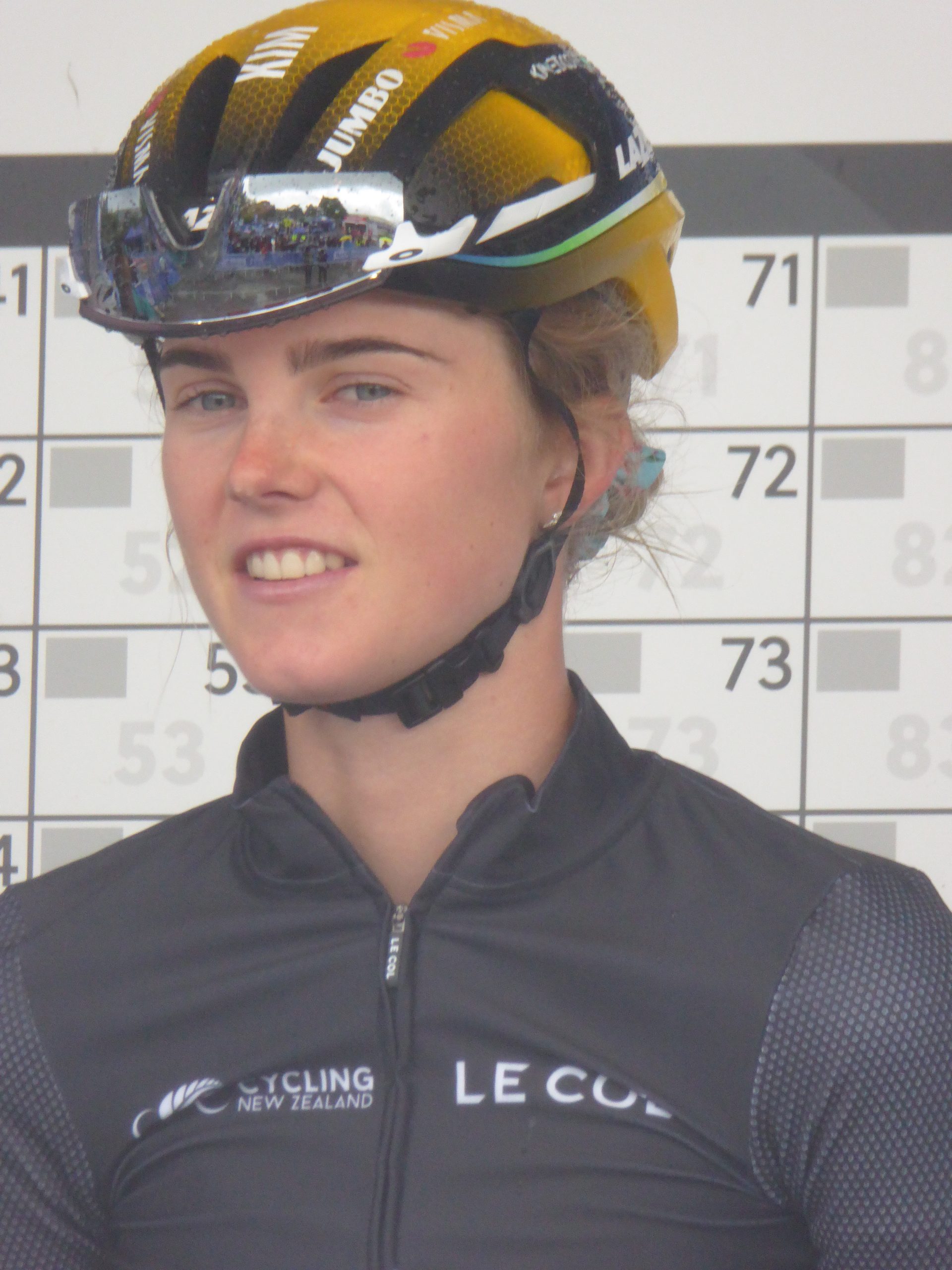
Cadzow’s decision lands at an unusually young age for a rider who had already reached the Olympics, national titles and major European results. Her exit puts a sharper spotlight on what success can cost in elite cycling.
Kim Cadzow is retiring from cycling at age 24, ending her professional racing career immediately after a rapid rise from New Zealand champion to former Visma rider. She is a New Zealand champion and former Visma rider. The article explains why she is leaving the sport: reports citing Cadzow’s Instagram statement say cycling was no longer her happy place, and she did not want to walk away hating it.
The decision is striking because Cadzow was not a fading veteran. She had already become a New Zealand road and time trial champion, raced in Europe, reached the Olympic Games and built the kind of résumé that usually points toward several more seasons, not retirement at 24.
A young career stops short
Cadzow’s announcement brings an abrupt end to one of New Zealand cycling’s more intriguing recent stories. Cyclingnews reported that she had not raced in 2026 and confirmed through her social media post that she would not be returning to professional racing.
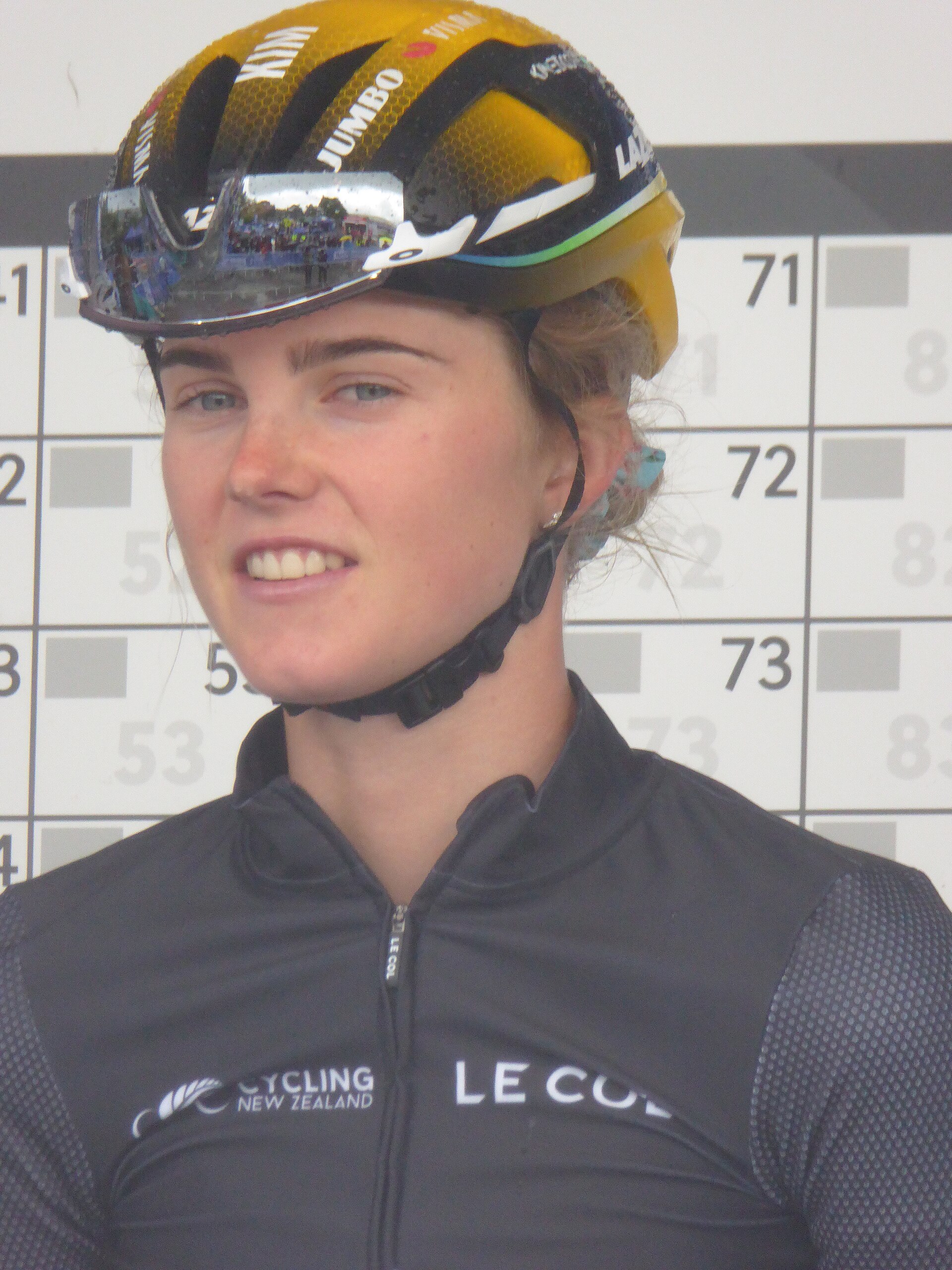
Her wording mattered. Cadzow did not frame the decision as a pause, a transfer issue or an injury comeback plan. According to reports quoting her Instagram message, she said she did not feel old enough to call herself retired, but she could say she would not be returning.
That distinction captures the emotional awkwardness of leaving elite sport young. At 24, most riders are still being described in terms of potential. Cadzow is choosing to define the endpoint herself.
Why Cadzow is walking away
The clearest explanation from Cadzow is not tactical or financial. It is emotional. Cyclingnews reported that she said riding her bike was no longer her happy place. Cyclingflash, also citing her Instagram statement, reported that she wrote she no longer found happiness in cycling and that it had increasingly felt like a burden.
That is a different kind of retirement language from the usual professional cycling statement. There was no polished line about seeking new challenges after a long career. Cadzow described a relationship with the sport changing before it turned sour.
She also made clear she wanted to leave before resentment took over. Reports quoted her as saying she loves sport and did not want to walk away with hate or bitterness. In elite cycling, where training, travel, body management and performance pressure can swallow ordinary life, that is a blunt reason — and a comprehensible one.
It also leaves some questions unanswered. Cadzow has not laid out a detailed next step, and the public reports do not fully explain why she did not race in 2026. What is clear is that she has decided the cost of continuing is no longer worth the return.
The results behind the shock
The timing feels surprising because Cadzow’s career had been accelerating. Cyclingflash listed a strong 2024 season that included sixth at Liège-Bastogne-Liège, 10th at La Vuelta Femenina, eighth at the Tour de Suisse and seventh in the Olympic time trial in Paris. She also won Trofeo Ponente in Rosa.
Those are not fringe results. They are signs of a rider capable of competing across demanding one-day races, stage races and time trials. In women’s cycling, that kind of range can make a rider especially valuable to teams building for both general classification ambitions and major one-day targets.
Then came the national titles. Cyclingflash reported that Cadzow won New Zealand championships in both the road race and the time trial in 2025. For a rider still in her early 20s, that combination suggested a clear path forward: more leadership chances, more international starts and more years to develop.
Instead, the peak became part of the farewell. Her short career now reads less like an incomplete résumé and more like a compressed one: late start, fast rise, Olympic appearance, national dominance, exit.
From Visma prospect to EF rider
Cadzow’s path into the professional ranks also explains why her retirement is drawing attention beyond New Zealand. She was associated early with the Jumbo-Visma setup, a program known for developing and sharpening high-level talent. Reports identify her as a former Visma rider before her move into the EF structure.
Cyclingnews reported that she turned professional with Jumbo-Visma in 2023 before joining EF Education-Oatly and racing for the American team over the past two seasons. Cyclingflash’s team listing places her in the Visma orbit earlier and then with EF’s women’s program afterward. The shared point is the same: Cadzow moved quickly through serious professional environments.
That matters because retirement at 24 can easily be misread as a rider failing to break through. Cadzow had already broken through. She had reached the Olympic Games within a few years of starting cycling, according to reports quoting her own reflection, and she described that rise as more than she had dared to dream.
Her exit is therefore not a simple story about missed potential. It is a story about a rider deciding that potential alone is not enough reason to keep going.
Leaving before resentment
Cadzow’s message also included advice that sounded less like a sporting cliché and more like a lesson learned under pressure. Cyclingflash reported that she urged young riders to keep friends close and family closer, and to build a support circle they can lean on.
That line is easy to skim past, but it says a lot about what professional sport can strip away. A rider’s calendar is built around camps, races, travel days and recovery blocks. The people outside the performance bubble often become the ones who help an athlete make sense of whether the bubble is still worth living inside.
There will be competing reactions to her decision. Some fans will see it as sad because a talented rider is gone just as her results were becoming more serious. Others will view it as an example of an athlete protecting herself before the sport does lasting damage to her relationship with competition.
Both readings can be true. Elite sport sells the idea of persistence, but persistence is not always the healthiest choice. Cadzow’s retirement is a reminder that leaving early can be an act of clarity, not defeat.
What remains unclear
The immediate sporting consequence is straightforward: Cadzow will not be part of the professional peloton going forward. For New Zealand, that means losing a rider who had already delivered national titles and shown international time-trial quality. For EF’s women’s setup, it means one fewer developing rider with proven versatility.
What comes next for Cadzow is less certain. The available reports do not say whether she wants to remain connected to cycling, move into another sport, study, coach or step away from elite competition entirely. Her public explanation was focused on the decision to leave, not a detailed map of life after racing.
That absence of a next chapter may be the point. Not every retirement has to be packaged as a pivot. Sometimes the first step is simply to stop doing the thing that no longer feels right.
Cadzow’s career was brief by professional standards, but it was not empty. She became a New Zealand champion, raced for major teams, reached the Olympics and left with enough perspective to say she did not want to hate the sport she once loved. At 24, that is not the ending many expected. It is the one she chose.
Leave a Reply