A ceremony tied to the Military Spouse Commission became a flashpoint after Trump described Democratic urban areas in sweeping terms. The reaction shows the risk of turning a policy rollout into a culture-war sound bite.
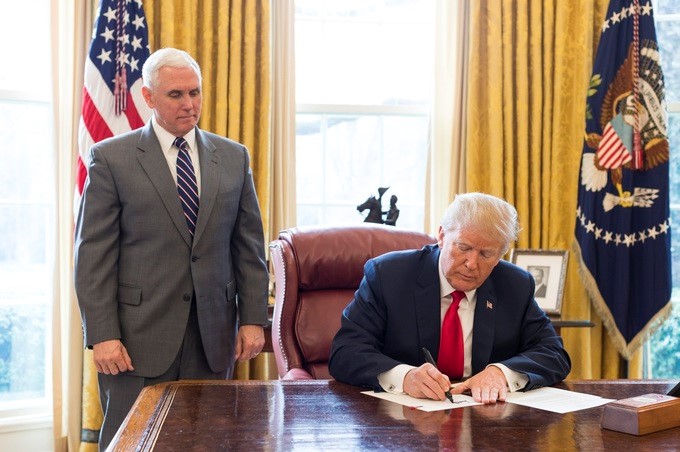
Donald Trump’s attack on blue cities drew criticism from some Fox News viewers after Trump called Democratic cities dirty and filthy during an August 3 White House event and executive order signing in the Oval Office. Fox News carried the ceremony as he signed an order establishing the Military Spouse Commission before the remarks shifted toward Democratic-voting urban areas, according to Daily Express US.
Some viewers described the comments as deranged or unhinged online. The exchange matters because a policy moment about military families quickly became a fight over Trump’s “filthy” blue cities language.
A friendly setting turned volatile
The setting was not a hostile interview or a campaign rally. It was a White House ceremony, televised by Fox News, with Trump taking questions from reporters after signing the executive order.

That context made the reaction stand out. Fox News is often a sympathetic venue for Trump, yet Daily Express US cited social media posts from some viewers who were sharply critical of how he talked about Democratic-run cities.
The criticism did not mean Fox viewers broadly turned against him. Social media reaction is not a poll, and it can overrepresent the loudest voices. But the comments showed that even a friendly broadcast can produce backlash when a governing event veers into sweeping insult politics.
The quote that changed the story
Trump did not single out one city. Instead, he described Democratic-voting urban areas as a group, using broad language that treated them as interchangeable.
“What do they have in common? They’re all dirty. They are filthy, dirty. Their streets are dirty,” Trump said, according to the report.
He continued: “Their streets smell. Their storefronts have broken. Their trees are all gross. Everything about the place is dirty. And I don’t want to mention any specific city. It’s really all of them.”
That last point is central to the backlash. By declining to name a city while saying it applied to all of them, Trump left no room for distinctions among neighborhoods, mayors, budgets, local conditions or policy records.
Some Fox viewers pushed back
Daily Express US reported that some viewers reacted to the segment on social media by describing Trump’s comments as irrational. One quoted viewer wrote, “He is so deranged! He is just beyond belief!”
Another critic cited by the outlet said Trump was not presenting a serious plan to improve roads, infrastructure or public conditions. A third accused him of being disconnected from life outside his own circle.
There was also support for Trump among the reactions cited. One supporter said Trump was right and argued that Democratic-run cities were “dirty” and “dangerous.”
That split captures the political power of the phrase. To supporters, it can sound like blunt talk about visible urban problems. To critics, it sounds like a blanket attack on millions of people and the places where they live.
Why blue cities became shorthand
“Blue cities” is a political label, not a precise category. It generally refers to large urban areas that vote Democratic, but the phrase often gets loaded with claims about crime, homelessness, sanitation, immigration, policing and local spending all at once.
Trump’s comments drew attention because they did not isolate a particular policy failure. He spoke in sweeping terms about streets, storefronts and trees, then extended the criticism to “all” of the cities he had in mind.
Republicans have long argued that Democratic leaders have mishandled major urban problems. Many voters do have real concerns about public safety, housing costs, open-air drug use, transit conditions and downtown vacancies.
The counterargument is that those problems vary widely by city and neighborhood. A broad claim that every Democratic city is filthy can energize voters already inclined to agree, while giving opponents an easy example of overstatement.
Military spouses were the stated focus
The event’s official subject was the Military Spouse Commission, a White House initiative whose name pointed to military families rather than city politics. Daily Express US also reported that Defense Secretary Pete Hegseth spoke during the ceremony and emphasized strong families, troop readiness and quality housing.
That contrast is what made the moment politically revealing. A signing ceremony can be designed to spotlight a constituency and give television audiences a clear policy image. One detour can redefine what people remember.
For military spouses, the practical questions are likely to be about what the commission will do, who will serve on it, what authority it will have and whether it will address concerns such as housing, employment barriers, child care or frequent relocations.
Those details were overshadowed by the city comments. If the administration wants the executive order to remain the story, it will need to explain how the commission is supposed to produce results for military families.
What remains unclear
Several pieces are still unresolved. Trump did not identify the cities he meant, did not cite specific metrics in the quoted remarks and did not outline a city-focused policy proposal during the exchange cited by Daily Express US.
It is also unclear how representative the viewer backlash was. Social media posts can capture real frustration, but they do not show how many Fox News viewers shared that reaction.
The political lesson is narrower but still important. Trump used an Oval Office signing ceremony on Fox News to attack unnamed Democratic cities as dirty and filthy, and some viewers who saw it described the remarks as deranged or unhinged.
The policy event moved forward. The rhetoric became the part people argued about.
Leave a Reply