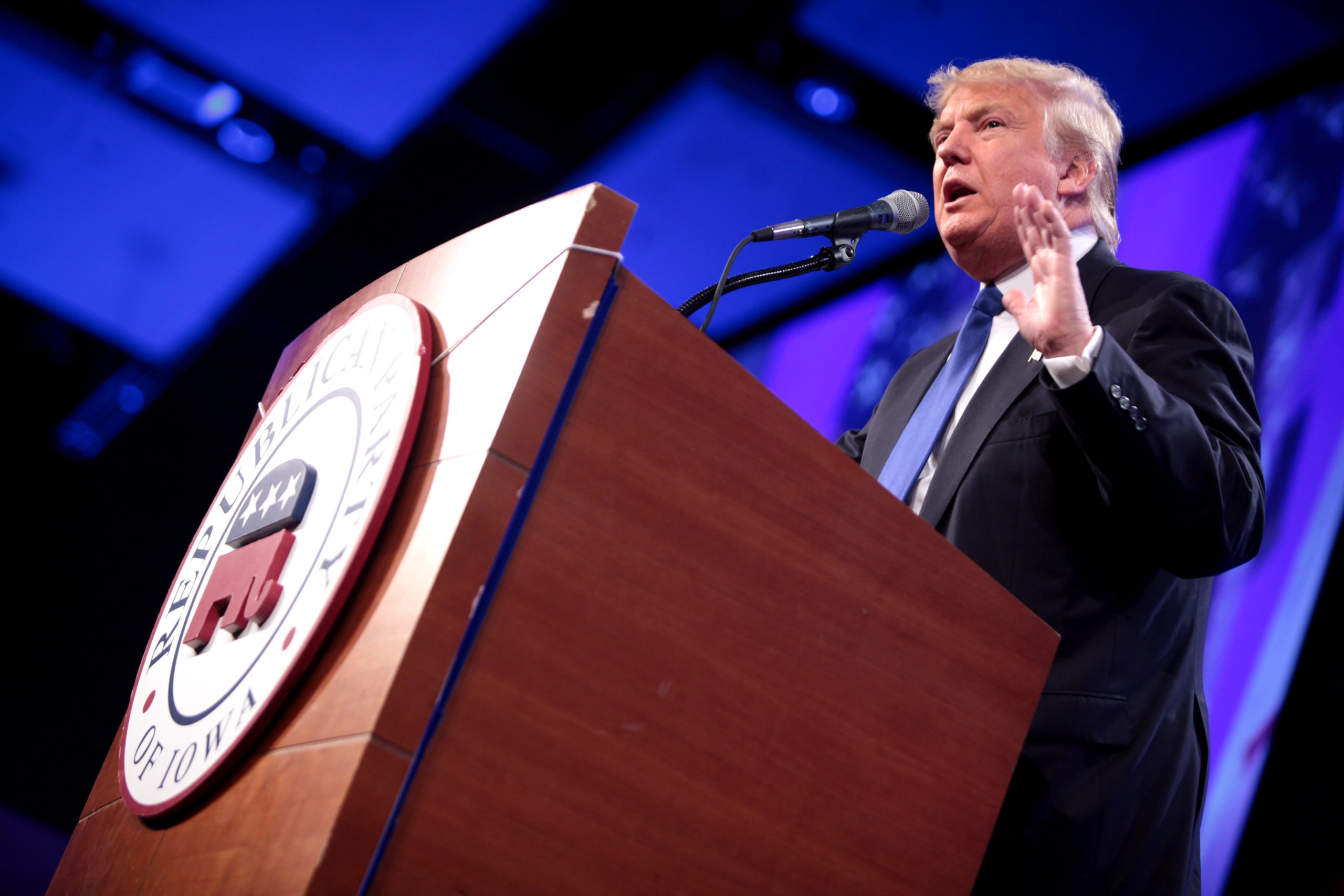
The remark landed as both a manufacturing boast and a political headache. Critics seized on the price tag, while supporters may see it as backing an American automaker and presidential security needs.
Donald Trump said the White House ordered 250 Cadillac Escalades for his presidential motorcade during remarks at a General Motors testing facility in Milford, Michigan, northwest of Detroit, and the backlash to Trump’s luxury vehicle boast arrived fast. The controversy over the White House buying 250 SUVs matters because the 2026 Cadillac Escalade starts at about $90,000, while critics online said the spending was out of touch with people who can’t afford groceries.
The unresolved question is whether Trump was describing a confirmed fleet purchase, a broader government order, or something more loosely framed from the stage. Either way, the line put a luxury SUV, federal spending and the cost-of-living squeeze into the same political frame.
The boast that lit up
Trump made the comments while speaking in Michigan as he promoted American manufacturing and the auto industry. USA Today reported that he told the crowd the White House had ordered 250 Cadillac Escalades for use in his presidential motorcade.
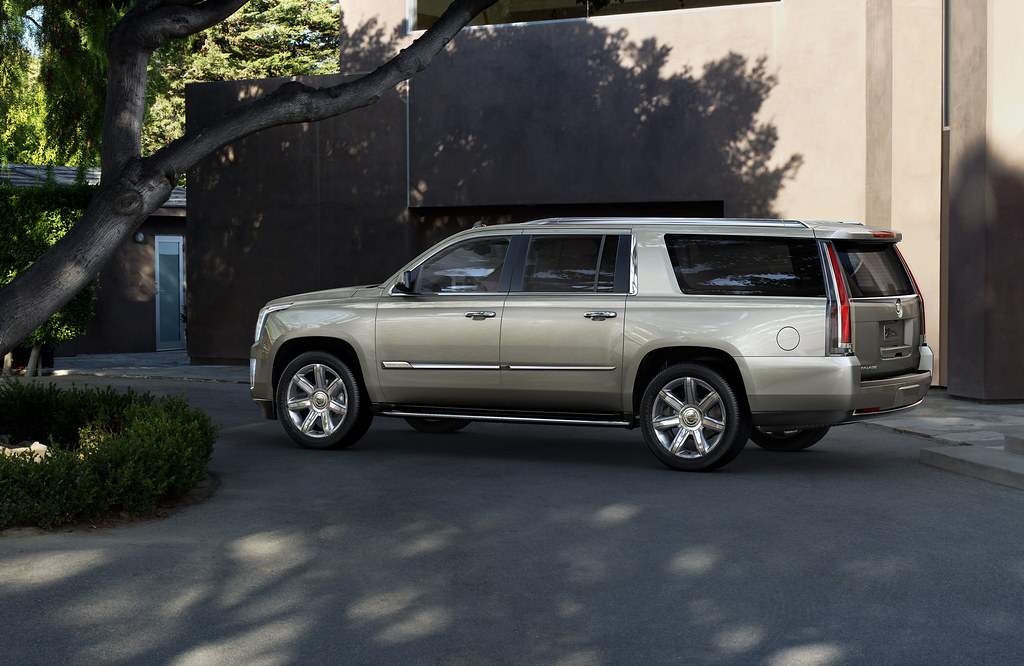
“The one and only Escalade,” Trump said, according to USA Today. “You know we ordered — they just told me — 250 Escalades, right? We ordered 250 Escalades. We look sharp in those Escalades.”
He added that “our guys are very spoiled” and said they like the Escalade. The delivery was classic Trump: part sales pitch, part status marker, part off-the-cuff flex.
That is also why it traveled so quickly online. The Escalade is not just any government vehicle in the public imagination. It is Cadillac’s flagship full-size luxury SUV, a vehicle associated with size, comfort and expense.
Why the number jarred critics
Cadillac lists the 2026 Escalade starting at $90,295. On a simple sticker-price basis, 250 base models would total more than $22.5 million before any special equipment, security modifications, maintenance, delivery costs or government pricing differences.
That figure is not the same as a final contract price. Federal buyers often negotiate differently than retail customers, and vehicles used for protective or law-enforcement purposes may not resemble showroom models by the time they enter service.
Still, the optics were easy for critics to attack. Social media users contrasted the image of hundreds of luxury SUVs with households still strained by everyday prices. The Bureau of Labor Statistics reported that the Consumer Price Index rose 3.0 percent over the 12 months ending in June 2026, with food at home up 2.4 percent over the same period.
That is the heart of the backlash: not simply that the government may buy vehicles, but that Trump sounded pleased about luxury while many voters are still irritated by grocery bills, rent, insurance and gasoline.
The affordability critique stuck
The phrase critics kept returning to was blunt: people can’t afford groceries. It captured a familiar political risk for presidents of both parties. A purchase that may be defensible inside a procurement system can still look tone-deaf when described as a brag.
Food inflation has cooled from its worst pandemic-era levels, but prices do not reset just because the rate of increase slows. For many families, the grocery aisle remains the most regular reminder that household budgets are tight.
That makes luxury symbolism unusually combustible. A $90,000 starting price is not abstract in the way a multibillion-dollar federal budget line can be. Readers can compare it instantly with a mortgage payment, a used car, a year of rent or several years of grocery bills.
Trump’s defenders can argue that presidential transportation is not a normal consumer purchase. Critics can answer that presidents choose how to talk about public money. In this case, the language of “we look sharp” gave opponents an opening.
Federal fleets are more complicated
Government vehicle buying is not usually handled like a president walking into a dealership. The General Services Administration says GSA Fleet leases more than 267,000 vehicles to federal agencies and provides vehicle purchasing services intended to give agencies safe, reliable, low-cost options.
That matters because the phrase “the White House ordered” may compress a more complex procurement process. Vehicles could be purchased, leased, replaced over time, or assigned across agencies connected to presidential travel and protection.
USA Today reported that the White House did not immediately provide details on whether the vehicles are standard retail models, specially configured law-enforcement or security vehicles, replacements for an aging fleet, or part of a broader multi-agency purchase.
Those details are not minor. They determine whether the public is looking at a straightforward luxury order, a security-related fleet refresh, or a claim that sounded more precise than the paperwork behind it.
Security is the strongest defense
The most serious argument for a large fleet is presidential protection. Motorcades are not built around one vehicle. They can include lead cars, communications vehicles, support SUVs, medical personnel, counterassault teams and local law-enforcement coordination.
The Secret Service says it protects the president and other key officials, and that it does not discuss the means, methods or resources used to carry out protective responsibilities. It also notes that many features of the presidential state car, known as “the Beast,” are classified for security reasons.
That secrecy leaves room for legitimate ambiguity. The public may never get a fully detailed explanation of how many vehicles are needed, how they are equipped, where they are staged, or how often they rotate out of service.
But secrecy also makes political communication more important. If the administration wants the public to view the Escalade order as security infrastructure or support for U.S. manufacturing, it has to say that clearly. Trump’s remark instead emphasized style and preference.
Trump’s cost-cutting message collides
The backlash also landed against Trump’s own government-efficiency branding. In February 2025, the White House announced a Department of Government Efficiency executive order aimed at shrinking the federal workforce, limiting hiring and pursuing what it called a transformation of the federal bureaucracy.
That created an obvious tension for critics: an administration promising to cut waste now had the president praising a possible 250-vehicle luxury SUV order. Some online criticism invoked DOGE directly, asking why a cost-cutting effort would not scrutinize a purchase like this.
Supporters see a different story. Cadillac is an American brand under General Motors, and the Escalade is assembled in Arlington, Texas. From that perspective, Trump was talking up U.S. auto jobs while choosing an American-made vehicle for official use.
Both readings can exist at once. A vehicle order can support domestic manufacturing and still carry poor political optics. A president can need secure transportation and still face criticism for sounding cavalier about the cost.
What remains unanswered
The central factual gap is the order itself. The public still lacks a clear breakdown of the purchasing authority, contract value, delivery timeline, vehicle configuration, agency budget and whether all 250 SUVs are tied directly to the presidential motorcade.
Those answers would change the story. A staggered replacement schedule for protective vehicles is different from a sudden luxury splurge. A fleet negotiated below retail is different from a purchase at sticker price. Armored or specialized vehicles would also cost far more than the base Escalade Trump’s critics are using as the reference point.
For now, the controversy is powered by Trump’s own words and the political moment in which he said them. He offered a luxury-car boast in a country still arguing about affordability, federal spending and what government efficiency is supposed to mean.
The clean takeaway is not that every official vehicle purchase is wasteful. It is that public spending stories are often decided first by symbols. In this one, 250 Cadillac Escalades became a rolling symbol of the gap between presidential confidence and household frustration.
Leave a Reply