
Australia combines mandatory employer-backed retirement saving with a smaller, means-tested public pension. Trump’s interest puts a difficult U.S. question in focus: how to expand retirement saving without weakening a core income guarantee for older Americans.
Donald Trump has expressed interest in Australia’s retirement system as U.S. Social Security faces projected trust-fund depletion in 2032. Australia requires workers to participate in mandatory private retirement savings, a model Trump has said the United States is studying; the immediate question is what that could mean for American workers, U.S. 401(k) plans and Social Security benefits.
It is not a proposal to replace Social Security overnight. But Trump’s comments have revived a consequential retirement-policy debate: whether wider required saving could reduce pressure on a federal program that remains essential to millions of retirees.
Trump has praised Australia’s model
At a July 6 White House event launching Trump Accounts, Trump said Australia’s approach had worked “incredibly well” and that his administration would discuss with Congress whether it could be implemented in some form, according to USA TODAY.
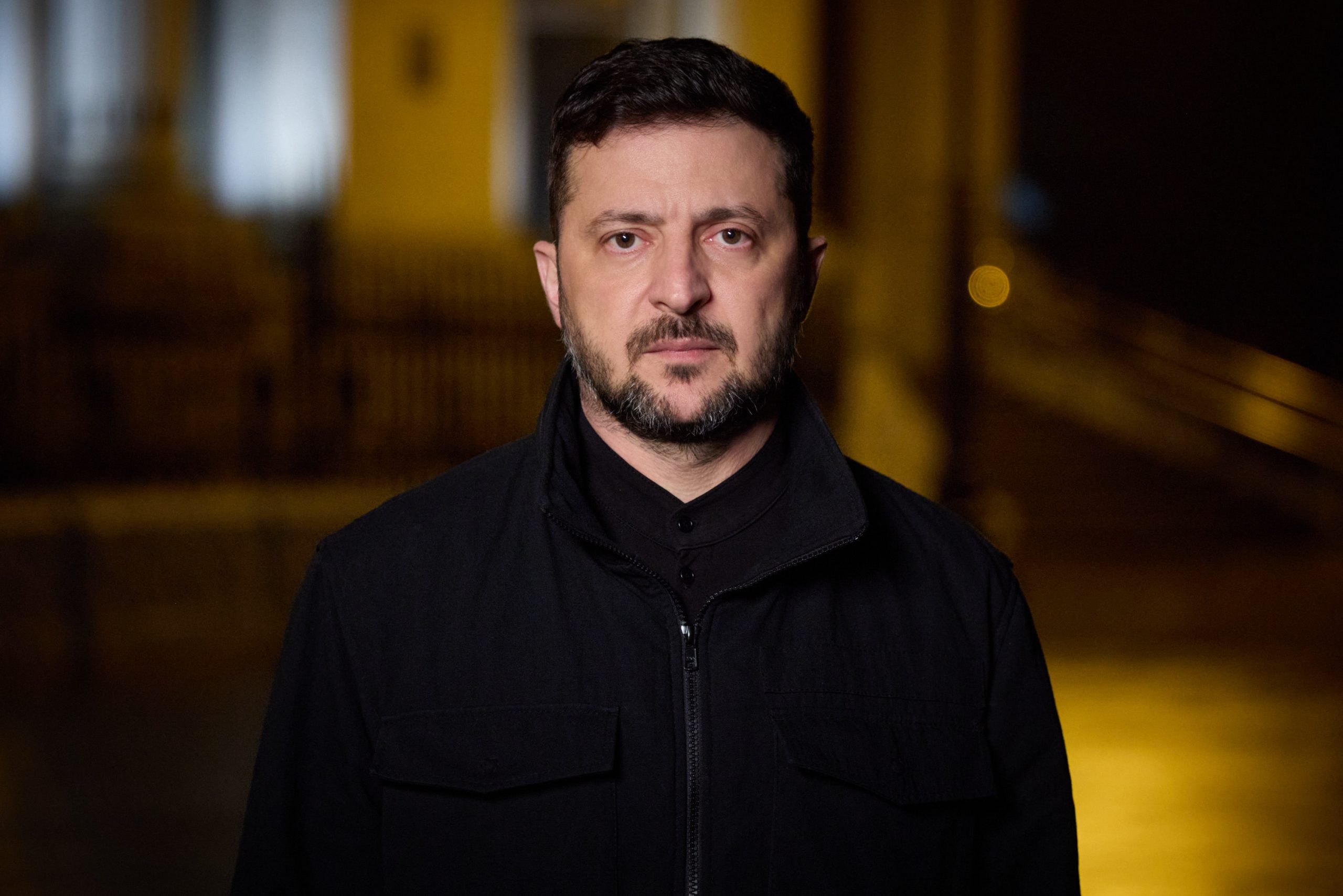
The administration has not publicly laid out a detailed plan to remake Social Security or require every American to use an Australia-style account. That distinction matters. Admiring another country’s system is not the same as introducing legislation, identifying how it would be paid for or explaining how current retirees would be protected.
Still, the interest is notable because retirement policy has long treated Social Security and employer plans as separate issues. Australia’s structure links the two more directly: broad private savings are expected to do much of the work, while the public pension is more narrowly aimed at people with limited means.
Australia requires broad retirement saving
Australia’s system, commonly called superannuation, requires employers to contribute a share of workers’ earnings into retirement accounts. USA TODAY reported that the required employer contribution is 12% of wages.
Those accounts are invested over a worker’s career and are distinct from the country’s Age Pension, a government payment designed chiefly as a safety net for older people who do not have enough income and assets. In other words, Australia does not rely on one universal public benefit alone.
The U.S. arrangement is more fragmented. Social Security provides a monthly earned benefit financed primarily through payroll taxes, while 401(k)s and similar workplace plans depend heavily on whether an employer offers one and whether a worker enrolls and contributes.
- Australia: mandatory employer retirement contributions plus a means-tested public pension.
- United States: Social Security for eligible workers plus voluntary, unevenly available workplace and individual savings.
That difference helps explain why advocates see Australia as a useful model for expanding coverage, rather than a simple template to copy.
Social Security’s financial strain
The appeal of alternatives is tied to the financing challenge confronting U.S. Social Security. USA TODAY reported that the program faces potential insolvency in 2032, meaning its relevant trust fund reserve could be depleted if lawmakers do not act.
“Insolvency” does not mean Social Security checks would vanish. Payroll taxes would continue to bring in revenue. But AARP’s estimate, cited by USA TODAY, says the program would have enough money to pay roughly 83% of scheduled benefits once reserves are exhausted, absent congressional action.
The pressure reflects a basic demographic shift: more people are collecting benefits while the ratio of workers paying payroll taxes to beneficiaries is lower than it was decades ago. Policymakers can address that imbalance in several ways, including more revenue, benefit changes, adjustments to eligibility rules, or some combination.
Private accounts do not automatically solve the near-term trust-fund shortfall. Money directed into personal retirement savings is not money available to pay current Social Security benefits. Any transition would therefore require difficult choices about financing both current obligations and future savings.
The 401(k) coverage gap remains
Trump’s interest also points to a separate problem: millions of Americans reach retirement with little or no workplace savings. USA TODAY reported that only about half of private-sector workers participate in workplace retirement plans intended to supplement Social Security.
The White House has taken steps aimed at expanding access rather than mandating contributions. An executive order described by USA TODAY calls for TrumpIRA.gov, a website intended to help workers enroll in a private-sector retirement plan when their employers do not offer a 401(k)-type option. The site is slated to be active by Jan. 1, 2027.
Automatic enrollment is also becoming more common. Yet automatic enrollment and universal compulsory saving are not the same. Workers can generally opt out of automatic-enrollment plans, while Australia’s system sets a national expectation that retirement contributions will be made.
For supporters, universal participation prevents workers from falling through gaps created by low wages, job changes or employers that do not sponsor plans. It also means more people build assets that can supplement Social Security later in life.
Mandatory saving divides experts
Retirement experts agree that the status quo leaves too many workers without savings. They disagree sharply on whether requiring contributions is the answer.
Andrew Biggs, a senior fellow at the American Enterprise Institute, told USA TODAY that a newly designed retirement system would likely resemble Australia’s. He has suggested a model in which Social Security becomes more focused on lower earners while workers are broadly enrolled in retirement accounts.
Teresa Ghilarducci, a labor economist at The New School, similarly argued that broad participation would help ensure every worker has a retirement account. From that view, a required contribution is not merely a burden; it is income reserved for a worker’s future.
Romina Boccia of the Cato Institute offered the counterargument. Although Australian contributions are technically paid by employers, she told USA TODAY that the cost can ultimately come out of workers’ wages. For lower-income households struggling with rent, food and debt, less take-home pay could cause immediate harm even if it produces future savings.
A transition would be the hardest part
The biggest unanswered question is not whether Australia’s system has strengths. It is how the United States could move toward it without disrupting people who have planned around current Social Security rules.
Australia’s Age Pension is substantially more modest than the maximum U.S. Social Security benefit. USA TODAY cited Center for Retirement Research analysis showing that the Australian payment topped out at roughly $28,000 for an individual in 2025, compared with a maximum U.S. Social Security benefit of $62,172 in 2026.
That gap underscores why a smaller public benefit would be far riskier for Americans who have not accumulated enough private savings. It also explains why any serious proposal would need to address current retirees, workers nearing retirement, investment risk, administrative costs and protections for people with unstable earnings.
Trump’s remarks have put Australia’s system on the U.S. policy agenda, but they have not settled the central tradeoff. Expanding retirement accounts may help future workers build savings; preserving Social Security’s dependable baseline remains critical for people who cannot afford to rely on markets or employer plans alone.
Leave a Reply